How to Stop Grinding Teeth at Night
Grinding your teeth at night is often blamed on stress, but for many people it is a reflex that reopens a narrowing airway during sleep. A Brookline, MA dentist explains how to tell the difference and what actually stops it.
To stop grinding your teeth at night, you first have to know why you are doing it. For some people the cause is stress and a custom night guard plus better sleep habits is enough. For a substantial proportion, though, grinding is a reflex that reopens a narrowing airway during sleep, and no guard will stop it because the guard is not addressing the problem. Sorting out which applies to you is the single most useful thing you can do, and it usually takes one examination.
How Do You Know You Are Grinding?
Most people who grind at night have no memory of it. What they have instead is a collection of morning symptoms that are easy to attribute to something else.
The signs you notice yourself: waking with a jaw that feels tired or locked, a headache that starts at the temples before the day has begun, teeth that ache or feel sensitive to cold, and a partner who has heard the sound. Many patients also describe an unconscious daytime habit of resting their teeth together, which is a related but distinct behaviour.
The signs your dentist notices are more objective. Canine tips lose their points and front teeth shorten. Wear facets appear as flat, polished areas that match up when you slide your jaw sideways. Enamel chips along biting edges without any injury to explain them. Restorations fracture. The masseter muscle at the jaw angle feels tender under gentle pressure, and in long-standing cases it becomes visibly enlarged, squaring off the lower face.
Why You Grind: The Two Different Causes
The stress model is the familiar one, and it is genuinely correct for daytime clenching. Psychological load raises muscle tone, people hold their jaws together while concentrating or driving, and the muscles fatigue. Awake bruxism responds well to awareness, stress management and, where needed, treatment of the muscles themselves.
Sleep bruxism is a different phenomenon. It is classified as a sleep-related movement behaviour, and episodes cluster with brief arousals from lighter stages of sleep, when heart rate rises and muscle tone increases. It originates centrally rather than in the teeth, which is why adjusting the bite rarely stops it.
The distinction matters because it changes the treatment entirely. Treating an airway-driven grinder for stress produces a patient who has learned to meditate, wears a guard, and still wakes exhausted with an aching jaw.
The Airway Connection Most Dentists Miss
During sleep, the muscles holding the upper airway open relax. In someone whose airway is already narrow, that relaxation allows the walls to approach each other, and airflow becomes turbulent or stops altogether. The body responds with a brief arousal, and jaw movement is part of that response: pushing the mandible forward pulls the tongue base away from the back of the throat and reopens the passage.
Viewed that way, grinding is not a bad habit. It is a protective reflex doing its job. Systematic reviews have examined the association between sleep bruxism and obstructive sleep apnea, and the relationship is well enough established that any dentist assessing grinding should ask about snoring, witnessed pauses in breathing and how refreshed you feel on waking.
This matters clinically because a night guard protects the teeth while leaving the underlying airway problem entirely untreated. The enamel survives; the fragmented sleep, the daytime fatigue and the cardiovascular consequences of untreated apnea do not go away.
What Actually Stops Nighttime Grinding
There are four honest options, and most patients need more than one.
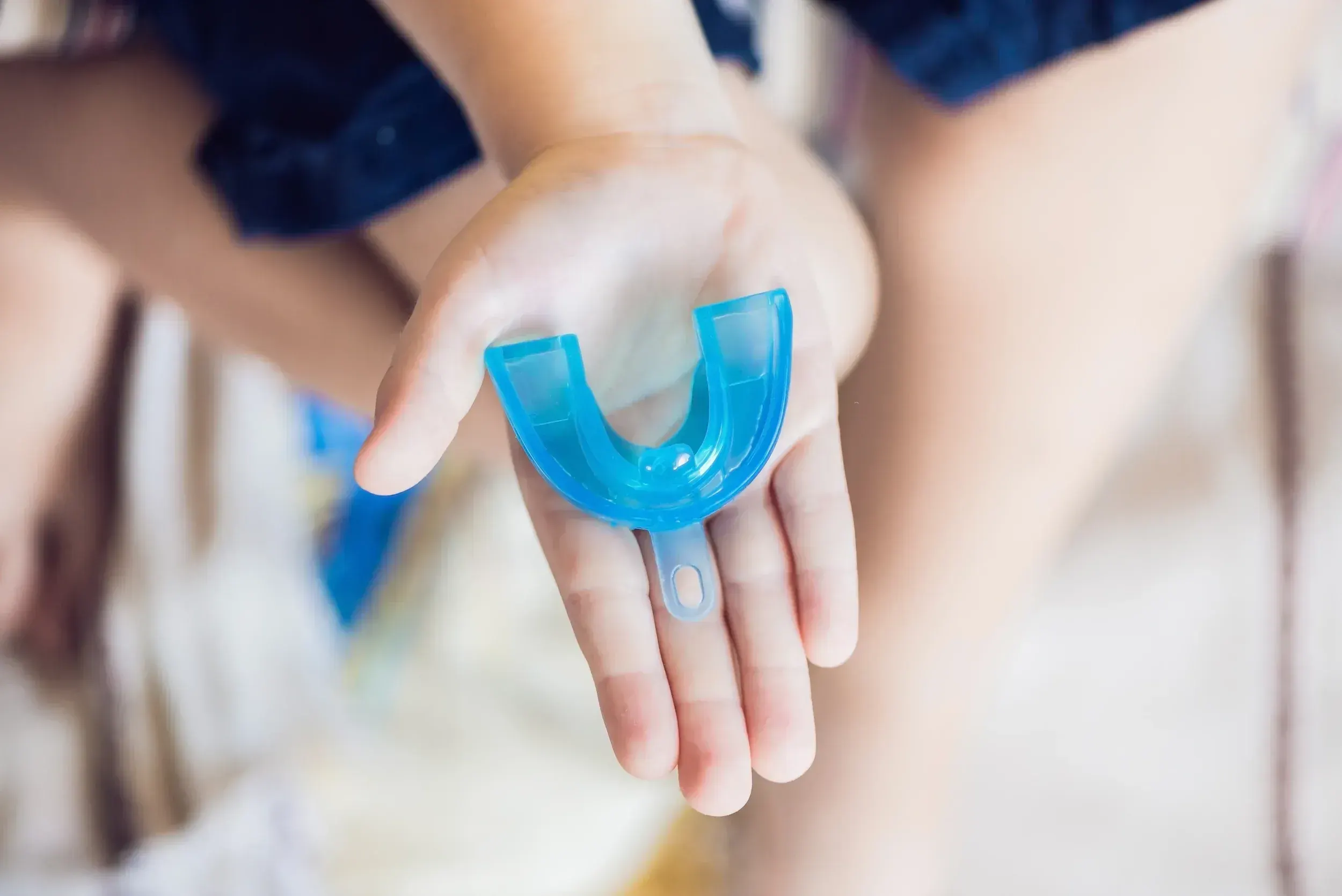
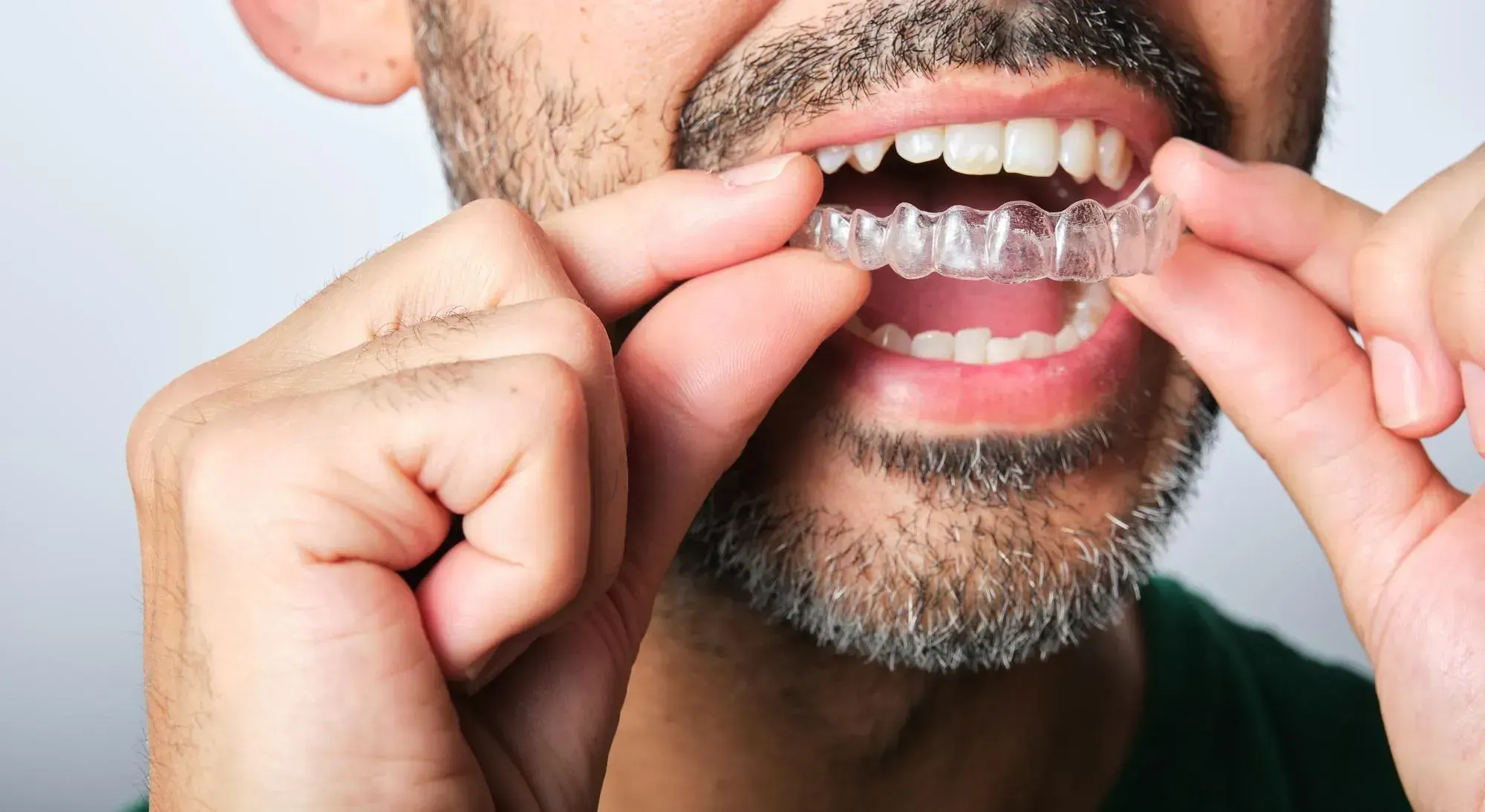
A custom occlusal splint. A properly made, adjusted guard protects enamel and restorations from the first night and frequently reduces morning muscle soreness by changing the position the muscles work from. What it does not do is stop the brain initiating the activity. Anyone who tells you a guard cures bruxism is overselling it. Our page on custom night guards in Brookline, MA explains the difference between a scan-made splint and a pharmacy tray, which is considerable.
Botox for the masseter. Injecting small quantities of botulinum toxin into the masseter and, where indicated, the temporalis reduces the force those muscles can generate. Chewing still works, but the involuntary night-time clenching loses much of its power. Randomised trials report benefit for masticatory myofascial pain, and this is described on our Botox for jaw clenching page. Masseter injection for bruxism is an off-label use of an FDA-approved medication, which we say plainly.
Airway evaluation and oral appliance therapy. Where breathing is the driver, treating the airway addresses the cause rather than the consequence. For adults that usually means a custom oral appliance, described on our sleep apnea treatment without CPAP page. For children, the approach is different again and works with jaw growth that is still occurring.
What to try at home, framed honestly. Cutting caffeine after midday, reducing evening alcohol, keeping a consistent sleep schedule and applying warm compresses to the jaw in the morning all help at the margins. Avoid chewing gum, which keeps overworked muscles active. None of these are treatment, and none of them protect enamel.
How to Tell Which Cause Is Yours
Start with three questions. Do you snore, or has anyone told you that you stop breathing during sleep? Do you wake unrefreshed after adequate hours in bed? Are you sleepy during the day in situations where you should be alert?
Answering yes to any of them shifts the probability meaningfully toward an airway cause and makes a sleep study the sensible next step. If the answer to all three is no, and your grinding tracks visibly with stressful periods, the stress model is more likely and treatment can start with a splint.
Neither answer is a diagnosis. What settles it is an examination that includes the muscles, the joint, the wear pattern and the airway, plus a sleep study where indicated. Sleep apnea is a medical diagnosis, and no dental examination replaces one.
What to Expect at a Jaw and Airway Evaluation
At Smile Brookline, the $195 TMJ exam covers palpation of the masseter and temporalis, assessment of joint sounds and range of motion, photographs of the wear pattern, and a review of your bite. The $195 sleep and airway exam adds arch width, tongue posture, nasal breathing and tonsil assessment.
You leave with an explanation of which mechanism is most likely driving your grinding, what the wear on your teeth suggests about how long it has been happening, and a plan that usually combines protection with treatment of the cause. Where the airway is implicated, we coordinate with your physician rather than working around them.
The condition itself is described in more depth on our bruxism treatment in Brookline, MA page, and the broader jaw picture on our TMJ treatment in Brookline, MA page.
Frequently Asked Questions About Grinding Teeth at Night
How do I stop grinding my teeth at night?
Identify the cause first. If grinding is airway-driven, treating the airway with an oral appliance addresses the mechanism. If it is stress-driven, a custom occlusal splint plus stress and stimulant management is usually the right combination. Masseter injections reduce the force in either case. A guard alone protects teeth without stopping the behaviour.
Why do I grind my teeth?
Sleep bruxism arises centrally rather than from how your teeth meet. Episodes cluster with brief arousals during lighter sleep, and in many patients those arousals are triggered by a narrowing airway. Stress, caffeine, alcohol, nicotine and certain medications including SSRIs all increase how often episodes occur.
What causes teeth grinding?
The main drivers are sleep-related arousals, sleep-disordered breathing, psychological stress and stimulants. Bite irregularities were once blamed but are now considered a minor factor at most. Children grind commonly, and in their case the airway link is particularly worth investigating.
Is teeth grinding related to sleep apnea?
Research has repeatedly examined the association between sleep bruxism and obstructive sleep apnea, and the relationship is well documented. Jaw movement is thought to help reopen a collapsing airway. If you grind and also snore or wake unrefreshed, an airway assessment should come before assuming stress is the cause.
Will a night guard stop the grinding or just protect my teeth?
Primarily it protects your teeth, and it often reduces morning muscle soreness by changing how the jaw loads. It does not stop the brain initiating grinding episodes. That is a limitation rather than a failure, and it is why we look for the cause alongside fitting the guard.
Does Botox help with teeth grinding?
Yes, by reducing the force the masseter can generate rather than by stopping the impulse. Most patients notice reduced jaw tension at five to seven days with full effect at two to three weeks, lasting three to four months. It is an off-label use of an FDA-approved medication.
Can children grind their teeth for the same reason?
Children grind very commonly, and it is often self-limiting. The airway link applies to them too, and arguably more strongly. A child who grinds alongside snoring, mouth breathing or restless sleep should be assessed through a pediatric airway dentist in Brookline, MA rather than fitted with a splint on a developing dentition.
How do I know if my grinding is stress or airway related?
Snoring, witnessed breathing pauses, waking unrefreshed and daytime sleepiness all point toward the airway. Grinding that tracks with stressful periods and occurs without any sleep symptoms points toward stress. An examination plus, where indicated, a sleep study settles it properly.
Book a Jaw and Airway Evaluation in Brookline, MA
If you wake with an aching jaw, book the $195 TMJ exam or the $195 sleep and airway exam with Dr. Sara Stock, DDS at Smile Brookline on Beacon Street. We will tell you which mechanism is most likely driving your grinding and what protecting your teeth actually requires. Call (617) 731-3364 or visit our contact page. Protection starts with custom night guards in Brookline, MA.
External resources worth reading: the American Academy of Sleep Medicine patient guidance on obstructive sleep apnea, the American Academy of Dental Sleep Medicine on oral appliance therapy, the American Dental Association patient page on bruxism, and a systematic review on the association between sleep bruxism and obstructive sleep apnea syndrome (PMID: 31628624).