
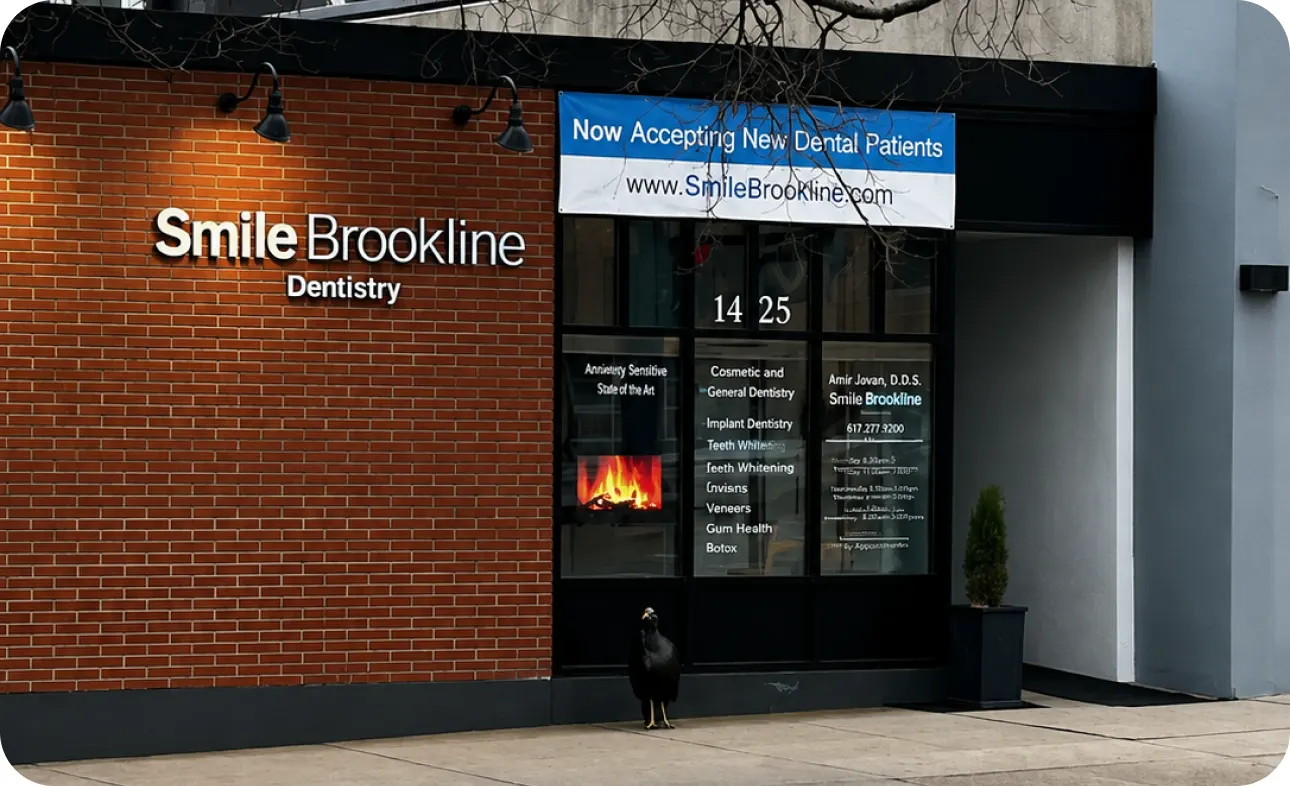
Tooth Extractions in Brookline, MA
- Treatment Time:
- 20-60 minutes
- Downtime:
- 3-7 days
- Socket Graft:
- Available same day
- Performed By:
- Periodontist

Surgical Care
Tooth extractions in Brookline, MA remove teeth that cannot be saved by decay, fracture or advanced gum disease, and every extraction here is planned alongside what will replace the gap. We treat patients from Coolidge Corner, Brookline Village, Chestnut Hill, Newton, Allston and Brighton.
Dr. Yumi Ogata, a board-certified periodontist, performs surgical extractions at Smile Brookline, and Dr. Sara Stock, DDS plans the restoration. Deciding what happens to the space before the tooth comes out is what protects the bone, because socket preservation grafting can only be done at the time of removal.
The Challenge
When a Tooth Extraction Is the Right Decision
Understanding What Comes Next
Understanding Your Treatment
What Are Tooth Extractions?
The Science of Socket Healing
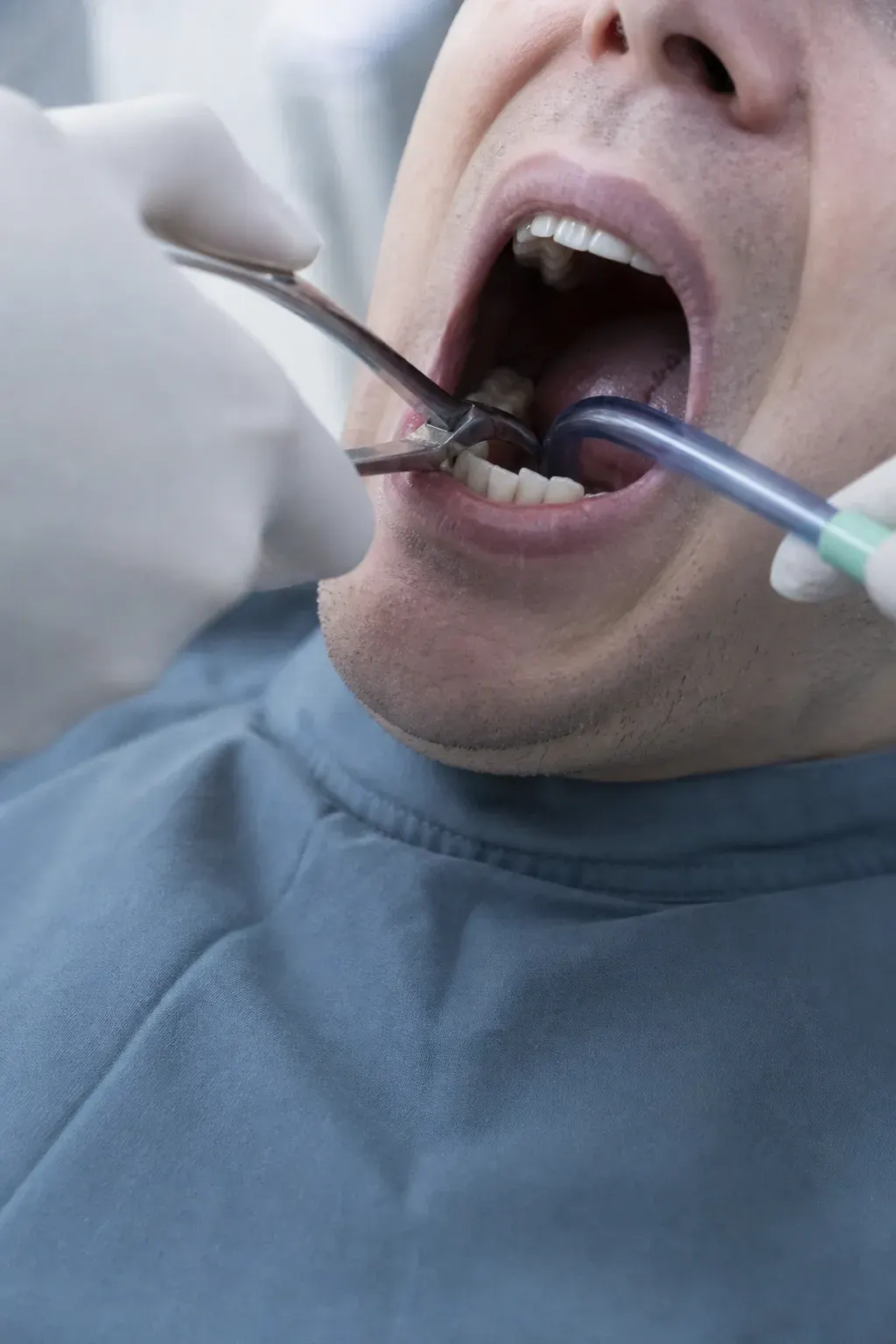
A tooth extraction is the removal of a tooth from its socket in the jawbone. A simple extraction is performed on a tooth fully visible above the gum, while a surgical extraction is used when a tooth is broken at the gumline, has curved roots, or is impacted, and involves raising a small flap and sometimes sectioning the tooth.
After removal, the socket fills with a blood clot that becomes the scaffold for new bone. That bone remodels over several months, and the ridge loses width and height as it does, most rapidly in the first six months. Socket preservation grafting placed at the time of extraction substantially reduces that dimensional loss.
Treatment Timeline:
- Treatment Time:
- 20 to 60 minutes
- First Signs:
- Immediate relief
- Full Effect:
- 3 to 6 months
- Recovery:
- 3 to 7 days
What We Treat
Tooth Extraction Treatment Areas
When Removal Is Necessary
- Unrestorable Decay
- Removes teeth where decay has destroyed too much structure
- Vertical Root Fracture
- Addresses splits that cannot be repaired or sealed
- Advanced Gum Disease
- Removes teeth loosened past saving by bone loss
- Recurrent Infection
- Resolves abscesses that keep returning to the same tooth
- Crowding for Orthodontics
- Creates space where an alignment plan requires it
- Failed Restorations
- Removes teeth where repeated repair is no longer viable
Benefits of a Planned Tooth Extraction
Removal with a plan attached
Tooth Extraction vs. Alternatives
Extraction is the last option, not the first. These are the routes we weigh before recommending removal.
| Treatment | Mechanism | Time | Results | Duration | Downtime | Best For |
|---|---|---|---|---|---|---|
| Tooth Extraction | Surgical or simple removal | 20-60 min | Immediate relief | Permanent | 3-7 days | Teeth that cannot be predictably saved |
| Root Canal by Referral | Infected pulp removed and sealed | 1-2 visits | Days | 10+ years | 1-2 days | Infected teeth with sound remaining structure |
| Crown Lengthening | Exposes more tooth for a restoration | 60-90 min | 6-12 weeks | Permanent | 5-10 days | Fractures and decay below the gum margin |
| Periodontal Treatment | Stabilises supporting bone and tissue | 1-2 visits | 2-6 weeks | Stable with maintenance | 1-3 days | Loose teeth where attachment can still be saved |







Is This Right for You
When Is Tooth Extraction the Right Choice?
Weighing Removal Against Repair
We treat extraction as the option of last resort, taken when the alternatives have a poor prognosis or a worse cost-to-benefit balance. The X-ray, the periodontal chart and the amount of sound structure remaining make the decision, not the level of pain.
Extraction Is Usually Indicated When
- A vertical root fracture runs the length of the root and cannot be sealed
- Decay extends so far below the bone that no restorable margin remains
- Advanced periodontal disease has left the tooth mobile with minimal bone support
- Infection recurs repeatedly despite endodontic treatment
- An orthodontic plan requires space that cannot be created any other way
Alternatives We Consider First
- Root canal therapy, referred to a trusted endodontist, where the tooth is structurally sound
- Crown lengthening, where the problem is access to a restorable margin
- Periodontal treatment, where attachment loss can still be arrested
- A conventional restoration, where enough sound tooth structure remains to hold it
Tell us about anticoagulants, bisphosphonates and other antiresorptive medication, previous jaw radiotherapy, diabetes and immunosuppression before any extraction. Patient guidance on extractions is published by the American Dental Association.
Your Experience
What Happens During a Tooth Extraction
Step-by-Step Process
Planning
Dr. Ogata and Dr. Stock confirm the tooth is unrestorable and agree the replacement plan.
Anaesthetic
Local anaesthetic numbs the tooth and surrounding tissue, with sedation available.
Removal
The tooth is loosened and removed, sectioned first where the roots require it.
Socket Preservation
Graft material is placed into the socket where an implant or bridge is planned.
Aftercare
The site is sutured if needed and you leave with written instructions and a review date.
Risks and Side Effects
What to Know
Common Side Effects After Extraction
Swelling, bruising and soreness for three to seven days is expected, peaking around day two. Minor oozing on the first evening is normal, as is jaw stiffness after a surgical removal. Most patients return to work within a day or two.
Less Common Complications
Dry socket, where the clot is lost and bone is exposed, causes severe pain typically at day three to five and is treated with a medicated dressing. It is far more common in smokers. Infection, prolonged bleeding and, in lower molars, temporary altered sensation from nerve proximity are all recognised risks, and imaging is used to plan around anatomy. Sinus communication is possible with upper molars and is managed at the time.
Safety and Medical History
Antiresorptive medication and previous jaw radiotherapy raise the risk of osteonecrosis and require medical liaison before surgery. Anticoagulants are managed rather than automatically stopped. Smoking substantially increases dry socket and graft failure rates. Patient guidance on extractions is available from the American Dental Association.
Investment
Tooth Extraction Cost in Brookline
Pricing and Payment Options
How Much Does a Tooth Extraction Cost in Brookline?
A simple extraction of a fully erupted tooth is the least expensive, while surgical removal of a broken or impacted tooth takes longer and costs more. Nationally, simple extractions commonly run $150 to $400 and surgical extractions $250 to $700, with socket preservation grafting quoted separately at roughly $400 to $1,200. We give you the figure for removal and for the planned replacement before surgery.
Insurance and Flexible Payment Options
Extractions are generally well covered by dental plans. Grafting and implant replacement have more variable coverage, and we check your specific benefits in advance. Smile Brookline submits claims to all major commercial carriers.
- Cherry - monthly payment plans, apply at pay.withcherry.com/smilebrookline
- Staged planning - extraction and replacement can fall across two benefit years
The Smile Brookline Difference
Why Choose Smile Brookline for Tooth Extractions in Brookline
Beacon Street Since 1992
Dr. Yumi Ogata handles surgical extractions and Dr. Sara Stock, DDS plans the replacement, so the conversation about what fills the space happens before the tooth is removed rather than months later. Socket preservation is offered at the same appointment, because that opportunity does not come back.
Periodontist On Site
Surgical extractions performed here rather than referred out
Graft at Removal
Socket preservation offered in the same appointment
Replacement Discussed First
Implant or bridge planning agreed before surgery
Honest About Saving
We recommend extraction only when the tooth cannot be kept
Tufts Faculty Surgeon
Dr. Ogata is an associate professor of periodontology at Tufts
Fee for Service
Surgical time is not limited by what a plan will reimburse


Explore More
Implant-Supported Dentures
Secure dentures that stay put without adhesive.
- No Adhesive Needed
- Stronger Bite
- Preserves Jawbone
Explore More
Dental Bridges
Fill the gap and restore your bite without surgery.
- No Surgery Needed
- Fixed in Place
- Faster Than Implants
Explore More
Bone Grafting
Rebuild jaw support so your implant can succeed.
- Makes Implants Possible
- Better Implant Survival
- Preserves Facial Contour
Explore More
Bone Grafting
Rebuild jaw support so your implant can succeed.
- Makes Implants Possible
- Better Implant Survival
- Preserves Facial Contour
Common Questions
Frequently Asked Questions About Tooth Extractions
How much does a tooth extraction cost in Brookline, MA?
How long does a tooth extraction take?
Does a tooth extraction hurt?
How long does the socket take to heal?
What should I do about the gap?
What is the difference between a simple and a surgical extraction?
How do I avoid dry socket?
Can men and women of any age have extractions?
Do you remove wisdom teeth?
Will I need antibiotics?
Get Started
Book Your Assessment
References
- Avila-Ortiz G et al., J Dent Res. (2014). Effect of alveolar ridge preservation after tooth extraction: a systematic review and meta-analysis. PMID: 24966231.
- Avila-Ortiz G et al., J Clin Periodontol. (2019). Effect of alveolar ridge preservation interventions following tooth extraction: A systematic review and meta-analysis. PMID: 30623987.
- Canullo L et al., Clin Oral Investig. (2022). Dimensional and histomorphometric evaluation of biomaterials used for alveolar ridge preservation: a systematic review and network meta-analysis. PMID: 34826029.
- American Dental Association MouthHealthy. (2025). Patient guidance on when extraction is indicated and how the socket heals afterwards.