
Crown Lengthening in Brookline, MA
- Treatment Time:
- 60-90 minutes
- Downtime:
- 5-10 days
- Before Crown:
- 6-12 weeks
- Performed By:
- Periodontist

Surgical Preparation
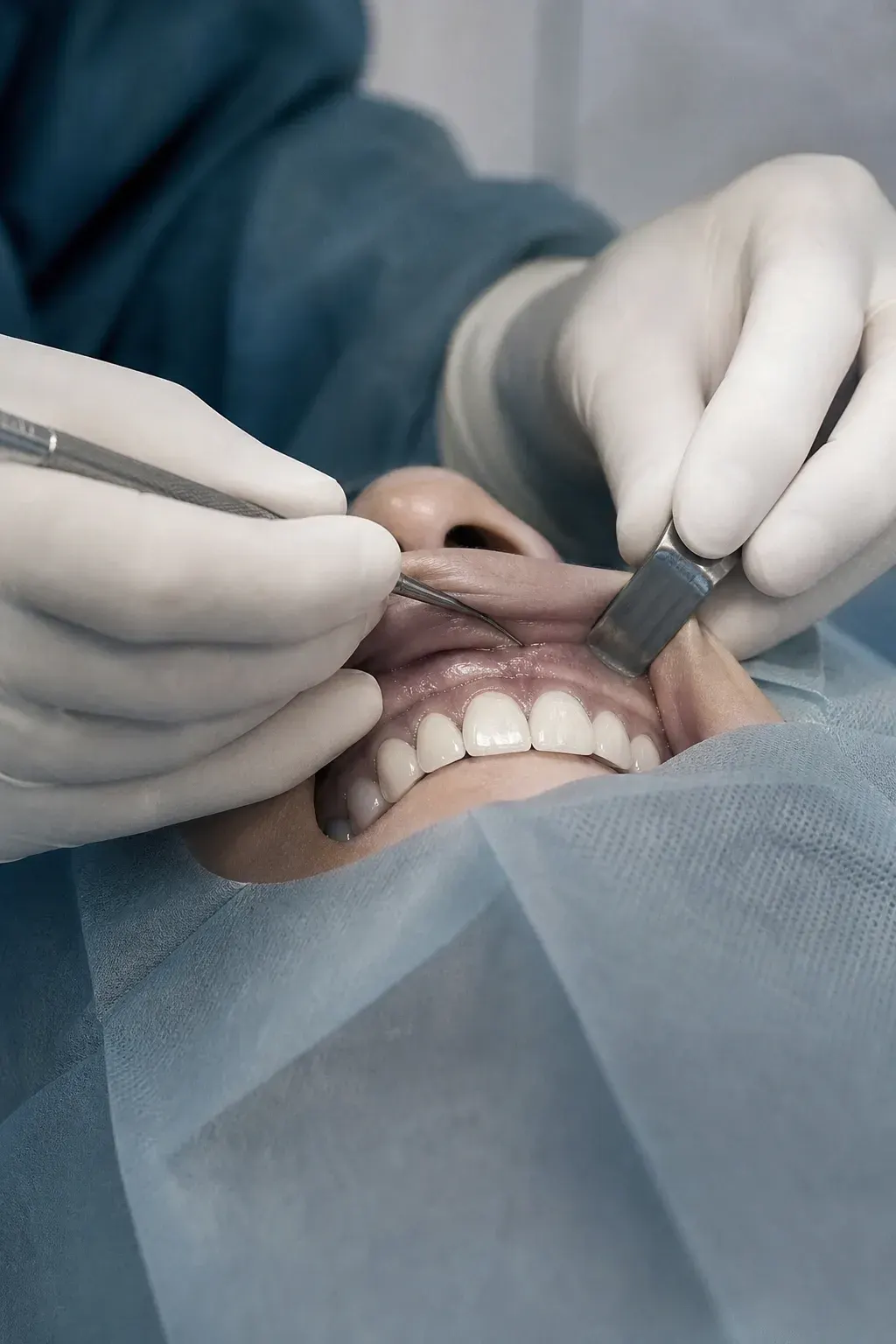
Crown lengthening in Brookline, MA is a surgical procedure that removes a small amount of gum tissue and bone to expose more of the tooth, so a crown or filling has enough sound structure to grip. We treat patients from Coolidge Corner, Brookline Village, Chestnut Hill, Newton, Allston and Brighton before restorative work begins.
Dr. Yumi Ogata, a board-certified periodontist and associate professor of periodontology at Tufts, performs crown lengthening here, and Dr. Sara Stock, DDS plans the restoration that follows. The two are designed together, because the amount of tooth exposed has to match what the final restoration requires.
The Challenge
When a Tooth Needs Crown Lengthening to Be Restored
Understanding Biologic Width
Understanding Your Treatment
What Is Crown Lengthening?
The Science of Supracrestal Attachment
Crown lengthening is a periodontal surgical procedure that exposes additional tooth structure by repositioning gum tissue and removing a measured amount of bone around the tooth. It is performed when a fracture, decay or a previous restoration extends too close to the bone for a new crown or filling to be placed predictably.
The biological requirement is the attachment zone between the bone crest and the base of the gum sulcus, typically around two millimetres. A restoration margin encroaching on this zone provokes chronic inflammation and progressive bone loss. Surgery re-establishes the necessary clearance so the restorative margin can be sealed and maintained.
Treatment Timeline:
- Treatment Time:
- 60 to 90 minutes
- First Signs:
- 1 to 2 weeks
- Full Effect:
- 6 to 12 weeks
- Recovery:
- 5 to 10 days
What We Treat
Crown Lengthening Treatment Areas
When Structure Must Be Exposed
- Subgingival Fractures
- Exposes a fracture line that runs below the gum margin
- Deep Decay
- Uncovers caries extending below the level of the existing tissue
- Short Clinical Crowns
- Provides retention height where too little tooth remains
- Failed Margins
- Allows a new margin to be placed on sound tooth structure
- Biologic Width Violation
- Restores clearance where a restoration sits too close to bone
- Pre-Restorative Access
- Improves access for isolation and impression before a crown
Benefits of Crown Lengthening
Saves teeth otherwise extracted
Crown Lengthening vs. Alternatives
When a margin sits too close to bone, the options are to move the tissue, move the tooth, or replace the tooth.
| Treatment | Mechanism | Time | Results | Duration | Downtime | Best For |
|---|---|---|---|---|---|---|
| Crown Lengthening | Surgical bone and tissue removal | 60-90 min | 6-12 weeks | Permanent | 5-10 days | Fractures and decay below the gum margin |
| Orthodontic Extrusion | Tooth moved coronally with force | 3-6 months | Gradual | Permanent | None | Single front teeth where bone must be preserved |
| Extraction and Implant | Tooth replaced entirely | 3-6 months | Staged | 20+ years | 3-7 days | Teeth with too little sound structure to restore |
| Deep Margin Elevation | Margin raised with bonded material | 30-60 min | Same visit | Case dependent | None | Selected cases with limited subgingival extension |






Is This Right for You
Who Is a Good Candidate for Crown Lengthening?
Deciding Whether a Tooth Is Restorable
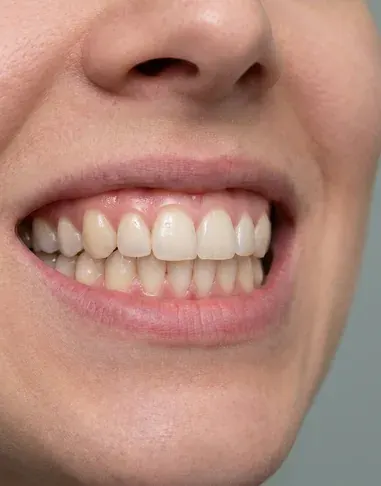
Crown lengthening is indicated when a tooth is worth saving but cannot be restored without exposing more structure. The judgement is whether enough sound root will remain, supported by adequate bone, once the necessary height has been removed.
Ideal Candidates for Crown Lengthening
- Patients with a tooth fractured at or just below the gum margin
- Anyone with decay extending below the level of the existing gum tissue
- Teeth with insufficient clinical height to retain a dental crown
- Patients whose existing restoration margin is causing persistent local inflammation
- People with healthy periodontal status on the neighbouring teeth
Who Should Consider Another Option
- Teeth where removing the required bone would compromise the neighbouring teeth
- Cases where the remaining root would be too short to support a restoration
- Patients with a vertical root fracture, where tooth extraction is the realistic outcome
- Anyone with untreated periodontal disease, which is stabilised before elective surgery
- Patients on antiresorptive medication or with a history of jaw radiotherapy, who need medical review first
Bone removed at surgery does not return, so the amount is planned from the restorative requirement rather than estimated in the chair. General clinical guidance on periodontal surgery is available through the American Dental Association.
Your Experience
What Happens During Crown Lengthening Treatment
Step-by-Step Process
Planning
Dr. Ogata and Dr. Stock agree how much structure the planned restoration requires.
Anaesthetic
Local anaesthetic numbs the tooth and surrounding tissue completely.
Access
A small flap is raised to expose the bone crest around the tooth.
Recontouring
A measured amount of bone is removed to re-establish attachment clearance.
Closure and Healing
The flap is sutured at the new level and the site heals for six to twelve weeks.
Risks and Side Effects
What to Know
Common Crown Lengthening Side Effects
Soreness, swelling and minor bleeding for five to ten days is normal. The treated tooth is often sensitive to cold once additional root surface is exposed, and that usually improves over several weeks. Sutures can feel irritating until removed at one to two weeks.
Expected Changes and Less Common Complications
The tooth will look longer afterwards, and a small dark triangle can appear between it and its neighbour where tissue has been repositioned. Root sensitivity may persist in some patients. Because bone support is reduced by design, mobility can increase slightly, and in rare cases the tooth loosens more than anticipated. Infection and delayed healing are uncommon but possible.
Safety and Case Selection
Bone removal is permanent, and taking too much compromises the tooth or its neighbours. That is why the surgical plan is dictated by the restorative requirement and agreed between Dr. Ogata and Dr. Stock before surgery. Tell us about anticoagulants, antiresorptive medication, diabetes and smoking. Clinical background is available via the American Dental Association.
Investment
Crown Lengthening Cost in Brookline
Pricing and Payment Options
How Much Does Crown Lengthening Cost in Brookline?
Fees depend on how many teeth are involved and whether bone recontouring extends to adjacent teeth. Surgery on a single posterior tooth is straightforward, while a multi-tooth segment takes longer. Nationally, crown lengthening commonly ranges from about $1,000 to $3,000 per tooth or site. The restoration that follows is quoted separately, and both figures are given before surgery so the total is clear.
Insurance and Flexible Payment Options
Crown lengthening performed to make a tooth restorable is a functional procedure, and most dental plans contribute where documentation supports the need. Smile Brookline is fee-for-service and submits claims to all major commercial carriers on your behalf.
- Cherry - monthly payment plans, apply at pay.withcherry.com/smilebrookline
- Staged treatment - surgery and restoration can fall in different benefit years
The Smile Brookline Difference
Why Choose Smile Brookline for Crown Lengthening in Brookline
Beacon Street Since 1992
Dr. Yumi Ogata performs the surgery and Dr. Sara Stock, DDS plans the restoration, in the same practice and from the same records. Crown lengthening removes bone permanently, so the amount taken must be dictated by what the final restoration needs, which is difficult to coordinate across two separate offices.
Board-Certified Periodontist
Dr. Ogata performs all crown lengthening surgery here
Restoratively Driven
Bone removal planned against the crown that will follow
One Set of Records
No referral gap between surgical and restorative phases
Honest Prognosis
We say when a tooth is not worth saving rather than operating
Tufts Faculty Surgeon
Dr. Ogata teaches periodontology at Tufts and treats here
Fee for Service
Surgical time is not limited by what a plan will reimburse


Explore More
Bone Grafting
Rebuild jaw support so your implant can succeed.
- Makes Implants Possible
- Better Implant Survival
- Preserves Facial Contour
Explore More
Tooth Extractions
Gentle removal with a clear plan for what comes next.
- Ends Chronic Pain
- Protects Neighbours
- Socket Preserved
Explore More
Dental Crowns
Durable, natural-looking crowns that protect and rebuild damaged teeth.
- Full Protection
- Natural Appearance
- Proven Longevity
Explore More
Same-Day Crowns
CEREC technology that designs, mills and places your crown in one visit.
- No Second Visit
- No Temporary Crown
- Numb Once
Common Questions
Frequently Asked Questions About Crown Lengthening
How much does crown lengthening cost in Brookline, MA?
How long does crown lengthening take?
Does crown lengthening hurt?
When can I have my crown fitted?
How long do the results last?
What is the difference between crown lengthening and gum contouring?
Can men and women of any age have crown lengthening?
Will the tooth look longer afterwards?
Is extraction a better option?
Will my tooth feel loose after surgery?
Get Started
Book Your Surgical Assessment
References
- Qali M et al., Cureus. (2024). Clinical Considerations for Crown Lengthening: A Comprehensive Review. PMID: 39628744.
- Al-Sowygh ZH et al., J Prosthodont. (2019). Does Surgical Crown Lengthening Procedure Produce Stable Clinical Outcomes for Restorative Treatment? A Meta-Analysis. PMID: 29876998.
- Katariya C et al., Cureus. (2024). Biologic Width Following Different Crown Lengthening Procedures: A Six-Month Follow-Up Study. PMID: 38817532.
- American Dental Association. (2025). Oral Health Topics library covering periodontal surgery preceding restorative treatment.