
Gummy Smile Treatment in Brookline, MA
- Common In:
- Adults 18-45
- Primary Causes:
- Tissue, lip, jaw growth
- Treatment Time:
- 10-90 minutes
- Results:
- Days to 8 weeks

Introduction
Balance the frame around your teeth
Understanding Your Smile
What Is a Gummy Smile?
Recognising the Signs
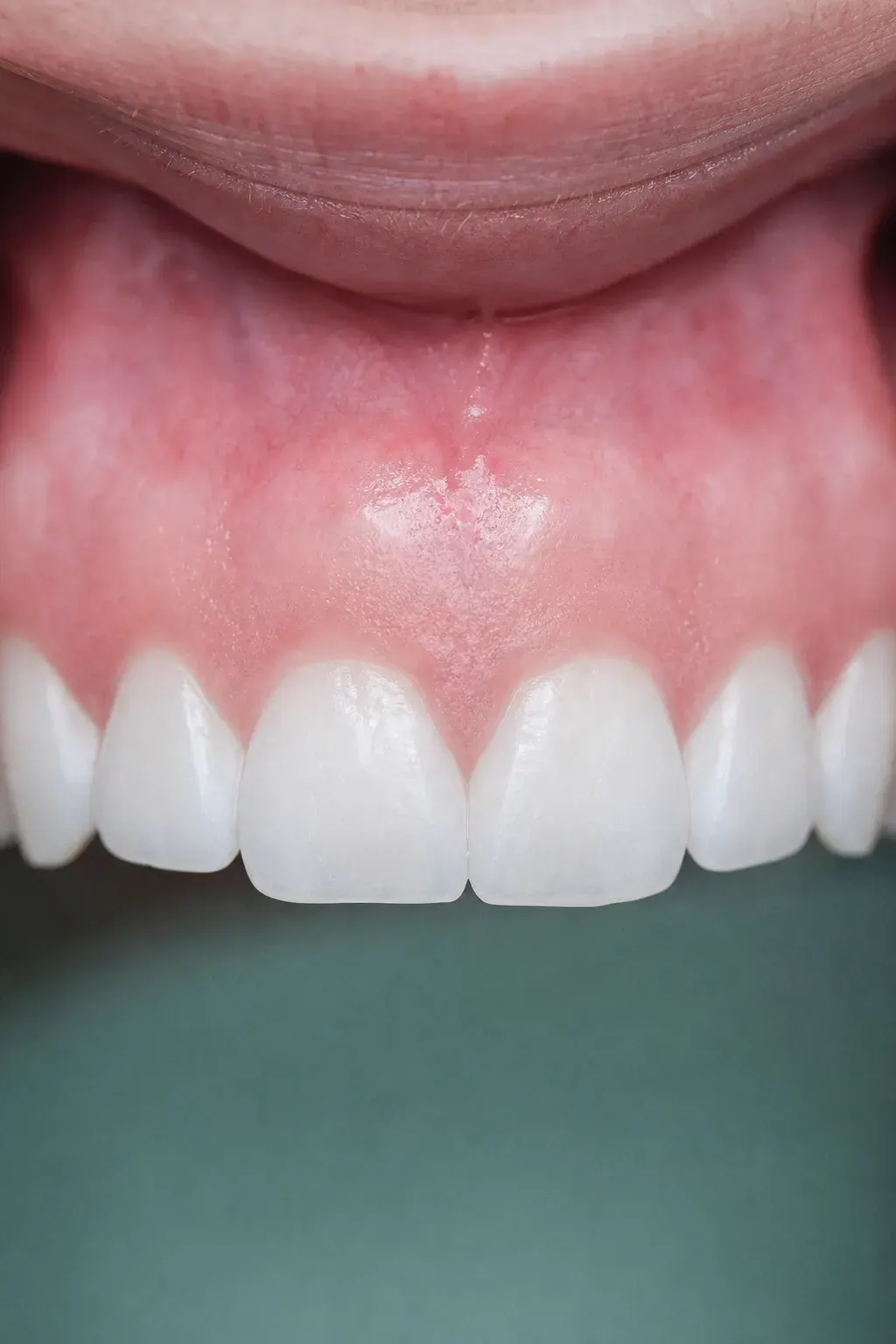
A gummy smile, clinically excessive gingival display, is generally defined as more than three millimetres of gum visible above the upper teeth when smiling fully. It is a proportion issue rather than a disease, and it has several distinct causes that look identical from the outside.
Most patients describe it as teeth that look short rather than gums that look large. Many have learned to smile with the upper lip held down, and only notice how much they were compensating when they see an unguarded photograph.
Because the causes differ, so do the treatments. Reviews of gummy smile diagnosis set out several distinct aetiologies, and identifying which applies is what separates a good result from a disappointing one.
Why a Gummy Smile Develops
Understanding the Root Causes
01The Science
The most common dental cause is altered passive eruption. During normal development, gum tissue recedes to sit just above the enamel margin as teeth erupt. When that migration does not complete, the tissue stays low, covering part of the crown, so teeth look short while their actual dimensions are normal.
A hypermobile upper lip is a muscular cause. The lip elevates further than average when smiling, revealing more gum regardless of where the tissue sits. Because the anatomy of the teeth is normal, removing tissue does not address it, and Botox to reduce lip elevation is the more logical treatment.
Vertical maxillary excess is skeletal: the upper jaw has grown further vertically than average, so the whole dentition sits lower relative to the lip. This is the cause that cosmetic procedures cannot correct, and honest diagnosis matters most here.
02Deeper Understanding
Tooth Proportion and the Gum Line
How Zenith Position Shapes a Smile
A balanced smile follows predictable proportions. Central incisors are usually around ten to eleven millimetres long with a width roughly eighty percent of that, and the highest point of gum on each tooth, the zenith, follows a consistent pattern across the arch.
When tissue covers part of the crown, that ratio shifts and teeth read as square rather than rectangular. Restoring the proportion through cosmetic gum contouring often changes the appearance of the smile more than whitening or veneers would, because it corrects the frame rather than the picture.
Where the bone crest sits too close to the enamel margin, tissue removal alone rebounds within months. In those cases the bone is recontoured at the same time, which is why a periodontist assesses the case before any elective reshaping.
Contributing Factors
What Causes Excessive Gum Display?
Identifying Your Triggers
Several distinct mechanisms produce the same appearance, and patients often have more than one contributing at once.
- Altered Passive Eruption
- Gum tissue never migrated to its adult position, so it still covers part of the crown.
- Hypermobile Upper Lip
- The lip elevates further than average when smiling, exposing more gum than usual.
- Vertical Maxillary Excess
- The upper jaw has grown further vertically, positioning the whole dentition lower.
- Short Clinical Crowns
- Teeth worn down by grinding appear shorter, exaggerating the proportion of gum shown.
- Gingival Overgrowth
- Certain medications and chronic inflammation thicken and enlarge the gum tissue.
- Uneven Gum Margins
- Asymmetry between adjacent teeth draws attention even when overall display is modest.
Is This You?
You May Have a Gummy Smile If...
Excessive gingival display is a matter of proportion and of how much it bothers you. These are the observations patients bring to a consultation.
Gum Above the Teeth
More than a few millimetres of gum shows above the upper teeth when you smile fully.
Short-Looking Teeth
Your teeth look square or stubby rather than rectangular, even though they are not worn.
A Guarded Smile
You have learned to hold your upper lip down or smile with your mouth closed.
Uneven Gum Line
The margin sits at different heights across the front teeth, drawing the eye.
Photograph Avoidance
You dislike unguarded photographs specifically because of how much gum appears.
Asymmetry When Laughing
One side of the smile shows noticeably more gum than the other.
Treatment Options Comparison
Compare the treatments we offer for a gummy smile, matched to whether tissue, bone, lip position or tooth proportion is the cause.
| Treatment | Best For | Session Time | Results Timeline | Maintenance |
|---|---|---|---|---|
| Botox Cosmetic | A hypermobile upper lip | 10-20 min | 3-7 days | Every 3-4 months |
| Gum Contouring | Excess tissue and uneven margins | 45-90 min | 4-8 weeks | Long term |
| Crown Lengthening | Cases needing bone recontouring | 60-90 min | 6-12 weeks | Permanent |
| Dental Veneers | Restoring proportion after reshaping | 2 visits | 2-3 weeks | Every 10-15 years |
Why Smile Brookline
Why Choose Smile Brookline for Gummy Smile Care in Brookline, MA
Expert Care in Brookline
At Smile Brookline, Dr. Sara Stock, DDS assesses lip dynamics and tooth proportion while Dr. Yumi Ogata, a board-certified periodontist, evaluates the tissue and bone. Between them, the actual cause is identified before any treatment is proposed.
Four Causes Distinguished
Tissue, bone, lip mobility and skeletal proportion are assessed separately.
Periodontist On Site
Dr. Ogata handles cases where the bone crest must be recontoured for stability.
Multiple Treatment Routes
Contouring, crown lengthening and Botox for lip position are all available here.
Honest When We Cannot Help
Skeletal cases are identified rather than treated with a procedure that will not work.
Tufts Faculty Surgeon
Dr. Ogata teaches periodontology at Tufts and is a visiting professor in Tokyo.
Result Planned As One
Tissue work and any veneers that follow are sequenced together, not treated apart.




Explore More
Dental Veneers
Custom porcelain veneers that correct shape, shade and spacing in two visits.
- Several Fixes at Once
- Stain Resistant
- Preview Before You Commit
Explore More
Take-Home Teeth Whitening
Custom professional trays for a brighter smile on your schedule.
- Even Coverage
- Less Sensitivity
- You Control the Pace
Explore More
Smile Makeover
A complete plan that combines treatments into one coordinated result.
- One Coherent Result
- Correct Sequence
- Preview First
Explore More
Gum Disease Treatment
Stop bleeding, swelling and bone loss before you lose a tooth.
- Stops Bone Loss
- Bleeding Resolves
- Fresher Breath
Your Questions
Frequently Asked Questions
Can a gummy smile be corrected permanently?
How do I know which treatment is right for me?
How quickly will I see a change?
Is a gummy smile a health problem?
Can Botox fix a gummy smile?
What can I do at home?
Can multiple treatments be combined?
When should I see a dentist about it?
Get Started
Schedule Your Cosmetic Consultation
Scientific References
- Tatakis DN et al., J Indian Soc Periodontol. (2025). From etiology to intervention: 50 years of progress in gummy smile research and treatment. PMID: 41450808.
- Dym H et al., Dent Clin North Am. (2020). Diagnosis and Treatment Approaches to a "Gummy Smile". PMID: 32111273.
- Mele M et al., Periodontol 2000. (2018). Esthetic treatment of altered passive eruption. PMID: 29504162.
- American Dental Association. (2025). Oral Health Topics library covering gingival esthetics and periodontal soft-tissue procedures.