
Night Guards in Brookline, MA
- Treatment Time:
- 2 visits
- Protection:
- From first night
- Results Last:
- 3-5 years
- Material:
- Custom hard acrylic
Custom Protection
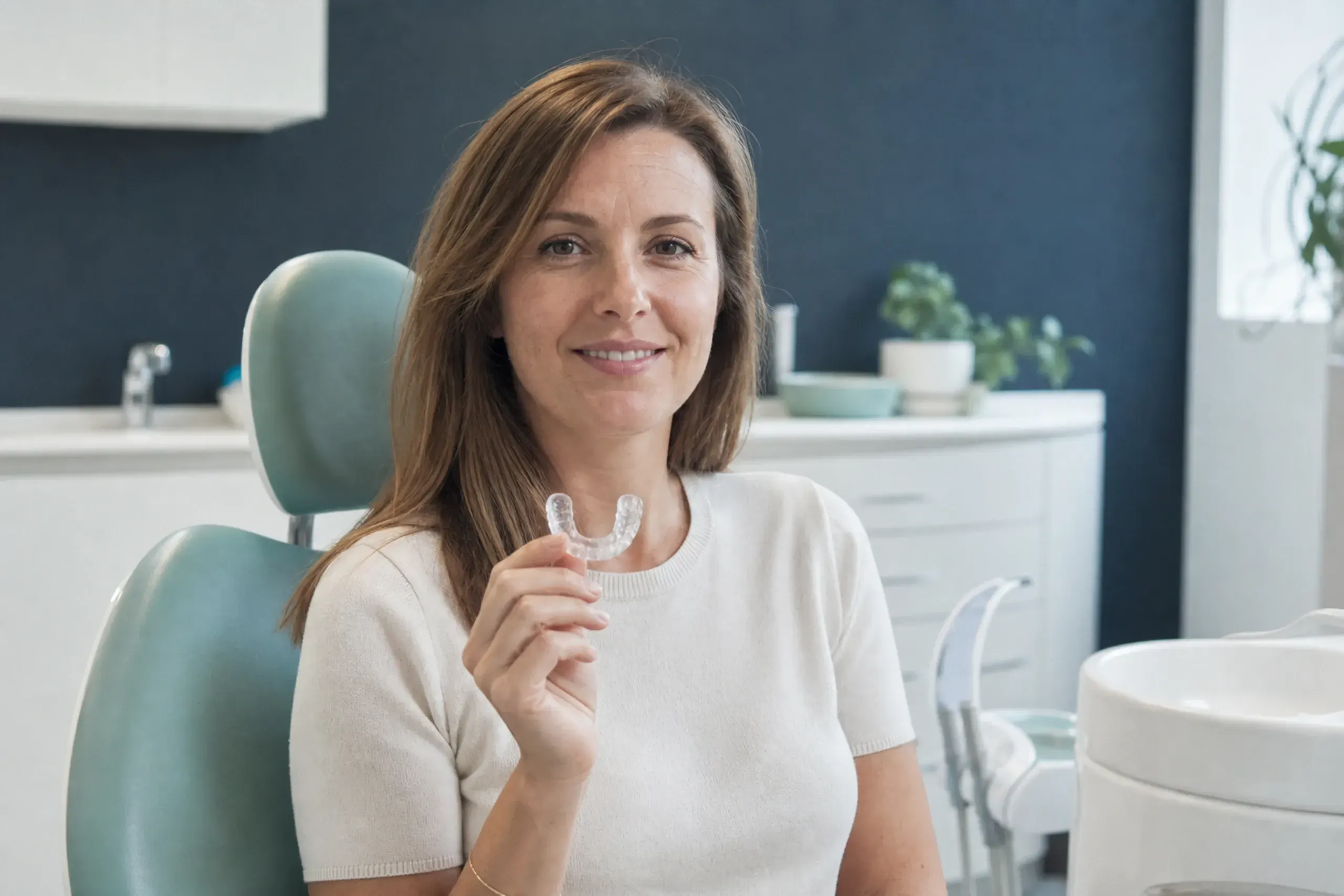
Night guards in Brookline, MA are custom occlusal splints made from a scan of your own teeth, worn during sleep to absorb grinding forces and take pressure off the jaw joint. We make them for patients from Coolidge Corner, Brookline Village, Chestnut Hill, Newton, Allston and Brighton.
Dr. Sara Stock, DDS designs splints around the bite rather than fitting a generic tray, and asks why the grinding is happening at all. In an airway-focused practice, that question matters: sleep bruxism is often associated with sleep-disordered breathing rather than being a simple stress habit.
The Challenge
Why a Custom Night Guard Beats a Boil-and-Bite Tray
Understanding Occlusal Protection
Understanding Your Treatment
What Are Night Guards?
The Science of Occlusal Splints
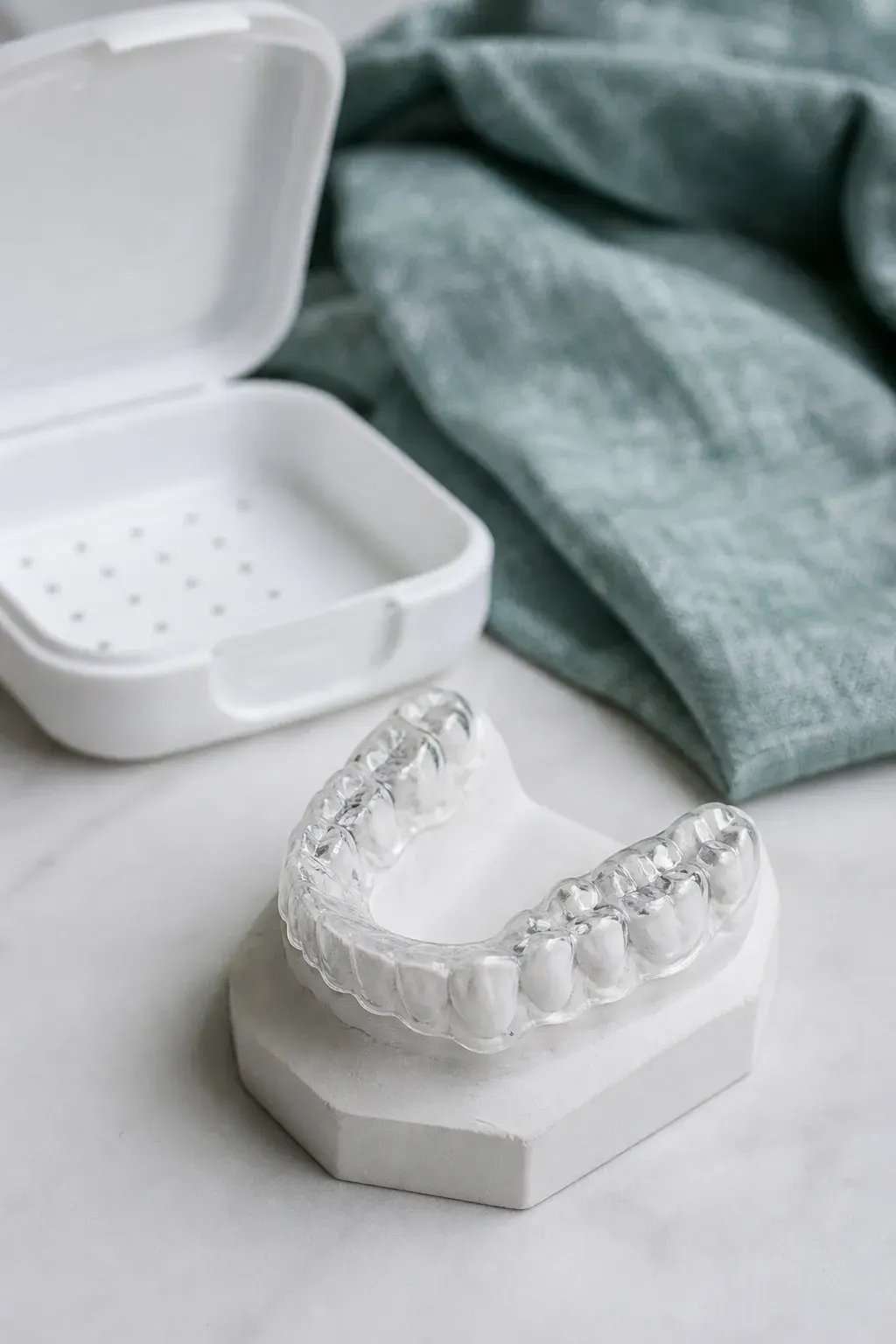
A night guard, clinically an occlusal splint, is a custom-fitted appliance worn over the upper or lower teeth during sleep. It protects enamel and restorations from the forces generated during bruxism, and provides an even contact surface that alters how the jaw muscles engage while you sleep.
Splints are made from a digital scan and fabricated in hard acrylic, soft material or a dual-laminate combination depending on the severity of grinding and your comfort. Hard splints are the most durable and best studied for bruxism. A guard does not stop the brain from initiating grinding, but it changes what those forces land on.
Treatment Timeline:
- Treatment Time:
- 2 visits
- First Signs:
- First night
- Full Effect:
- 2 to 4 weeks
- Recovery:
- None
What We Treat
Night Guard Treatment Areas
What a Splint Protects
- Enamel Wear
- Stops the flattening of canine tips and biting edges
- Cracked Teeth
- Reduces the force that propagates cracks through molars
- Damaged Restorations
- Protects crowns, veneers and fillings from grinding fracture
- Morning Jaw Soreness
- Eases the muscle ache that greets clenchers on waking
- Temple Headaches
- Reduces tension headaches linked to overnight clenching
- Joint Loading
- Redistributes force away from a strained jaw joint
Benefits of a Custom Night Guard
Protection that actually fits
Night Guards vs. Alternatives
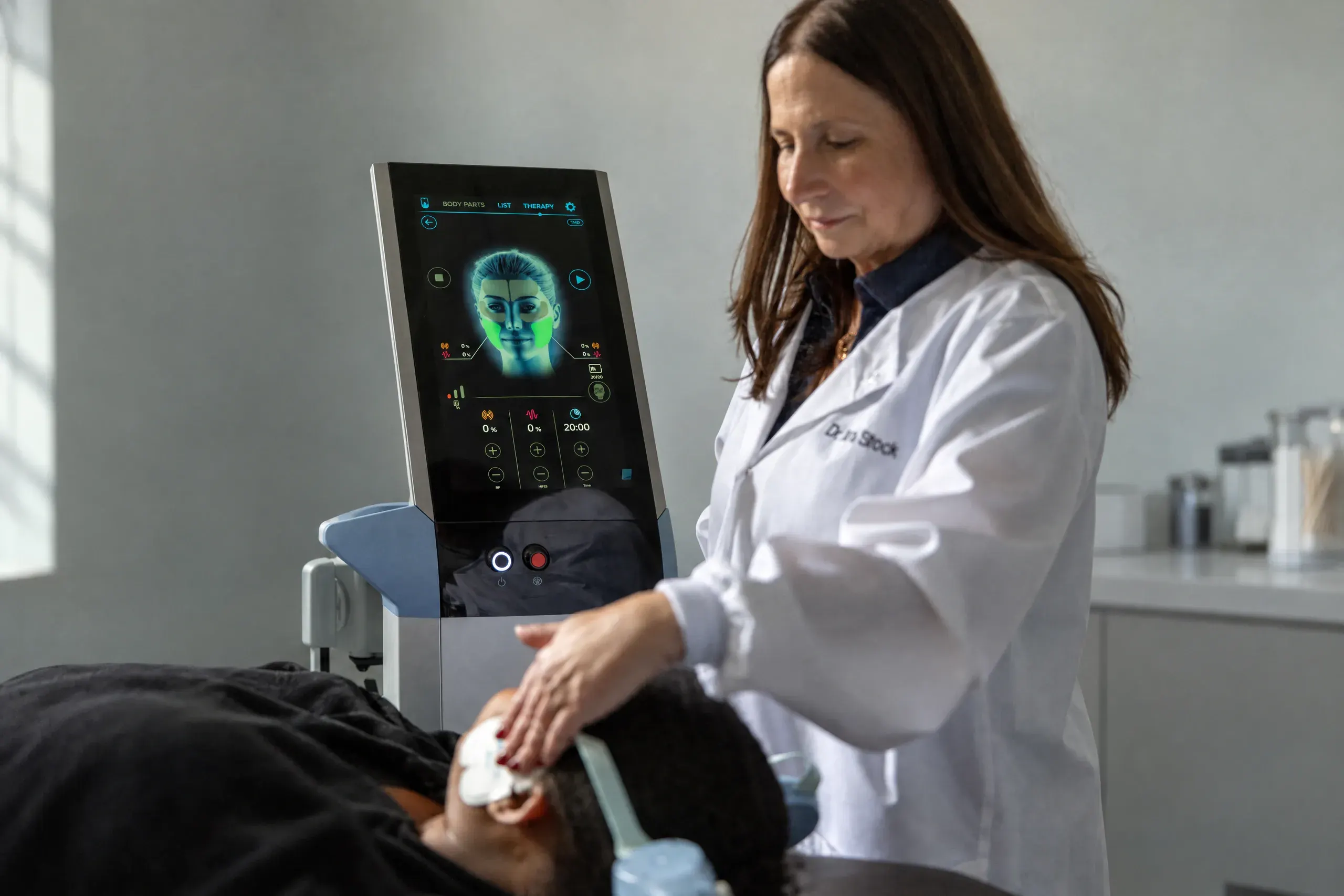
A splint protects teeth. Reducing the grinding itself needs a different approach, and the two work well together. Where the muscles around the joint stay stiff, <a href="/services/tmj-treatment/emvital/">EMVITAL laser therapy</a> can be added alongside the guard.
| Treatment | Mechanism | Time | Results | Duration | Downtime | Best For |
|---|---|---|---|---|---|---|
| Custom Occlusal Splint | Even contact surface over the teeth | 2 visits | First night | 3-5 years | None | Protecting enamel and restorations from grinding |
| Boil-and-Bite Guard | Generic softened tray | Same day | First night | 6-12 months | None | Short-term stopgap only |
| Botox for TMJ | Reduces muscle contraction force | 15-20 min | 5-7 days | 3-4 months | None | Muscle pain and heavy clenching force |
| Sleep Apnea Treatment | Opens the airway during sleep | 2-3 visits | 1-2 weeks | Nightly wear | None | Grinding driven by airway collapse |


Is This Right for You
Who Is a Good Candidate for a Night Guard?
Recognising Grinding Damage
Most patients who grind benefit from a splint, and the sooner it is worn the more enamel survives. The examination looks for wear facets, cracks, muscle tenderness and the pattern of contact across the arch.
Ideal Candidates for a Custom Night Guard
- Patients with flattened canine tips or worn biting edges on the front teeth
- Anyone waking with jaw soreness, temple headaches or tooth sensitivity
- Patients with crowns, veneers or implants that grinding forces could fracture
- People whose partner reports audible grinding during sleep
- Patients with cracked or chipped teeth and no other obvious cause
Who Needs Something Else Considered
- Patients with witnessed pauses in breathing or heavy snoring, who should be assessed for sleep apnea treatment first
- Anyone with severe muscular jaw pain, where Botox for jaw clenching may be added
- Patients with active decay or gum disease, which is treated before a splint is made
- Children, whose grinding is common, usually self-limiting, and often airway-related
A guard protects teeth without addressing why the grinding occurs, which is an important distinction rather than a criticism. Patient guidance on bruxism is published by the American Dental Association.
Your Experience
What Happens During Night Guard Treatment
Step-by-Step Process
Examination
Dr. Stock records wear facets, muscle tenderness, joint sounds and your contact pattern.
Digital Scan
An intraoral scan captures both arches and the way they meet, with no impression tray.
Fabrication
The splint is made in hard acrylic or dual-laminate material to suit your grinding pattern.
Fitting
The guard is seated and the contacts adjusted so force distributes evenly across the arch.
Review
We check comfort, wear pattern and symptom change a few weeks later.
Risks and Side Effects
What to Know
Common Night Guard Side Effects
Increased salivation and a feeling of bulk during the first week are normal, as is mild tooth tenderness on waking while the muscles adapt. Most patients are comfortable within seven to ten days and stop noticing the splint entirely.
Less Common Effects
A poorly fitting or unadjusted guard can create uneven contact and worsen jaw symptoms, which is the main risk of pharmacy trays. Soft guards occasionally encourage more chewing activity in some patients rather than less. Long-term wear can produce small occlusal changes, which is one reason the fit is reviewed at hygiene appointments rather than left for years.
Safety and the Underlying Cause
A splint protects teeth but does not stop the brain from initiating grinding. Where bruxism is linked to sleep-disordered breathing, protecting the teeth while leaving the airway unaddressed misses the more important problem, and we screen for that. Guidance on bruxism is published by the American Dental Association.
Investment
Night Guard Cost in Brookline
Pricing and Payment Options
How Much Does a Custom Night Guard Cost in Brookline?
Cost depends on the material and the design. A hard acrylic full-arch splint is the most durable and best supported for bruxism, while dual-laminate designs suit patients who find hard acrylic uncomfortable. Nationally, custom night guards commonly range from about $400 to $900, compared with $20 to $60 for a pharmacy tray that typically lasts months rather than years. We quote yours after the examination.
Insurance and Flexible Payment Options
Many dental plans contribute toward occlusal guards where bruxism and wear are documented, usually once every few years. Smile Brookline submits claims to all major commercial carriers on your behalf.
- Cherry - monthly payment plans, apply at pay.withcherry.com/smilebrookline
- HSA and FSA funds - accepted for custom occlusal appliances
The Smile Brookline Difference
Why Choose Smile Brookline for Night Guards in Brookline
Beacon Street Since 1992
Dr. Sara Stock, DDS adjusts every splint to the bite rather than handing over a tray, and asks what is driving the grinding. Because this is an airway-focused practice, patients whose bruxism is linked to disturbed breathing get that identified rather than simply protected against for the next decade.
Adjusted in the Chair
Contacts refined so the splint seats evenly, not just tightly
Material Matched
Hard, soft or dual-laminate chosen for your grinding pattern
Airway Screened
We check whether disturbed breathing is driving the bruxism
Other Options Available
Botox and Emvital therapy offered when a splint is not enough
Certified Vivos Provider
Airway therapy available when breathing drives the grinding
Fee for Service
Material and chair time chosen for the grinding, not the plan


Explore More
Botox for TMJ
Relax overworked jaw muscles to stop clenching and grinding.
- Treats the Cause
- Protects Restorations
- Fewer Headaches
Explore More
Emface TMJ
Needle-free muscle therapy for jaw tension, clenching and TMJ pain.
- No Needles
- No Medication
- No Downtime
Explore More
Emvital
Hands-free laser therapy for jaw pain, stiffness and muscle tension.
- Hands-Free
- No Needles
- No Downtime
Explore More
Sleep Apnea Treatment
A comfortable alternative to CPAP that treats the airway itself.
- No Mask or Hose
- Genuinely Portable
- Higher Adherence
Common Questions
Frequently Asked Questions About Night Guards
How much does a custom night guard cost in Brookline, MA?
How long does it take to get a night guard?
Does wearing a night guard hurt?
How long do night guards last?
Will a night guard stop me grinding?
What is the difference between a night guard and a mouthguard?
Can men and women of any age wear a night guard?
Are pharmacy night guards any good?
Should the guard go on the top or bottom teeth?
Could my grinding be caused by sleep apnea?
Get Started
Book Your Night Guard Fitting
References
- Chisini LA et al., J Dent. (2024). Occlusal splint or botulinum toxin-a for jaw muscle pain treatment in probable sleep bruxism: A randomized controlled trial. PMID: 39510242.
- Minakuchi H et al., Jpn Dent Sci Rev. (2022). Managements of sleep bruxism in adult: A systematic review. PMID: 35356038.
- da Costa Lopes AJ et al., Sleep Breath. (2020). Is there an association between sleep bruxism and obstructive sleep apnea syndrome? A systematic review. PMID: 31628624.
- American Dental Association MouthHealthy. (2025). Patient guidance on bruxism, its consequences for enamel, and the role of a custom night guard.