
Snoring Treatment in Brookline, MA
- Common In:
- Adults 30+ and children
- Primary Causes:
- Narrow airway, position, tone
- Treatment Time:
- 2-3 visits
- Results:
- 1-2 weeks

Introduction
Find out what is causing it
Understanding Your Airway
What Causes Snoring?
Recognising the Signs
Snoring is the sound of turbulent airflow vibrating the soft tissues of the upper airway during sleep. It happens when the passage narrows enough for air to accelerate through it, most often at the level of the soft palate, the tongue base or both.
For some people it is an occasional nuisance after a late drink. For others it is nightly, loud enough to send a partner to another room, and accompanied by waking unrefreshed no matter how many hours were spent in bed.
The distinction that matters is whether the airway is merely narrowing or actually collapsing. Research in dental patient populations has examined how common snoring and apnea symptoms are, and the two sit on the same spectrum.
Why Snoring Happens
Understanding the Root Causes
01The Science
During sleep, the muscles holding the upper airway open relax. In a passage that is already narrow, that relaxation allows the walls to approach each other, and air moving through the reduced space vibrates the soft palate and pharyngeal tissue. The narrower the passage, the louder the result.
Anatomy sets the baseline. A narrow maxillary arch, a low tongue posture, enlarged tonsils, nasal obstruction and a recessed lower jaw all reduce the space available. These are the same factors that drive obstructive sleep apnea, and they are why sleep apnea treatment without CPAP uses appliances that reposition the jaw or widen the arch.
Everything that relaxes muscle tone worsens it: alcohol in the evening, sedatives, sleeping on the back and nasal congestion. Weight gain adds soft tissue around the pharynx. None of these create the underlying anatomy, but each pushes a borderline airway over the threshold.
02Deeper Understanding
When Snoring Signals Sleep Apnea
How to Tell the Difference
Primary snoring involves vibration without meaningful airflow restriction. Obstructive sleep apnea involves repeated partial or complete collapse, each event ending in a brief arousal that fragments sleep and drops blood oxygen. Both sound similar from the next room, which is exactly the problem.
The signs that point toward apnea are witnessed pauses in breathing, gasping or choking at night, waking unrefreshed after adequate hours, daytime sleepiness and morning headaches. Untreated apnea carries recognised cardiovascular consequences, so it is not a condition to treat as a snoring nuisance.
A sleep study is what separates the two, and no examination in a dental chair can substitute for one. European respiratory guidance sets out where non-CPAP therapies including oral appliances fit into treatment, and we work alongside your physician rather than around them.
Contributing Factors
What Makes Snoring Worse?
Identifying Your Triggers
Several factors narrow the airway or relax the muscles holding it open, and most patients who snore have more than one.
- Narrow Upper Arch
- A constricted maxilla reduces both nasal airflow and the space available to the tongue.
- Sleeping on Your Back
- Gravity allows the tongue and soft palate to fall backward into the airway.
- Alcohol Before Bed
- Evening alcohol relaxes the pharyngeal muscles that normally hold the airway open.
- Nasal Obstruction
- Congestion, deviation or allergy forces mouth breathing, which worsens collapse.
- Weight Gain
- Additional soft tissue around the pharynx narrows the passage during sleep.
- Enlarged Tonsils
- Tonsillar or adenoidal tissue physically reduces the airway, particularly in children.
Is This You?
You May Need Snoring Treatment If...
Snoring that is loud, nightly or accompanied by any of these signs deserves assessment rather than earplugs for your partner.
Nightly Loud Snoring
It happens most nights and is loud enough to disturb someone else in the room.
Witnessed Pauses
A partner has noticed you stop breathing, gasp or choke during the night.
Waking Unrefreshed
You sleep a full night and still wake feeling as though you barely slept.
Daytime Sleepiness
You fight drowsiness in meetings, while reading or, most concerningly, while driving.
Morning Headaches
Headaches are present on waking and ease through the first hours of the day.
Nighttime Grinding
You also grind or clench, which frequently accompanies disturbed breathing.
Treatment Options Comparison
Compare the treatments we offer for snoring and disrupted breathing, for adults and for children.
| Treatment | Best For | Session Time | Results Timeline | Maintenance |
|---|---|---|---|---|
| Night Guards | Grinding that accompanies snoring | 2 visits | First night | Replace every 3-5 years |
| Sleep Apnea Treatment | Adults with snoring and apnea | 2-3 visits | 1-2 weeks | Nightly wear |
| Pediatric Airway | Children aged 3 to 12 who snore | 12-24 months | 2-3 months | Reviewed every few months |
Why Smile Brookline
Why Choose Smile Brookline for Snoring Care in Brookline, MA
Expert Care in Brookline
At Smile Brookline, Dr. Sara Stock, DDS is a certified Vivos provider and airway is the organising idea of the practice. Snoring is assessed as an airway finding rather than a noise complaint, for adults and for children.
Airway-Focused Practice
Breathing, sleep and jaw development are assessed as one connected system.
Certified Vivos Provider
Dr. Stock is trained in Vivos therapy for both adults and children aged 3 to 12.
Adults and Children
Separate pathways for adult apnea and pediatric airway development.
Medical Coordination
We work with your physician and insist on a sleep study before treating apnea.
Grinding Screened With It
Night-time clenching is checked alongside snoring, since the two often travel together.
Appliances Fitted Here
Oral appliances are made, fitted and adjusted in this practice rather than referred out.

Explore More
Sleep Apnea Treatment
A comfortable alternative to CPAP that treats the airway itself.
- No Mask or Hose
- Genuinely Portable
- Higher Adherence
Explore More
Pediatric Airway
Airway treatment improves your child's sleep quality and overall health!
- Works With Growth
- No Mask at Night
- Nasal Breathing Restored
Explore More
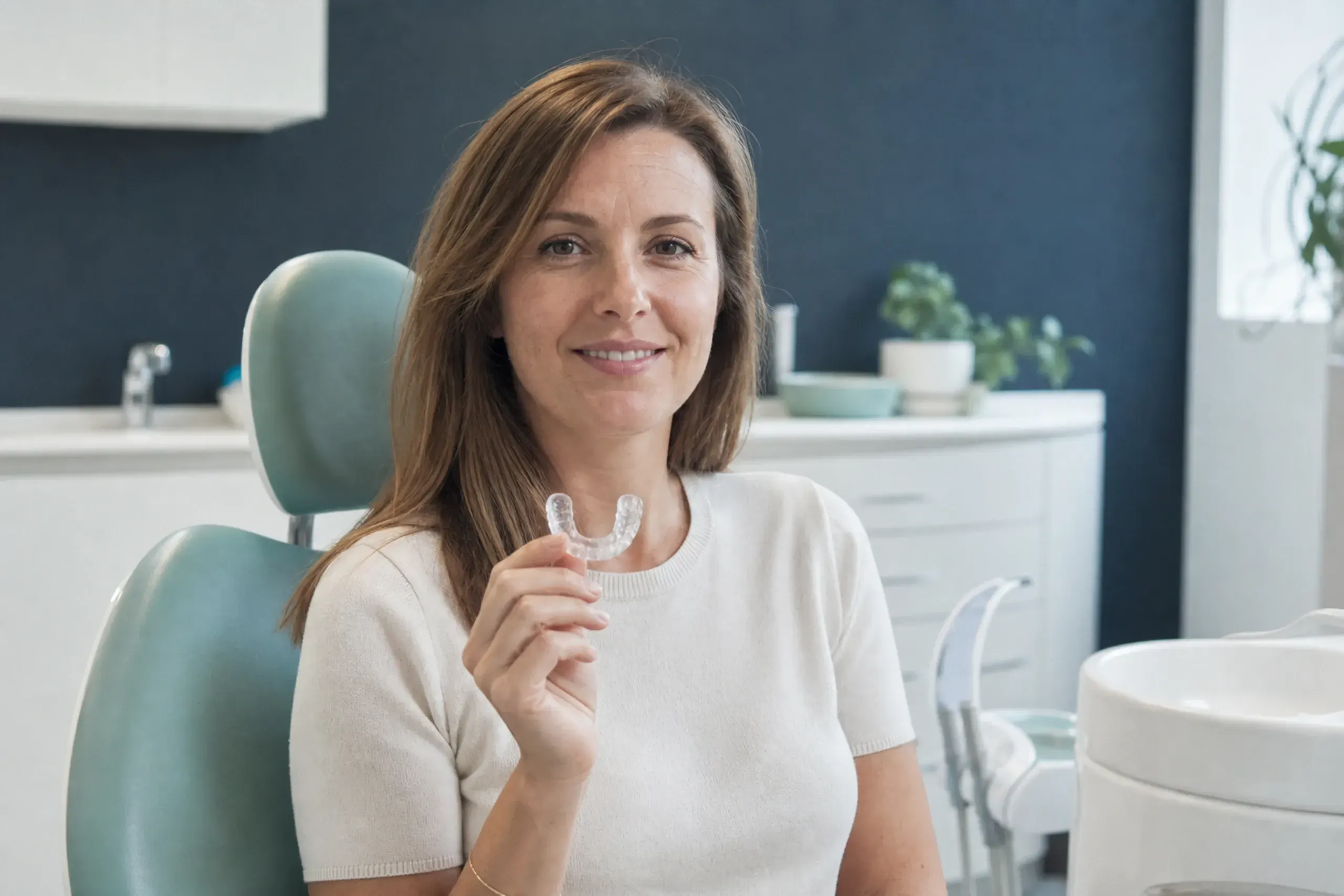
Night Guards
Custom occlusal splints that protect your teeth and ease jaw tension while you sleep.
- Precise Fit
- Protects Investment
- Thin and Comfortable
Explore More
Night Guards
Custom occlusal splints that protect your teeth and ease jaw tension while you sleep.
- Precise Fit
- Protects Investment
- Thin and Comfortable
Your Questions
Frequently Asked Questions
Can I stop snoring from getting worse?
How do I know whether it is just snoring or sleep apnea?
How quickly will treatment work?
Is snoring normal as I get older?
Can nasal congestion cause snoring?
What can I do at home?
Can children snore for the same reasons?
When should I see someone about snoring?
Get Started
Schedule Your Airway Consultation
Scientific References
- Al-Jewair TS et al., Saudi Med J. (2016). Prevalence and risks of habitual snoring and obstructive sleep apnea symptoms in adult dental patients. PMID: 26837402.
- Ou YH et al., J Am Coll Cardiol. (2024). Mandibular Advancement vs CPAP for Blood Pressure Reduction in Patients With Obstructive Sleep Apnea. PMID: 38588926.
- Randerath W et al., Eur Respir Rev. (2021). European Respiratory Society guideline on non-CPAP therapies for obstructive sleep apnoea. PMID: 34853097.
- National Heart, Lung, and Blood Institute. (2024). Federal overview of obstructive sleep apnea, including snoring as its most common warning sign.