
Bone Grafting in Brookline, MA
- Treatment Time:
- 60-90 minutes
- Healing:
- 4-9 months
- Downtime:
- 5-10 days
- Performed By:
- Periodontist
Surgical Preparation
Bone grafting in Brookline, MA rebuilds jaw bone that has resorbed after tooth loss, creating the volume an implant needs to anchor properly. A sinus lift does the same in the upper back jaw, where the sinus floor sits too low. We treat patients from Coolidge Corner, Brookline Village, Chestnut Hill, Newton and Brighton.
Dr. Yumi Ogata, a board-certified periodontist and associate professor of periodontology at Tufts, performs grafting and sinus augmentation in this practice. Her clinical research focuses on hard tissue regeneration, including guided bone regeneration and ridge preservation, and she works directly with Dr. Sara Stock, DDS on the restorative plan.
The Challenge
Why Bone Grafting Comes Before an Implant
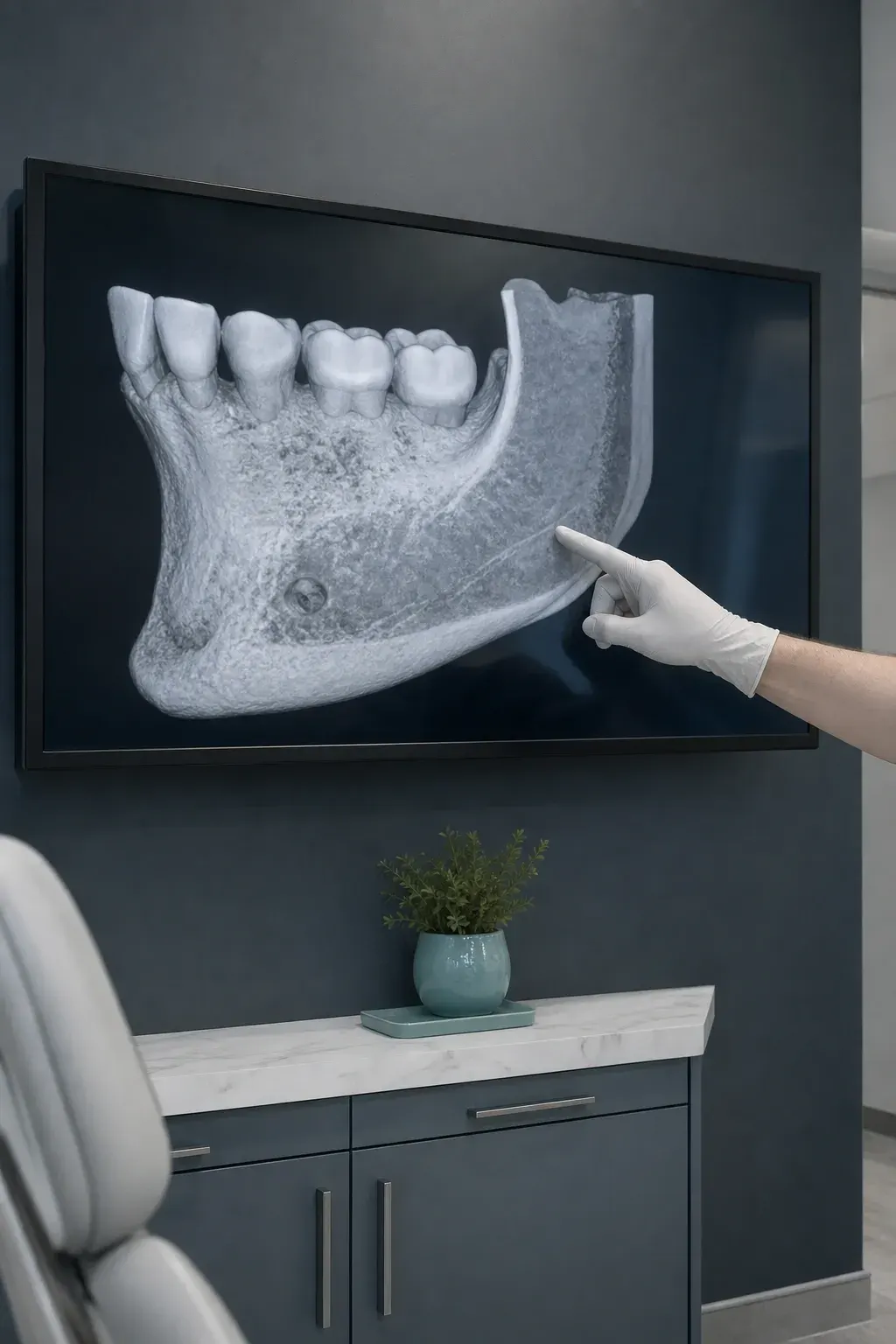
Understanding Bone Resorption
Understanding Your Treatment
What Is Bone Grafting?
The Science of Guided Regeneration
Dental bone grafting is a surgical procedure that adds volume to jaw bone that has resorbed or was never sufficient. Graft material may be your own bone, processed human or bovine bone, or a synthetic substitute. It functions as a scaffold: your body forms new bone through and around it, eventually replacing much of the graft with living tissue.
A sinus lift, or sinus augmentation, addresses the upper back jaw specifically. The membrane lining the sinus floor is carefully elevated and graft material placed underneath, creating the height an implant needs. Guided bone regeneration uses a barrier membrane to keep faster-growing soft tissue out while slower bone fills the space.
Treatment Timeline:
- Treatment Time:
- 60 to 90 minutes
- First Signs:
- Immediate volume
- Full Effect:
- 4 to 9 months
- Recovery:
- 5 to 10 days
What We Treat
Bone Grafting Treatment Areas
Where Volume Must Be Rebuilt
- Resorbed Ridge
- Restores width and height lost in the years after tooth loss
- Sinus Proximity
- Sinus lift creates implant height in the upper back jaw
- Extraction Sockets
- Ridge preservation graft placed at the time of extraction
- Periodontal Defects
- Regenerates bone lost to advanced gum disease around teeth
- Long-Term Denture Wear
- Rebuilds ridge flattened by years without root stimulation
- Failed Implant Sites
- Restores the site so a replacement implant can be placed
Benefits of Bone Grafting
The foundation implants need
Bone Grafting vs. Alternatives
When bone volume is short, the options are to rebuild it, work around it, or choose a different replacement altogether.
| Treatment | Mechanism | Time | Results | Duration | Downtime | Best For |
|---|---|---|---|---|---|---|
| Bone Graft or Sinus Lift | Rebuilds jaw volume | 60-90 min | 4-9 months | Permanent | 5-10 days | Sites without enough bone for an implant |
| Ridge Preservation | Graft placed at extraction | 15-30 min extra | 4-6 months | Permanent | 3-7 days | Preventing collapse before it happens |
| Shorter Implants | Implant sized to existing bone | Single surgery | 3-6 months | 15-20 years | 3-7 days | Moderate height loss in suitable sites |
| Dental Bridge | Fixed span on natural teeth | 2-3 visits | 2-3 weeks | 10-15 years | 1-2 days | Avoiding surgery where neighbours are restored |



Is This Right for You
Who Is a Good Candidate for Bone Grafting?
Finding Your Best Foundation
Grafting is recommended when imaging shows there is not enough bone to place an implant safely, or when a tooth is being removed from a site where an implant is planned later.
Ideal Candidates for Bone Grafting
- Patients whose imaging shows insufficient ridge width or height for an implant
- Anyone having a tooth removed where an implant is planned, for socket preservation
- Patients needing implants in the upper back jaw where the sinus sits low
- People with bone defects following advanced periodontal disease
- Patients in good general health who do not smoke, or are willing to stop
Who Needs Careful Assessment First
- Patients taking intravenous bisphosphonates or other antiresorptive medication
- Anyone with a history of radiotherapy to the jaws
- Patients with uncontrolled diabetes, where graft integration is compromised
- Heavy smokers, who have significantly higher graft and implant failure rates
- Anyone with active sinus disease, if a sinus lift is being considered
Where grafting is not advisable, shorter implants or a dental bridge may achieve the outcome without surgery. Patient guidance on implant planning is published by the American College of Prosthodontists.
Your Experience
What Happens During Bone Grafting Treatment
Step-by-Step Process
Imaging
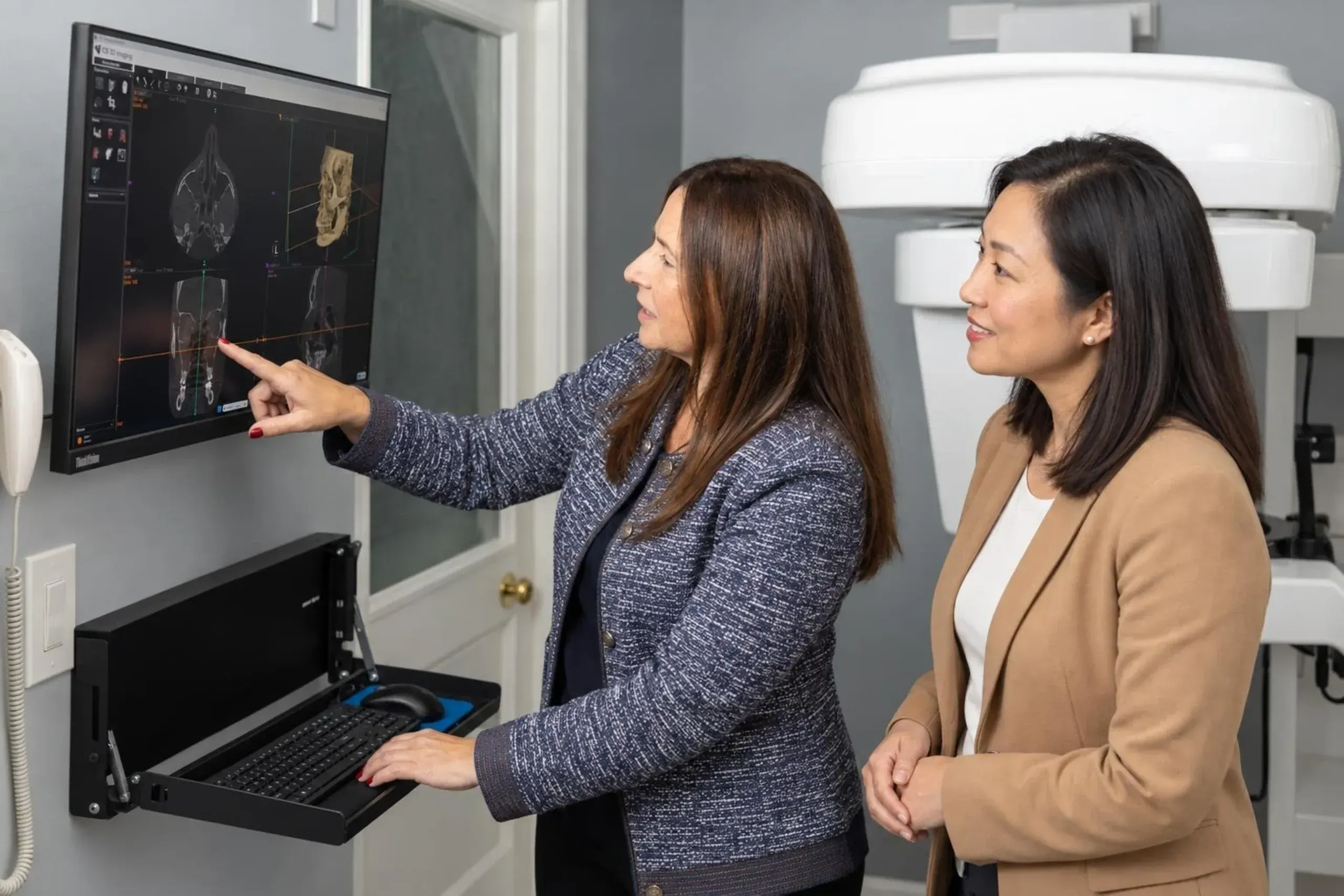
Three-dimensional imaging maps existing bone volume and the position of nerves and sinus.
Anaesthetic
Local anaesthetic numbs the site completely, with sedation options available.
Graft Placement
Dr. Ogata places graft material and, where needed, a barrier membrane over it.
Closure
The site is sutured and you receive written aftercare and any prescribed medication.
Integration
Four to nine months of healing before the implant is placed into the new bone.
Risks and Side Effects
What to Know
Common Bone Grafting Side Effects
Swelling, bruising and soreness for five to ten days are expected, peaking around the second or third day. Minor bleeding on day one is normal, as is a small amount of graft granule loss from the site in the first week. Jaw stiffness after a longer procedure settles within a few days.
Less Common Complications
Infection of the graft site occurs occasionally and is treated with antibiotics and, rarely, removal of the graft. Membrane perforation during sinus augmentation is a recognised event that is usually repaired during the same procedure without affecting the outcome. Partial graft resorption can leave less volume than planned, sometimes requiring a second procedure. Nerve involvement in the lower jaw is uncommon and is planned against using three-dimensional imaging.
Safety and Medical History
Tell us about bisphosphonates and other antiresorptive drugs, previous radiotherapy to the jaws, diabetes, immunosuppression and smoking, as all materially affect healing. Sinus disease must be assessed before augmentation. Patient information on implant treatment planning is published by the American College of Prosthodontists.
Investment
Bone Grafting Cost in Brookline
Pricing and Payment Options
How Much Does Bone Grafting Cost in Brookline?
Fees depend on the size of the defect, the graft material used and whether a barrier membrane or sinus augmentation is required. A socket preservation graft placed at the time of extraction is the most economical, while a lateral window sinus lift is a considerably larger procedure. Nationally, dental bone grafts commonly range from about $400 to $1,200 for socket preservation and $1,500 to $4,000 for sinus augmentation. You receive a written figure after imaging.
Insurance and Flexible Payment Options
Smile Brookline is fee-for-service and submits claims to all major commercial dental insurance carriers. Coverage for grafting varies considerably between plans, and we check your specific benefits before treatment rather than after.
- Cherry - monthly payment plans, apply at pay.withcherry.com/smilebrookline
- Staged treatment - grafting and implant placement can be scheduled across benefit years
The Smile Brookline Difference
Why Choose Smile Brookline for Bone Grafting in Brookline
Beacon Street Since 1992
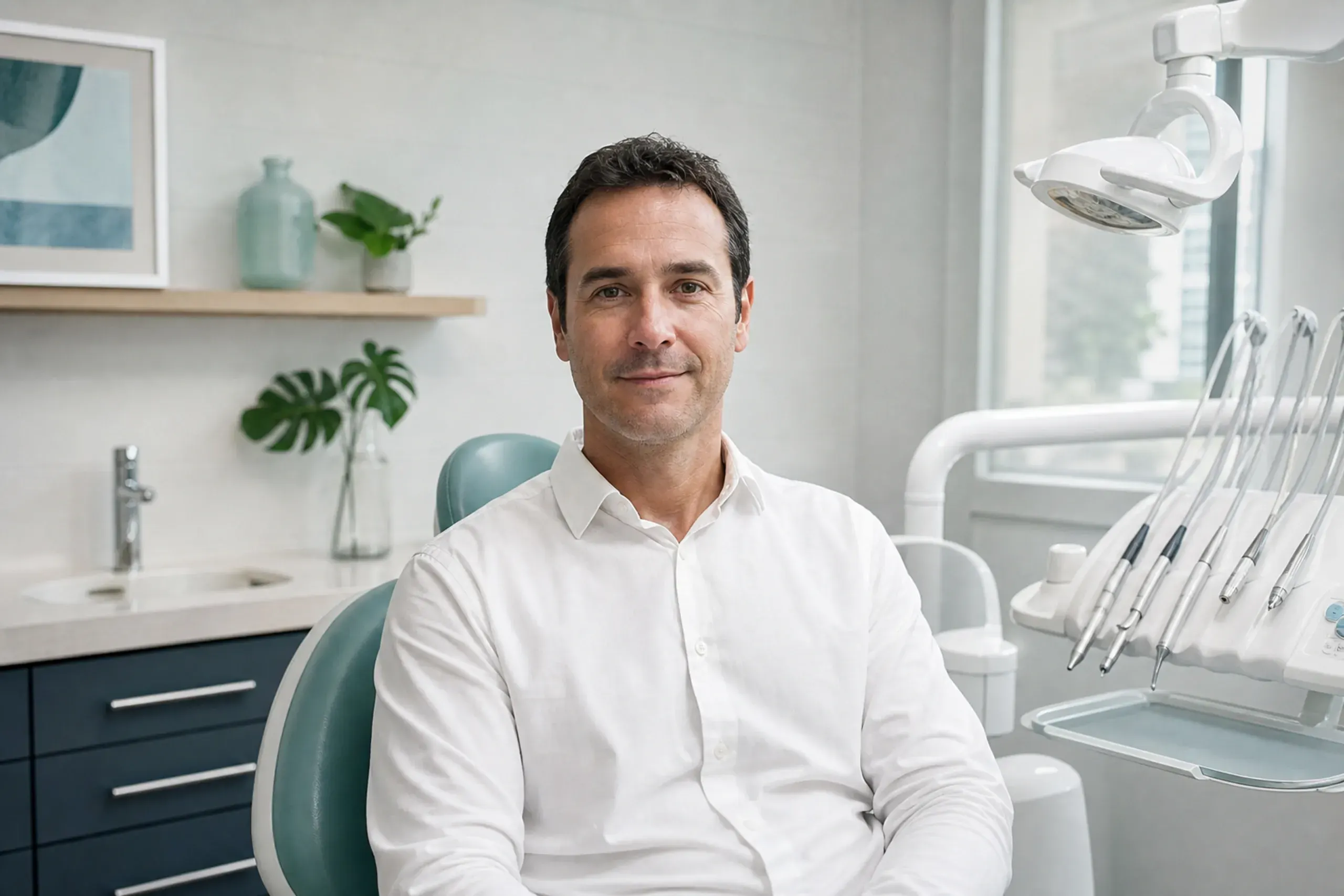
Dr. Yumi Ogata is a board-certified periodontist whose research at Tufts University School of Dental Medicine focuses on guided bone regeneration, ridge preservation and sinus augmentation for implant therapy. Grafting here is performed by the person who teaches and studies it, and planned alongside the restorative dentist who will finish the case.
Board-Certified Periodontist
Dr. Ogata performs all grafting and sinus augmentation
Academic Background
Associate professor researching hard tissue regeneration at Tufts
3D Imaging Planning
Volume assessed on three-dimensional imaging before surgery
Restorative Coordination
Graft designed around where the implant and crown must sit
Sinus Augmentation Here
Upper posterior grafting handled in house, not referred out
Fee for Service
No insurance cap on graft material or the time surgery takes


Explore More
Tooth Extractions
Gentle removal with a clear plan for what comes next.
- Ends Chronic Pain
- Protects Neighbours
- Socket Preserved
Explore More
Crown Lengthening
Expose more tooth structure so a crown or filling can hold.
- Saves the Tooth
- Sealable Margin
- Prevents Inflammation
Explore More
Implant-Supported Dentures
Secure dentures that stay put without adhesive.
- No Adhesive Needed
- Stronger Bite
- Preserves Jawbone
Explore More
Dental Bridges
Fill the gap and restore your bite without surgery.
- No Surgery Needed
- Fixed in Place
- Faster Than Implants
Common Questions
Frequently Asked Questions About Bone Grafting
How much does bone grafting cost in Brookline, MA?
How long does bone grafting take to heal?
Does bone grafting hurt?
When can I have my implant placed?
How often does bone grafting fail?
What is the difference between a bone graft and a sinus lift?
Can men and women of any age have bone grafting?
Where does the graft material come from?
Can I avoid bone grafting altogether?
Is smoking really a problem for grafts?
Get Started
Schedule Your Surgical Consult
References
- Del Fabbro M et al., Clin Implant Dent Relat Res. (2012). Implant survival rates after osteotome-mediated maxillary sinus augmentation: a systematic review. PMID: 22082056.
- Shah D et al., J Indian Prosthodont Soc. (2022). Survival rate of dental implant placed using various maxillary sinus floor elevation techniques: A systematic review and meta-analysis. PMID: 36511050.
- Díaz-Olivares LA et al., Int J Implant Dent. (2021). Management of Schneiderian membrane perforations during maxillary sinus floor augmentation with lateral approach in relation to subsequent implant survival rates: a systematic review and meta-analysis. PMID: 34250560.
- American College of Prosthodontists. (2025). Patient guidance on implant treatment planning, including when bone volume must be rebuilt first.