
Invisalign in Brookline, MA
- Treatment Time:
- 6-18 months
- Visibility:
- Nearly invisible
- Removable:
- Yes, for meals
- Consultation:
- Free
Clear Aligners
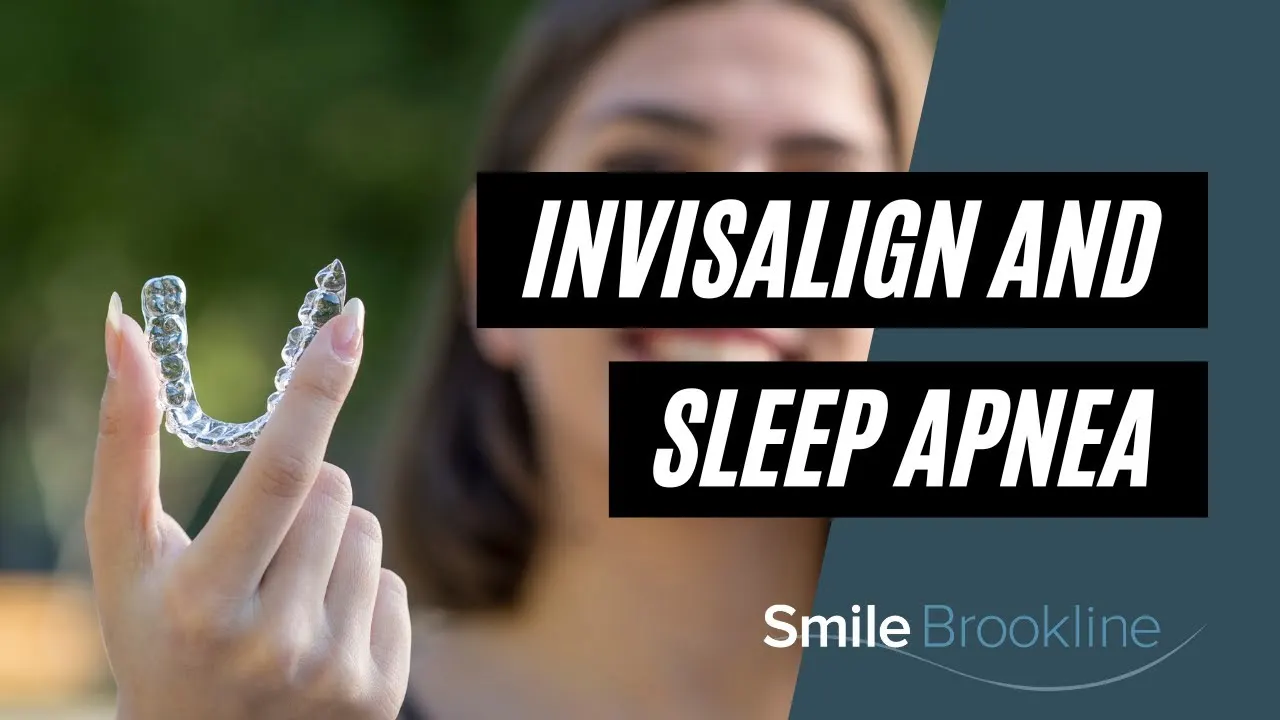
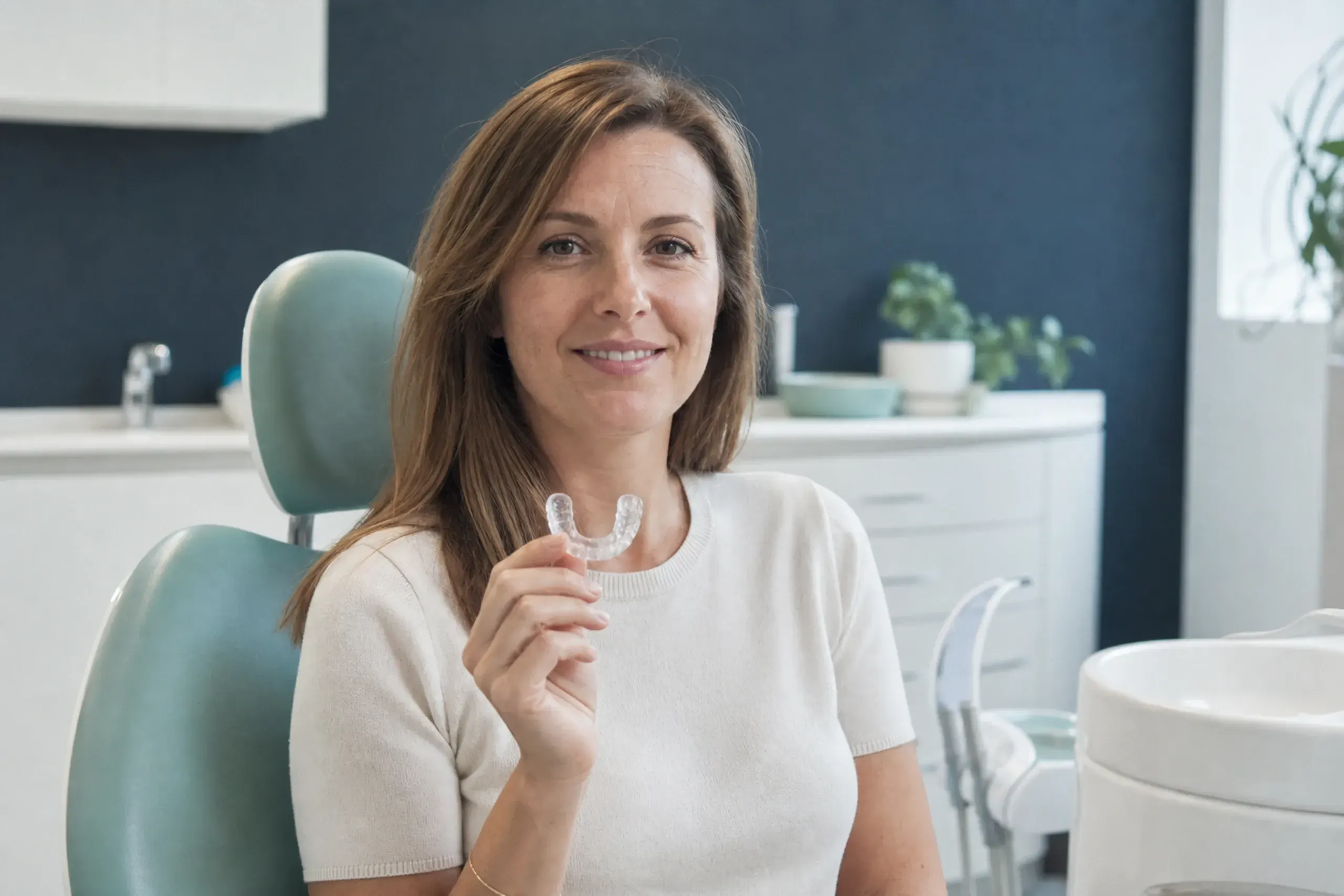
Invisalign in Brookline, MA straightens teeth with a series of clear, removable aligners instead of fixed metal brackets, making it the discreet braces option most adults ask for. We treat patients from Coolidge Corner, Brookline Village, Chestnut Hill, Newton, Allston and Brighton who want alignment without announcing it.
Dr. Sara Stock, DDS has been an Invisalign provider for more than twenty years and plans cases with airway and function in mind, not just tooth position. Where crowding is driven by a narrow arch or mouth breathing, straightening the teeth without addressing the space they sit in is a short-term fix, and we say so at the consultation.
The Challenge
Why Adults Choose Invisalign Over Metal Braces
Understanding Aligner Therapy
Understanding Your Treatment
What Is Invisalign?
The Science of Clear Aligners
Invisalign is a clear aligner system made by Align Technology that straightens teeth using a series of custom thermoplastic trays. Each aligner is shaped a fraction differently from the last, so wearing them in sequence applies controlled force that moves teeth gradually. It corrects crowding, gaps, overbite, underbite, crossbite and open bite in suitable cases.
Treatment is planned from a digital scan, and small tooth-coloured attachments are bonded to certain teeth so the aligner can grip and rotate or upright them. Aligners are worn 20 to 22 hours a day and changed roughly weekly. Retention afterwards is not optional: teeth drift back without a retainer, whatever system moved them.
Treatment Timeline:
- Treatment Time:
- 6 to 18 months
- First Signs:
- 4 to 6 weeks
- Full Effect:
- End of aligner series
- Recovery:
- None
What We Treat
Invisalign Treatment Areas
What Clear Aligners Correct
- Crowded Teeth
- Creates space and aligns teeth that overlap or sit rotated
- Gaps and Spacing
- Closes spaces between teeth for an even, continuous arch
- Overbite
- Reduces excessive vertical overlap of the upper front teeth
- Underbite
- Corrects lower teeth sitting ahead of the uppers in suitable cases
- Crossbite
- Repositions teeth biting inside their opposing partners
- Open Bite
- Closes a gap where front teeth do not meet when biting
Benefits of Invisalign Clear Aligners
Straightening people do not notice
Invisalign vs. Alternatives
Aligners and braces both move teeth. The right choice depends on the complexity of the movement and how visible you want treatment to be.
| Treatment | Mechanism | Time | Results | Duration | Downtime | Best For |
|---|---|---|---|---|---|---|
| Invisalign | Removable clear aligners | 6-18 months | 4-6 weeks | Permanent with retention | None | Adults wanting discreet braces |
| Metal Braces | Fixed brackets and wires | 12-24 months | 8-12 weeks | Permanent with retention | None | Complex movements and severe cases |
| Ceramic Braces | Tooth-coloured fixed brackets | 12-24 months | 8-12 weeks | Permanent with retention | None | Complex cases wanting less visibility |
| Dental Veneers | Bonded ceramic shells | 2 visits | 2-3 weeks | 10-15 years | 1-3 days | Appearance only, teeth not actually moved |




Is This Right for You
Who Is a Good Candidate for Invisalign?
Finding Your Best Straightening Route
Clear aligners handle most common alignment problems in adults and teenagers with erupted permanent teeth. The deciding factors are the complexity of the movement required and whether you will genuinely wear the trays.
Ideal Candidates for Invisalign
- Adults and teenagers with mild to moderate crowding, spacing or rotation
- Patients with an overbite, crossbite or open bite that aligner therapy can address
- Anyone who wants discreet braces for professional or personal reasons
- Patients willing to wear the trays 20 to 22 hours daily, every day
- People with healthy teeth and gums and no untreated decay
Who Should Consider Another Option
- Patients with severe skeletal discrepancies, who may need orthognathic assessment
- Anyone with active gum disease, which needs treatment before teeth are moved
- Patients unlikely to achieve consistent daily wear, where fixed braces remove the compliance variable
- Cases needing large vertical movements or major rotations of round-rooted teeth
- Anyone whose only concern is tooth shape or shade, better served by dental veneers
Retention is lifelong and part of every plan we quote. General guidance on orthodontic options is published by the American Dental Association.
Your Experience
What Happens During Invisalign Treatment
Step-by-Step Process
Consultation
Dr. Stock assesses your bite, gum health and arch width, and confirms aligners suit the case.
Digital Scan
An intraoral scan replaces impressions and produces the three-dimensional treatment plan.
Plan Preview
You review the projected tooth movements and end position before aligners are ordered.
Attachments
Small tooth-coloured attachments are bonded where a tooth needs extra grip.
Progress Reviews
You change trays weekly at home and see us every six to eight weeks.
Risks and Side Effects
What to Know
Common Invisalign Side Effects
Pressure and tenderness for two to three days after each new aligner is normal and indicates the teeth are moving. A temporary lisp in the first week is common and resolves as your tongue adapts. Some patients notice increased salivation initially, and dry lips from mouth breathing over the trays.
Less Common Complications
Root resorption, a shortening of the root tip, can occur with any orthodontic movement and is monitored radiographically. Gum recession may become more apparent as crowded teeth are aligned. Decalcification and decay occur when patients eat or drink anything other than water with aligners in, since sugar is then held against the enamel. Attachments occasionally debond and need replacing.
Safety and Compliance
Aligner therapy only works with 20 to 22 hours of daily wear, and inadequate wear is the most common reason cases run long or finish short of the plan. Treatment supervised in person allows problems to be caught early, which is our concern with mail-order systems. General orthodontic guidance is published by the American Dental Association.
Real Results
Most patients see visible movement within four to six weeks, and front teeth often change first because they move most easily. Typical cases finish in six to eighteen months depending on complexity. Retainers are required afterwards, and teeth will relapse without them. Refinement aligners at the end are common and included in most treatment plans. Individual results vary.
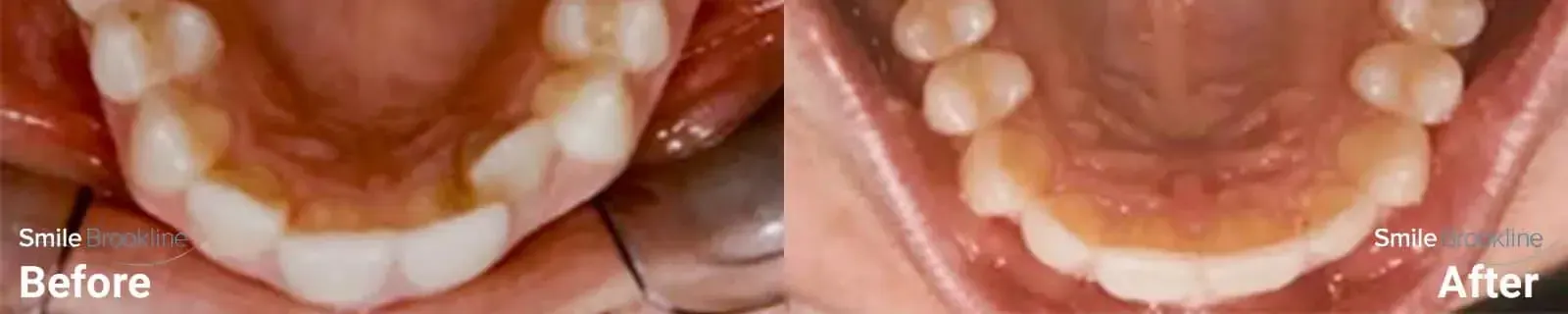
Before
After
Representative example: individual results vary.
Investment
Invisalign Cost in Brookline
Pricing and Payment Options
How Much Does Invisalign Cost in Brookline?
Fees depend on case complexity and the number of aligners required. A limited case correcting mild front-tooth crowding costs considerably less than a comprehensive case addressing bite as well as alignment. Nationally, Invisalign commonly ranges from about $3,500 to $8,000, with retainers and refinements normally included. Your consultation is complimentary and produces a written figure before scanning.
Insurance and Flexible Payment Options
Many dental plans include a lifetime orthodontic benefit that applies to clear aligners, and we submit claims to all major commercial carriers on your behalf. Smile Brookline is fee-for-service, so the plan is built for your case rather than a fee schedule.
- Cherry - monthly payment plans, apply at pay.withcherry.com/smilebrookline
- HSA and FSA funds - orthodontic treatment is generally an eligible expense
The Smile Brookline Difference
Why Choose Smile Brookline for Invisalign in Brookline
Beacon Street Since 1992
Dr. Sara Stock, DDS has provided Invisalign for over twenty years and is an airway-focused dentist, which changes how cases are planned. Crowding is often a space problem rather than a tooth problem, and where a narrow arch or mouth breathing is driving it, we address that rather than simply pushing teeth into line.
20+ Years Providing
Dr. Stock has treated Invisalign cases since the early years
Airway-Aware Planning
Arch width and breathing assessed, not just tooth position
Supervised In Person
Progress reviewed in the chair, unlike mail-order aligners
Free Consultation
Invisalign consultations at Smile Brookline are complimentary
Since 1992
Dr. Stock has run this Beacon Street practice for 30 years
Restorative Follow-Through
Bonding, whitening and veneers finished by the same team

Explore More
Dental Veneers
Custom porcelain veneers that correct shape, shade and spacing in two visits.
- Several Fixes at Once
- Stain Resistant
- Preview Before You Commit
Explore More
Take-Home Teeth Whitening
Custom professional trays for a brighter smile on your schedule.
- Even Coverage
- Less Sensitivity
- You Control the Pace
Explore More
Smile Makeover
A complete plan that combines treatments into one coordinated result.
- One Coherent Result
- Correct Sequence
- Preview First
Explore More
Night Guards
Custom occlusal splints that protect your teeth and ease jaw tension while you sleep.
- Precise Fit
- Protects Investment
- Thin and Comfortable
Common Questions
Frequently Asked Questions About Invisalign
How much does Invisalign cost in Brookline, MA?
How long does Invisalign treatment take?
Does Invisalign hurt?
When will I see results?
How many hours a day do I need to wear them?
What is the difference between Invisalign and metal braces?
Can teenagers have Invisalign?
Do I have to wear a retainer afterwards?
Can I whiten my teeth during Invisalign?
Will Invisalign fix my bite or just my front teeth?
Get Started
Book Your Free Consultation
References
- Robertson L et al., Orthod Craniofac Res. (2020). Effectiveness of clear aligner therapy for orthodontic treatment: A systematic review. PMID: 31651082.
- Rossini G et al., Angle Orthod. (2015). Efficacy of clear aligners in controlling orthodontic tooth movement: a systematic review. PMID: 25412265.
- Nucera R et al., Materials (Basel). (2022). Effects of Composite Attachments on Orthodontic Clear Aligners Therapy: A Systematic Review. PMID: 35057250.
- American Dental Association MouthHealthy. (2025). Patient guidance on orthodontic options for crowding, spacing and bite correction.