
Implant-Supported Dentures in Brookline, MA
- Treatment Time:
- 3-6 months
- Adhesive:
- Not needed
- Results Last:
- 15-20 years
- Surgery:
- Done in house

Stable Tooth Replacement
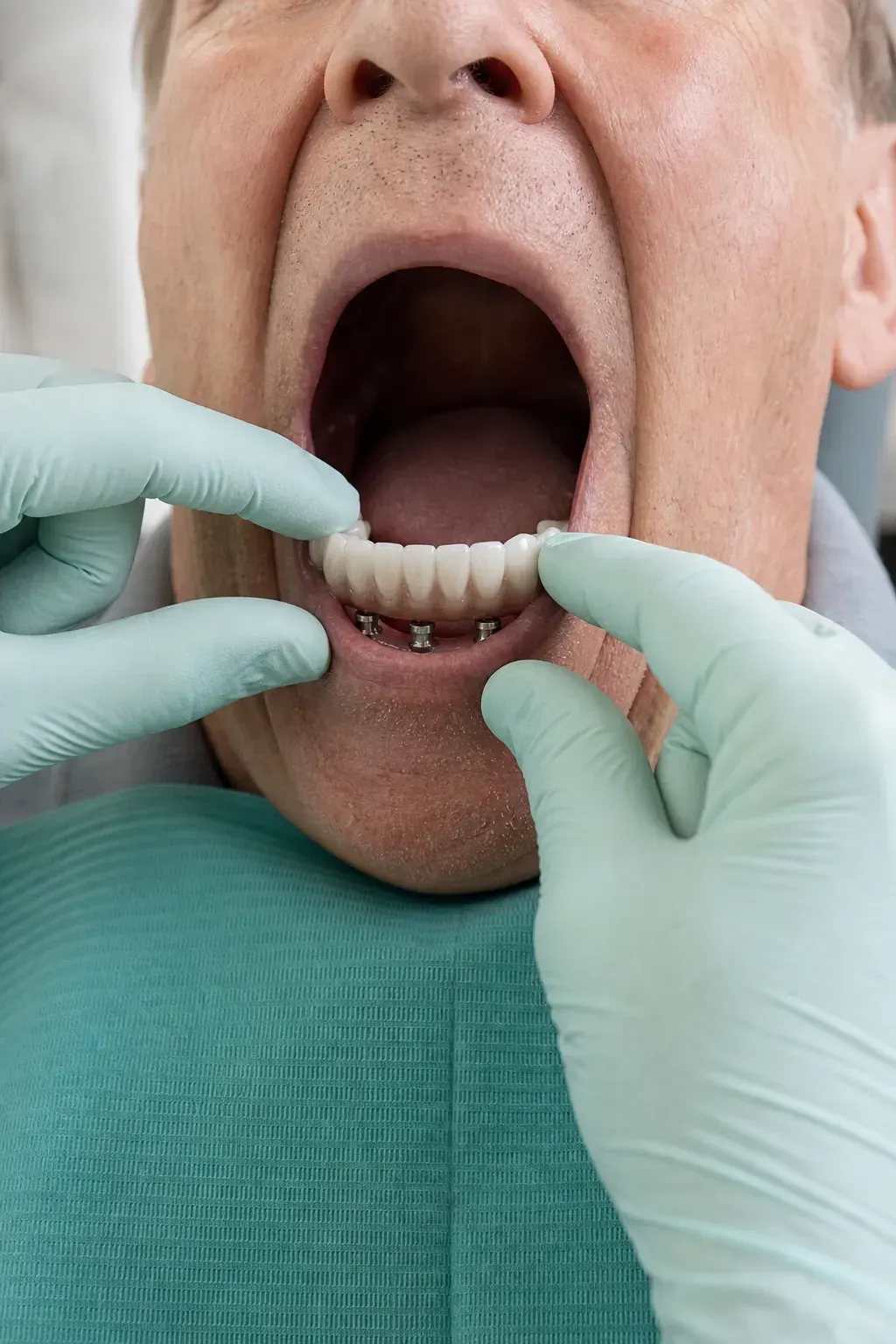
Implant-supported dentures in Brookline, MA use dental implants placed in the jaw as anchors for a denture or fixed bridge, so the prosthesis is held by bone rather than suction and adhesive. Patients from Coolidge Corner, Brookline Village, Chestnut Hill, Newton, Allston and Brighton come to us to stop managing a loose plate.
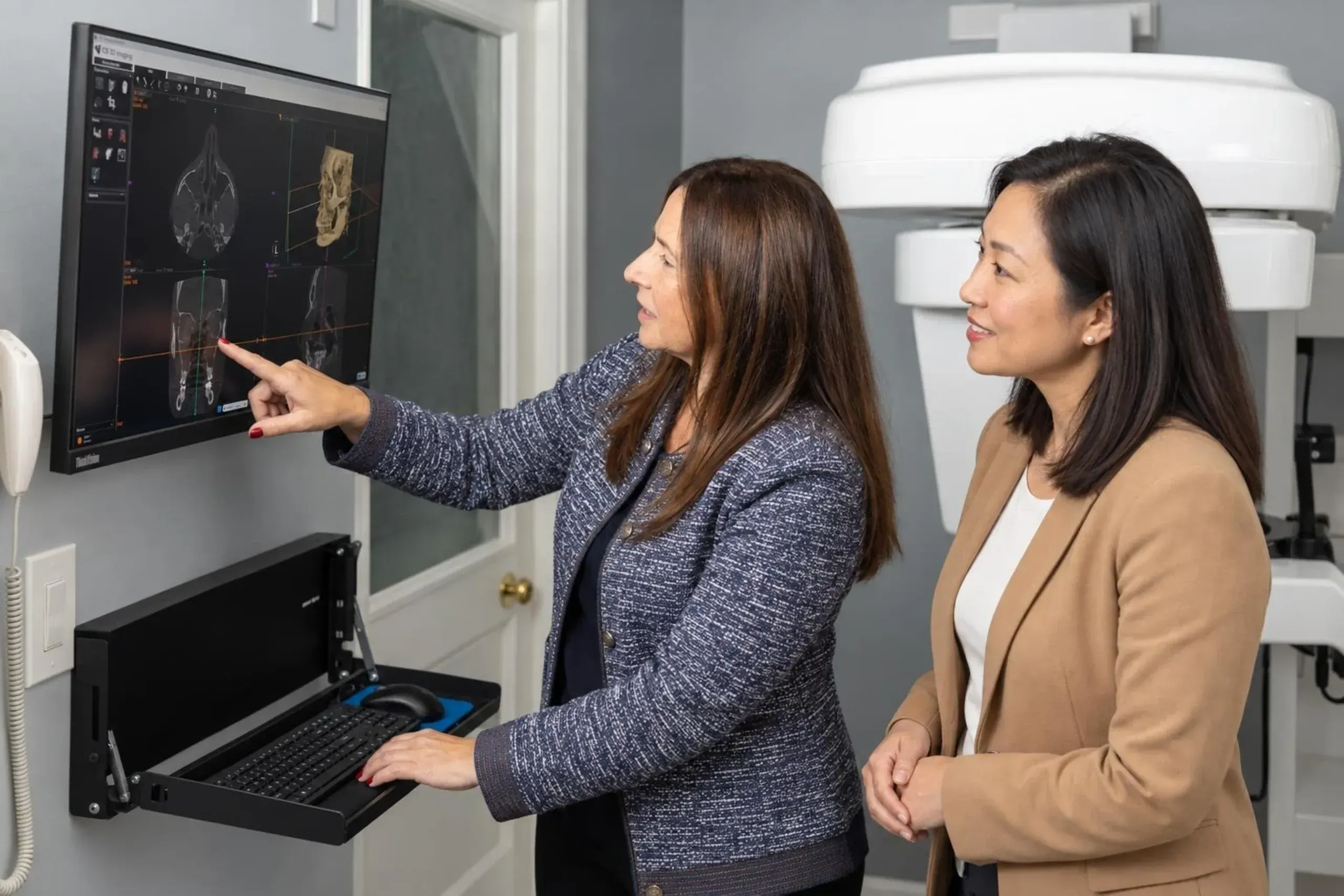
At Smile Brookline, Dr. Yumi Ogata places the implants and Dr. Sara Stock, DDS handles the restorative phase, both in this practice. Most general offices refer the surgery elsewhere, which splits responsibility for the outcome. Here the surgeon and the restorative dentist plan the case together from the first scan.
The Challenge
Why Implant-Supported Dentures Change Daily Life
Understanding Denture Stability
Understanding Your Treatment
What Are Implant-Supported Dentures?
The Science of Anchored Prosthetics
Implant-supported dentures are full-arch prostheses held in place by dental implants rather than by suction and adhesive. Two to six implants per arch act as anchors, and the denture either clips onto them and is removable for cleaning, or is screwed into place and stays fixed. Implants can also carry a fixed bridge for a full arch.
Each implant is a titanium post placed into the jawbone, where it integrates with bone over three to six months in a process called osseointegration. Because the implants transmit chewing force into the bone the way natural roots do, the ridge is preserved rather than continuing to shrink beneath a conventional plate.
Treatment Timeline:
- Treatment Time:
- 3 to 6 months
- First Signs:
- Implant placement day
- Full Effect:
- After final prosthesis
- Recovery:
- 3 to 7 days per stage
What We Treat
Implant-Supported Denture Treatment Areas
What Anchoring Solves
- Loose Lower Dentures
- Anchors the plate that suction alone struggles to hold
- Adhesive Dependence
- Removes the need for daily denture adhesive entirely
- Limited Diet
- Restores enough bite force to eat firmer, fibrous food again
- Ridge Resorption
- Loads the bone so the jaw ridge shrinks far more slowly
- Palate Coverage
- Allows an open-palate design that restores taste and temperature
- Speech Difficulty
- Stops the movement that causes clicking and slurred sounds
Benefits of Implant-Supported Dentures
Held by bone, not adhesive
Implant-Supported Dentures vs. Alternatives
Full-arch replacement ranges from removable plates to fixed bridges on implants. Bone volume and daily function decide which fits.
| Treatment | Mechanism | Time | Results | Duration | Downtime | Best For |
|---|---|---|---|---|---|---|
| Implant-Supported Denture | Clipped onto implants | 3-6 months | Staged | 15-20 years | 3-7 days | Loose lower dentures, adhesive dependence |
| Fixed Implant Bridge | Screwed onto implants | 4-6 months | Staged | 20+ years | 3-7 days | Full arch replacement kept permanently in place |
| Single Dental Implants | Individual titanium roots | 3-6 months | Staged | 20+ years | 3-7 days | One or several separate missing teeth |
| Dental Bridge | Fixed span on natural teeth | 2-3 visits | 2-3 weeks | 10-15 years | 1-2 days | One or two gaps with healthy neighbours |



Is This Right for You
Who Is a Good Candidate for Implant-Supported Dentures?
Finding Your Best Full-Arch Option
Anchoring a denture to implants requires enough bone to hold them, healthy gum tissue and general health that supports healing. Where bone volume is short, it can often be rebuilt before placement rather than ruling treatment out.
Ideal Candidates for Implant-Supported Dentures
- Patients with a loose lower denture that suction cannot hold
- Anyone dependent on adhesive who wants to stop managing it daily
- Patients missing all or most teeth in an arch with adequate bone height
- People whose diet has narrowed because chewing has become unreliable
- Patients in reasonable general health who do not smoke, or who will stop
Who Needs Something Else First
- Patients with insufficient bone volume, who may need bone grafting to rebuild jaw support first
- Anyone with untreated gum disease, which must be resolved before implant placement
- Patients with uncontrolled diabetes, where healing and integration are compromised
- Anyone taking intravenous bisphosphonates or with a history of jaw osteonecrosis
- Heavy smokers, who have measurably higher implant failure rates
Where teeth still remain but are failing, tooth extraction is planned as part of the same treatment sequence. Patient guidance on denture options is published by the American Dental Association.
Your Experience
What Happens During Implant-Supported Denture Treatment
Step-by-Step Process
Planning
Dr. Ogata and Dr. Stock review imaging together to map implant positions and bone volume.
Placement
Dr. Ogata places the implants under local anaesthetic, with sedation options discussed beforehand.
Healing
Implants integrate with bone over three to six months while you wear a temporary prosthesis.
Connection
Abutments are fitted and Dr. Stock records the arch for the definitive denture.
Delivery
The finished prosthesis is fitted, the bite refined and cleaning technique demonstrated.
Risks and Side Effects
What to Know
Common Side Effects After Implant Placement
Swelling, bruising and soreness for three to seven days are expected, along with minor bleeding on the first day and jaw stiffness after a longer surgical appointment. Most patients manage with prescribed analgesia and return to work within a few days.
Less Common Complications
Implant failure to integrate occurs in a small percentage of cases and is more likely in smokers, in uncontrolled diabetes and where bone quality is poor. Peri-implantitis, an inflammatory condition around an integrated implant, can develop years later without diligent cleaning and maintenance. Nerve involvement in the lower jaw and sinus complications in the upper jaw are uncommon and are planned against using three-dimensional imaging.
Safety and Long-Term Maintenance
Implant-supported prostheses require the same maintenance discipline as natural teeth: daily cleaning around every abutment and regular professional review. Tell us about bisphosphonates, anticoagulants, diabetes, radiotherapy to the jaws and smoking, since each changes the risk profile. Guidance on prosthetic options is published by the American Dental Association.
Investment
Implant-Supported Denture Cost in Brookline
Pricing and Payment Options
How Much Do Implant-Supported Dentures Cost in Brookline?
Cost depends on how many implants each arch needs, whether the prosthesis clips on or is screwed in place, and whether grafting is required first. A two-implant lower overdenture is the most economical route, while a fixed full-arch bridge on four to six implants is a considerably larger case. Nationally, implant-supported dentures commonly range from about $6,000 to $30,000 per arch. Your written plan itemises surgical and restorative stages separately.
Insurance and Flexible Payment Options
Smile Brookline is fee-for-service and submits claims to all major commercial dental insurance carriers. Many plans contribute toward the prosthesis even where implant surgery is excluded, and a staged case can span two benefit years.
- Cherry - monthly payment plans, apply at pay.withcherry.com/smilebrookline
- Staged treatment - surgical and restorative phases can be scheduled to spread cost
The Smile Brookline Difference
Why Choose Smile Brookline for Implant-Supported Dentures in Brookline
Beacon Street Since 1992
Dr. Yumi Ogata is a board-certified periodontist and associate professor of periodontology at Tufts who places the implants, while Dr. Sara Stock, DDS designs and fits the prosthesis. Surgical and restorative planning happen in the same building, which is unusual for a general practice and matters when a case is full arch.
Surgeon In House
Dr. Ogata places implants here rather than referring out
One Team, One Plan
Surgical and restorative phases planned together from day one
Grafting Available
Bone volume rebuilt on site when the ridge needs support
Restorative Precision
Dr. Stock designs bite and aesthetics for the finished arch
Tufts Faculty Surgeon
Dr. Ogata is an associate professor of periodontology at Tufts
Digital Scanning
Optical impressions for a closer fitting finished prosthesis
Explore More
Dental Bridges
Fill the gap and restore your bite without surgery.
- No Surgery Needed
- Fixed in Place
- Faster Than Implants
Explore More
Bone Grafting
Rebuild jaw support so your implant can succeed.
- Makes Implants Possible
- Better Implant Survival
- Preserves Facial Contour
Explore More
Bone Grafting
Rebuild jaw support so your implant can succeed.
- Makes Implants Possible
- Better Implant Survival
- Preserves Facial Contour
Explore More
Tooth Extractions
Gentle removal with a clear plan for what comes next.
- Ends Chronic Pain
- Protects Neighbours
- Socket Preserved
Common Questions
Frequently Asked Questions About Implant-Supported Dentures
How much do implant-supported dentures cost in Brookline, MA?
How long does treatment take?
Does implant surgery hurt?
How long do implant-supported dentures last?
How often will I need maintenance?
What is the difference between these and regular dentures?
Can men and women of any age have implants?
Do I still take the denture out at night?
Will I need bone grafting first?
Can I eat normally with implant-supported dentures?
Get Started
Schedule Your Implant Consult
References
- Sutariya PV et al., J Indian Prosthodont Soc. (2021). Mandibular implant-supported overdenture: A systematic review and meta-analysis for optimum selection of attachment system. PMID: 34810359.
- Kutkut A et al., J Prosthodont Res. (2018). A systematic review of studies comparing conventional complete denture and implant retained overdenture. PMID: 28666845.
- Abou-Ayash S et al., Clin Oral Implants Res. (2023). Treatment effect of implant-supported fixed complete dentures and implant overdentures on patient-reported outcomes: A systematic review and meta-analysis. PMID: 37750530.
- American Dental Association. (2025). Clinical topic summary comparing conventional dentures with implant-retained prostheses.