
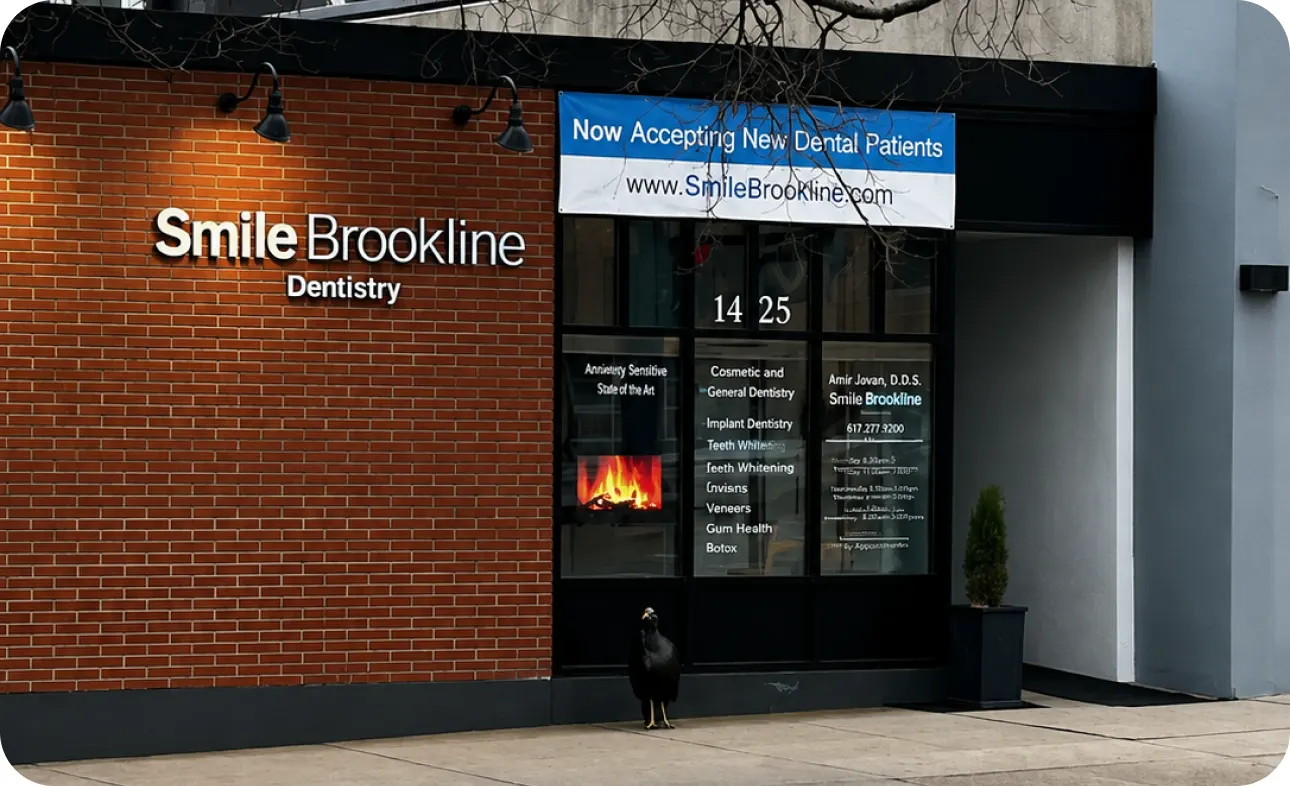
Dental Bridges in Brookline, MA
- Treatment Time:
- 2-3 visits
- Surgery:
- Not required
- Results Last:
- 10-15 years
- Fixed:
- Not removable
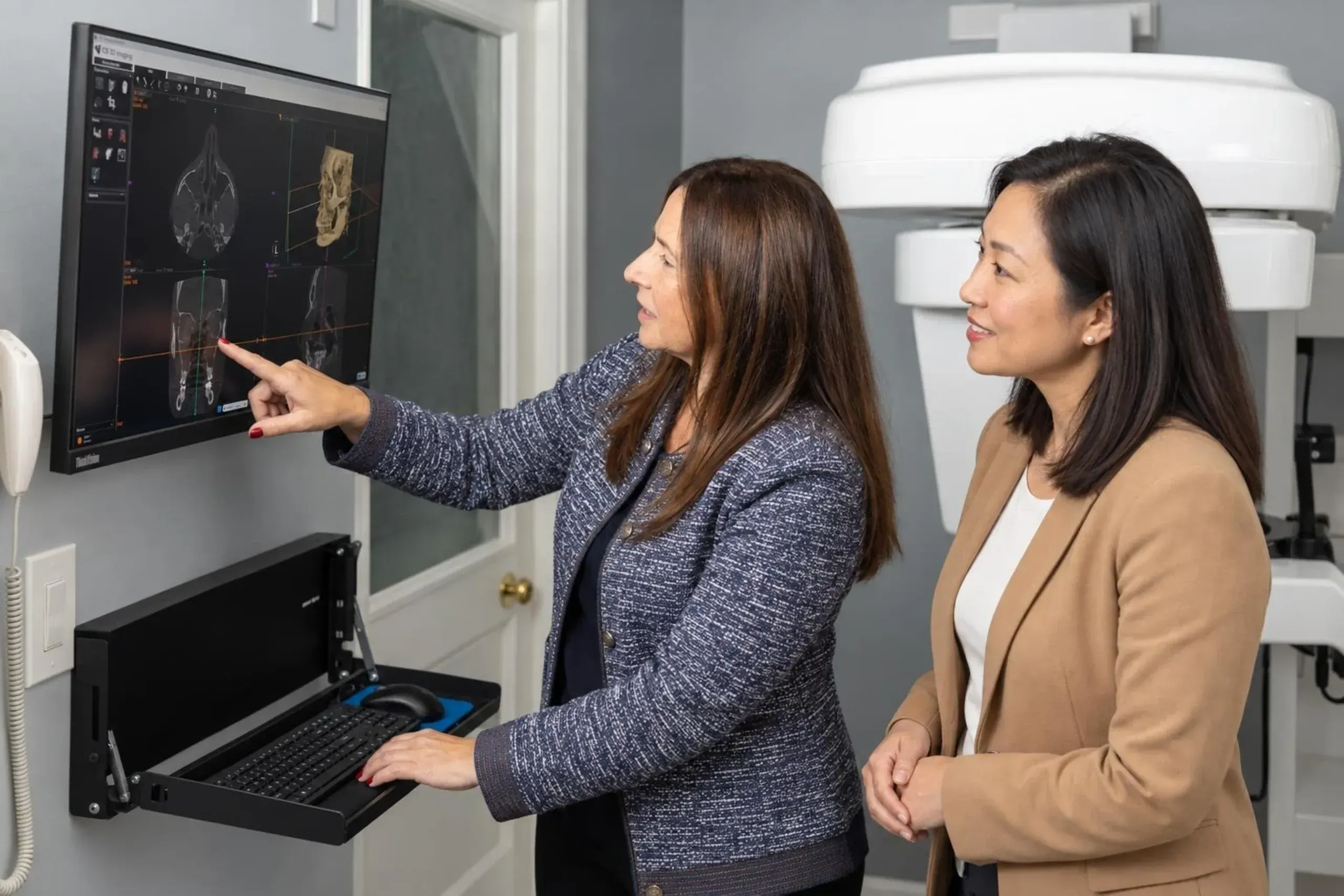
Replace the Gap
Dental bridges in Brookline, MA replace one or more missing teeth by anchoring a replacement tooth to the teeth on either side of the gap. No surgery is involved and the result is fixed in place, not removable. We restore missing teeth for patients from Coolidge Corner, Brookline Village, Chestnut Hill, Newton and Brighton.
Dr. Sara Stock, DDS plans bridge work around how the whole bite loads, because a replacement tooth that is not supported properly transfers force onto the anchor teeth. With Dr. Yumi Ogata performing implant surgery in the same practice, we can compare a bridge with an implant honestly and let the anatomy decide.
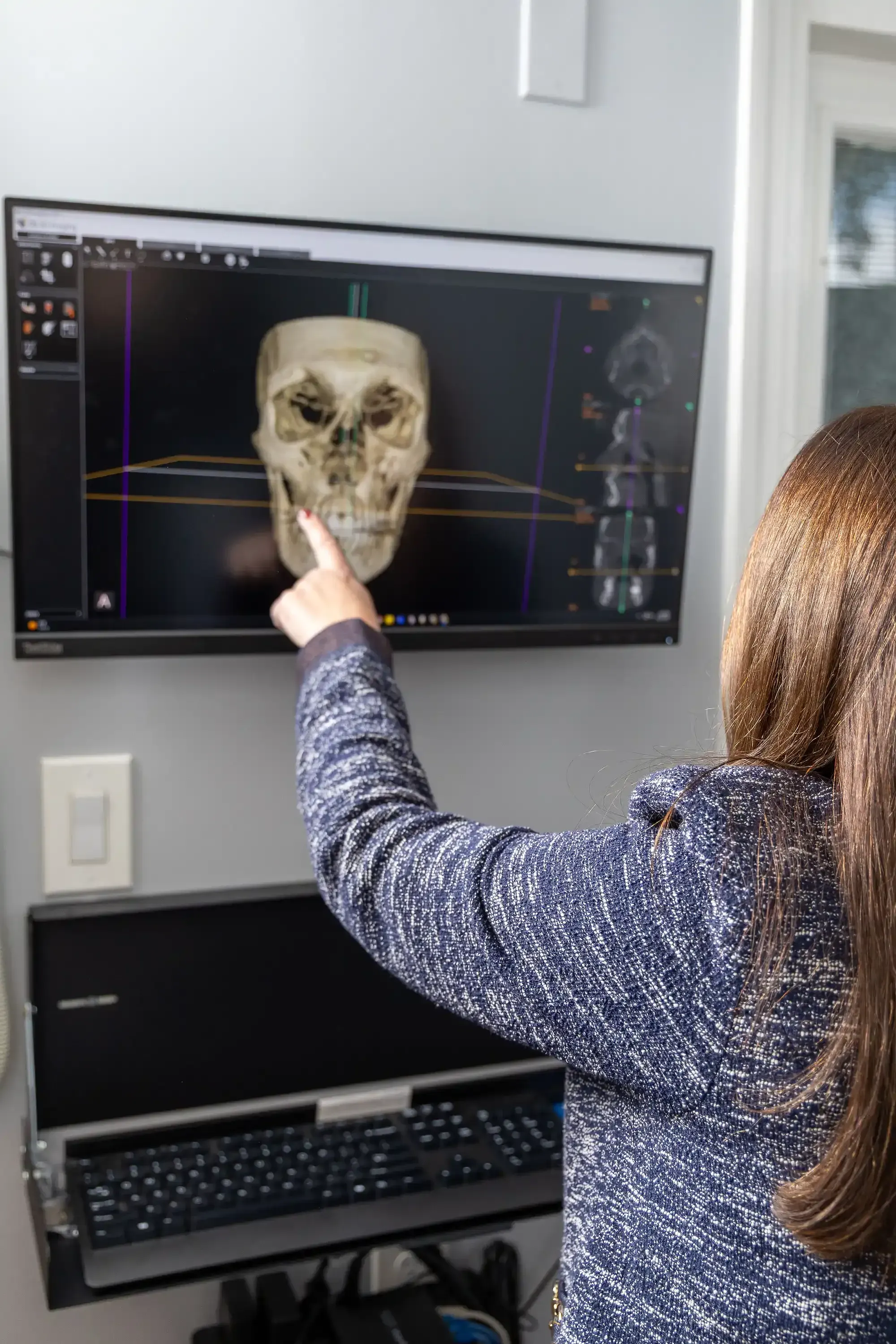
The Challenge
Why a Gap Needs a Dental Bridge
Understanding Tooth Migration
Understanding Your Treatment
What Are Dental Bridges?
The Science of Fixed Tooth Replacement
A dental bridge is a fixed restoration that replaces one or more missing teeth. The replacement tooth, called a pontic, is fused to crowns that fit over the natural teeth on either side of the gap, known as abutments. The whole unit is cemented in place permanently, so it is not removed for cleaning.
Bridges are made from zirconia, porcelain fused to metal, or all-ceramic materials, chosen for the load the span will carry. A resin-bonded design that requires almost no preparation is sometimes possible for a single front tooth. Implants can also serve as the carriers for a bridge, which avoids preparing healthy neighbouring teeth altogether.
Treatment Timeline:
- Treatment Time:
- 2 to 3 visits
- First Signs:
- Same day as fitting
- Full Effect:
- 2 to 3 weeks
- Recovery:
- 1 to 2 days
What We Treat
Dental Bridge Treatment Areas
Gaps a Bridge Can Close
- Single Missing Tooth
- Closes one gap using the teeth either side as support
- Two Adjacent Gaps
- Spans a short run of missing teeth with one fixed unit
- Drifting Teeth
- Stops neighbouring teeth tilting into the empty space
- Food Packing
- Restores contact points so food stops wedging into the gap
- Uneven Chewing
- Redistributes bite force so you stop favouring one side
- Front Tooth Gaps
- Restores appearance and speech where a visible tooth is missing
Benefits of Dental Bridges
Fixed, and no surgery
Dental Bridges vs. Alternatives
Replacing a missing tooth comes down to what the neighbouring teeth and the bone underneath can support.
| Treatment | Mechanism | Time | Results | Duration | Downtime | Best For |
|---|---|---|---|---|---|---|
| Dental Bridge | Fixed span on adjacent teeth | 2-3 visits | 2-3 weeks | 10-15 years | 1-2 days | Healthy neighbouring teeth, no surgery wanted |
| Dental Implant | Titanium root in the jaw | 3-6 months | Staged | 20+ years | 3-7 days | Preserving neighbouring teeth and bone |
| Implant-Supported Bridge | Fixed span on implants | 4-6 months | Staged | 20+ years | 3-7 days | Several missing teeth in a row |
| Removable Partial Denture | Clasped appliance | 3-4 visits | 3-4 weeks | 5-8 years | None | Multiple gaps or interim replacement |



Is This Right for You
Who Is a Good Candidate for Dental Bridges?
Finding Your Best Replacement
A bridge needs healthy, well-supported teeth on both sides of the gap, because those teeth will carry the replacement. When they are already crowned or heavily filled, using them as abutments makes sense. When they are pristine, an implant usually does.
Ideal Candidates for Dental Bridges
- Patients missing one tooth, or two adjacent teeth, with sound teeth either side
- Anyone whose neighbouring teeth already have large fillings or crowns
- Patients who would prefer to avoid surgery or cannot undergo implant placement
- People who want the gap closed in weeks rather than months
- Patients with healthy gums and good daily cleaning habits
Who Should Consider Another Option
- Patients with healthy, unrestored neighbouring teeth, where dental implants avoid cutting them down
- Anyone with active gum disease, which needs treating before any fixed restoration
- Patients missing several teeth in different areas, where implant-supported dentures serve better
- Long spans with heavy bite forces, where the leverage on the abutments is unfavourable
Cleaning underneath the pontic every day with a floss threader or interdental brush is not optional. Patient guidance on bridges is published by the American Dental Association.
Your Experience
What Happens During Dental Bridge Treatment
Step-by-Step Process
Assessment
Dr. Stock checks the abutment teeth, gum health and bone support on X-ray.
Preparation
The anchor teeth are shaped under local anaesthetic to receive their crowns.
Scanning
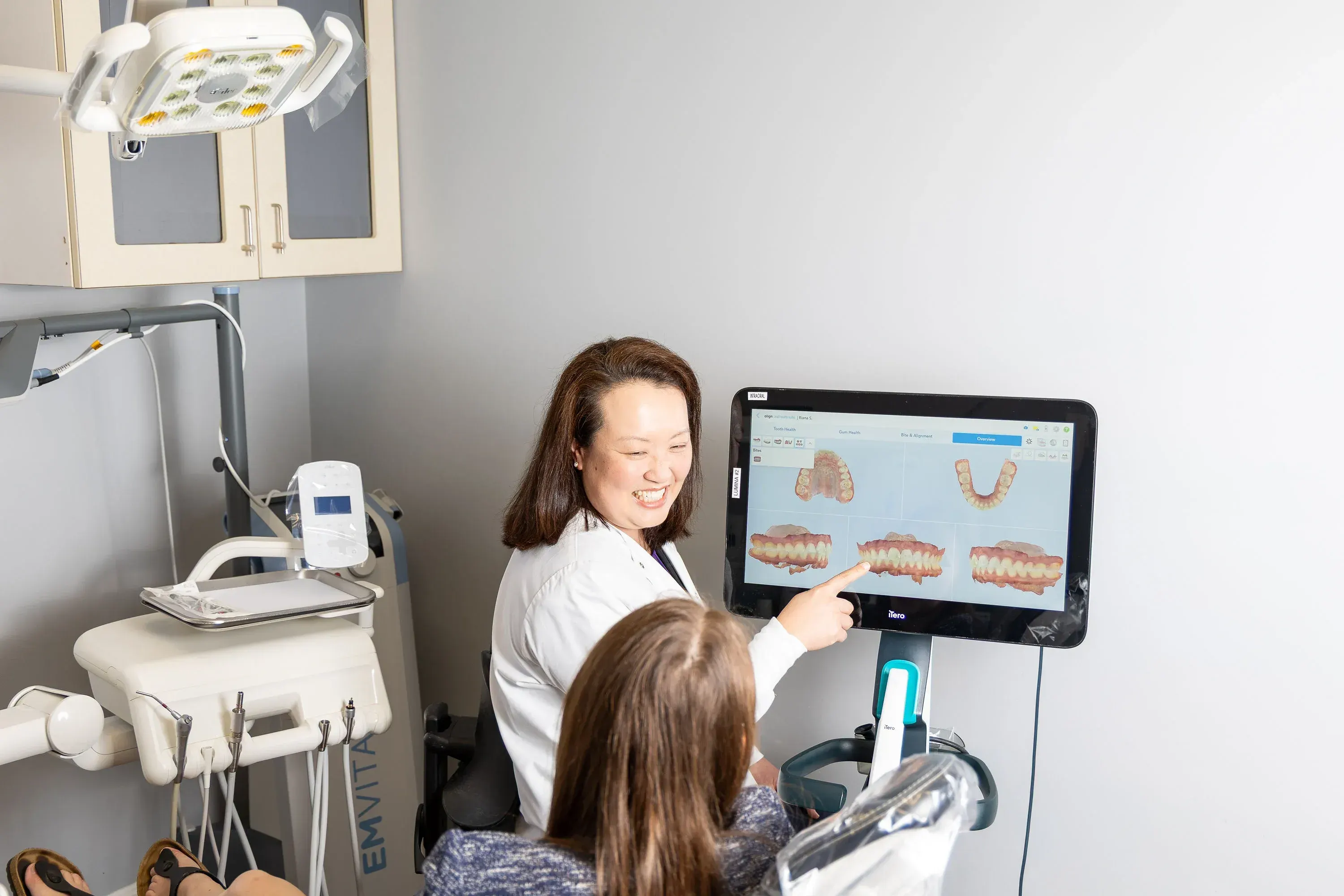
A digital scan or impression records the span, the margins and your opposing bite.
Temporary
A provisional bridge protects the prepared teeth while the final unit is made.
Fitting
The bridge is tried in, contacts and bite adjusted, then cemented permanently.
Risks and Side Effects
What to Know
Common Dental Bridge Side Effects
Temperature sensitivity in the prepared abutment teeth for one to three weeks is normal, as is gum tenderness where the pontic rests. Speech can feel slightly different for the first few days when a front tooth has been replaced, and it usually normalises within a week.
Less Common Complications
Abutment teeth occasionally develop pulp inflammation after preparation and need root canal treatment, which we refer out. Decay can start at a crown margin if cleaning is inconsistent, and this is the most common reason bridges are eventually replaced. Ceramic can chip under heavy grinding, and in rare cases a long span loosens on one abutment, which must be addressed quickly to avoid hidden decay.
Safety and Long-Term Care
Preparing two healthy teeth to replace one missing tooth is a real trade-off, and we discuss it openly before you commit. Daily cleaning beneath the pontic with a threader or interdental brush is essential, and patients who grind should wear a night guard. Tell us about bruxism, jaw pain or a history of gum disease before treatment planning.
Real Results
The gap is closed on the day the bridge is cemented, and most patients are chewing comfortably on that side within a few days. Speech adjusts within about a week if a front tooth was involved. Gum tissue under the pontic settles over two to three weeks. Longevity depends on cleaning underneath the span daily. Individual results vary.

Before
After
Representative example: individual results vary.
Investment
Dental Bridge Cost in Brookline
Pricing and Payment Options
How Much Does a Dental Bridge Cost in Brookline?
A bridge is priced per unit, and a standard three-unit bridge, meaning two crowns plus one replacement tooth, involves three units. Nationally, three-unit bridges commonly range from about $2,500 to $5,500 depending on material and whether an abutment needs a core build-up first. We examine the teeth, review the X-ray and give you a written figure before preparation.
Insurance and Flexible Payment Options
Smile Brookline is a fee-for-service practice and submits claims to all major commercial dental insurance carriers on your behalf. Many plans contribute toward bridges after a waiting period, often with an annual maximum that a full case can exceed.
- Cherry - monthly payment plans at pay.withcherry.com/smilebrookline
- HSA and FSA funds - accepted for fixed restorative treatment
The Smile Brookline Difference
Why Choose Smile Brookline for Dental Bridges in Brookline
Beacon Street Since 1992
Dr. Sara Stock, DDS will only recommend a bridge when it is genuinely the better option for your mouth. Because Dr. Yumi Ogata places implants in this same practice, we have no incentive to steer you toward one solution, and we will tell you plainly when preparing two healthy teeth is the wrong trade.
Honest Comparison
Bridge and implant weighed openly, since we provide both
Bite-Led Design
Span and contour planned around how your jaw actually loads
Periodontist On Site
Dr. Ogata assesses the gum and bone supporting the abutments
Cleanable Contours
Pontic shaped so floss threaders and brushes can reach under it
Digital Impressions
Scanned rather than trayed, for a closer fitting span
Fee for Service
Materials chosen on merit, not on what insurance allows

Explore More
Implant-Supported Dentures
Secure dentures that stay put without adhesive.
- No Adhesive Needed
- Stronger Bite
- Preserves Jawbone
Explore More
Bone Grafting
Rebuild jaw support so your implant can succeed.
- Makes Implants Possible
- Better Implant Survival
- Preserves Facial Contour
Explore More
Dental Crowns
Durable, natural-looking crowns that protect and rebuild damaged teeth.
- Full Protection
- Natural Appearance
- Proven Longevity
Explore More
Same-Day Crowns
CEREC technology that designs, mills and places your crown in one visit.
- No Second Visit
- No Temporary Crown
- Numb Once
Common Questions
Frequently Asked Questions About Dental Bridges
How much does a dental bridge cost in Brookline, MA?
How long do dental bridges last?
Does getting a dental bridge hurt?
How many visits does a bridge take?
When can I eat normally again?
What is the difference between a bridge and an implant?
Can men and women of any age have a bridge?
How do I clean under a dental bridge?
Will the bridge match my other teeth?
Can a bridge replace more than one tooth?
Get Started
Schedule Your Bridge Consult
References
- Sailer I et al., Clin Oral Implants Res. (2018). A systematic review of the survival and complication rates of zirconia-ceramic and metal-ceramic multiple-unit fixed dental prostheses. PMID: 30328185.
- Thoma DS et al., Clin Oral Implants Res. (2017). A systematic review of the survival and complication rates of resin-bonded fixed dental prostheses after a mean observation period of at least 5 years. PMID: 28191679.
- Pjetursson BE et al., Clin Oral Implants Res. (2007). Comparison of survival and complication rates of tooth-supported fixed dental prostheses (FDPs) and implant-supported FDPs and single crowns (SCs). PMID: 17594374.
- American Dental Association MouthHealthy. (2025). Patient overview of fixed bridges as a replacement option for missing teeth.