Botox for TMJ in Brookline, MA
- Treatment Time:
- 15-20 minutes
- Downtime:
- None
- Results Last:
- 3-4 months
- FDA Status:
- Off-label use

Jaw Muscle Relief
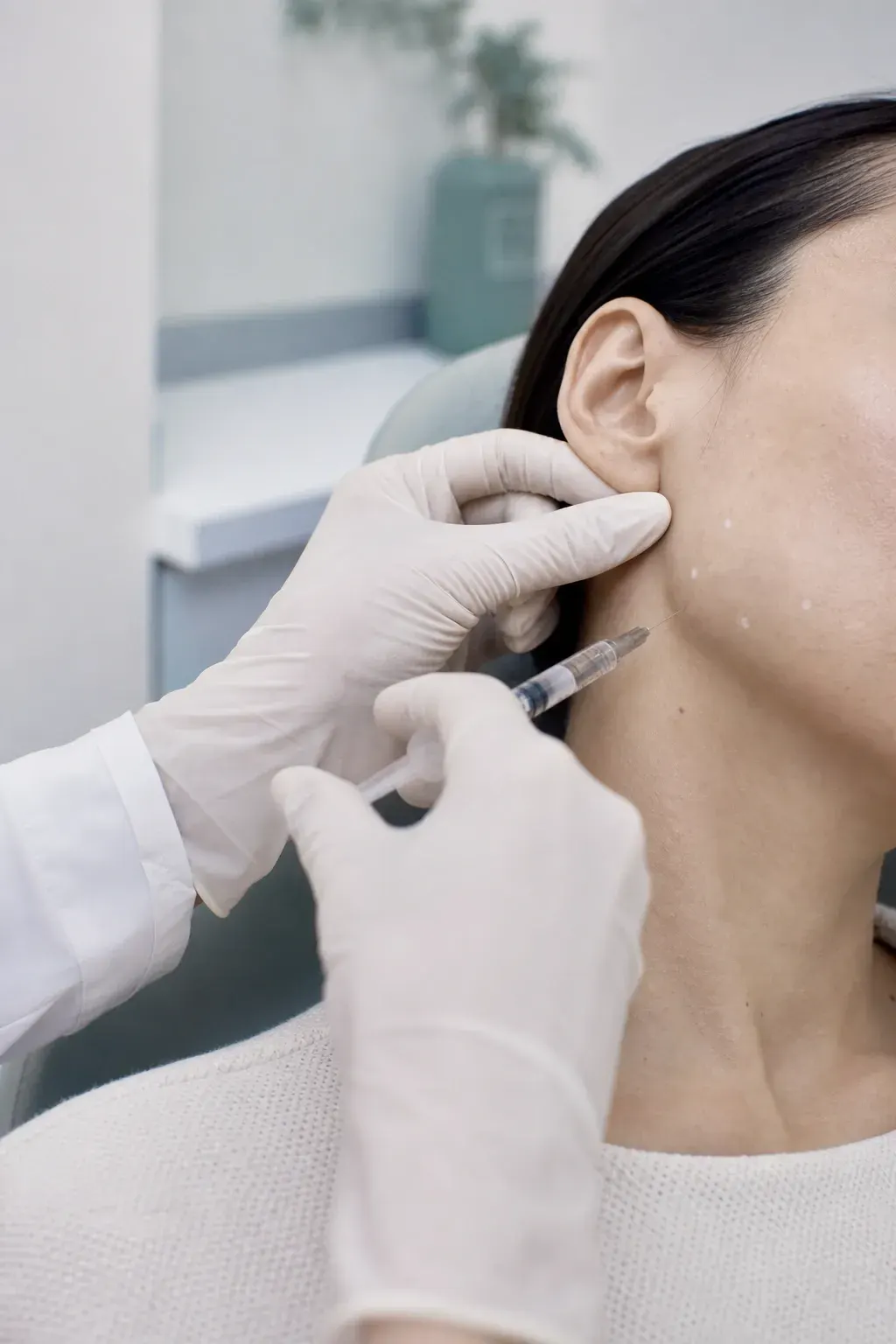
Botox for TMJ in Brookline, MA targets the masseter and temporalis muscles that drive clenching and grinding, reducing the force they generate and easing the ache that comes with it. We treat patients from Coolidge Corner, Brookline Village, Chestnut Hill, Newton, Allston and Brighton who wake with a tight, tired jaw.
Dr. Sara Stock, DDS works with the muscles of mastication every clinical day and treats jaw pain as part of a whole-airway picture rather than in isolation. Masseter injection is planned differently from cosmetic dosing: the target, the depth and the volume all change when the goal is force reduction rather than line softening.
The Challenge
When Jaw Clenching Calls for Botox for TMJ
Understanding Masseter Overload
Understanding Your Treatment
What Is Botox for TMJ?
The Science of Muscle Force Reduction
Botox for TMJ is the injection of botulinum toxin type A into the masseter and, where indicated, the temporalis muscles to reduce the force of clenching and grinding. It treats the muscular component of temporomandibular disorder rather than the joint itself, which is why it works best for muscular pain and less well for internal joint derangement.
The toxin blocks the nerve signal that tells the muscle to contract, so the muscle relaxes and its bulk gradually reduces with sustained treatment. Chewing function is preserved because dosing is calculated to weaken rather than paralyse. Effects begin within about a week and typically last three to four months, after which treatment is repeated if it helped.
Treatment Timeline:
- Treatment Time:
- 15 to 20 minutes
- First Signs:
- 5 to 7 days
- Full Effect:
- 2 to 3 weeks
- Recovery:
- None
What We Treat
Botox for TMJ Treatment Areas
Muscles and Symptoms Targeted
- Masseter Muscle
- Reduces the force of the primary clenching muscle at the jaw angle
- Temporalis Muscle
- Eases the fan-shaped muscle behind the temple headaches
- Nighttime Grinding
- Lowers the intensity of bruxism episodes during sleep
- Morning Jaw Ache
- Relieves the soreness that greets clenchers on waking
- Tension Headaches
- Reduces temple headaches driven by overworked jaw muscles
- Jaw Widening
- Softens the squared lower face caused by masseter hypertrophy
Benefits of Botox for TMJ
Relief the guard cannot give
Botox for TMJ vs. Alternatives
Muscular jaw pain responds to several approaches, and combining them usually works better than choosing one.
| Treatment | Mechanism | Time | Results | Duration | Downtime | Best For |
|---|---|---|---|---|---|---|
| Botox for TMJ | Reduces muscle contraction force | 15-20 min | 5-7 days | 3-4 months | None | Muscular clenching, masseter pain and headaches |
| Custom Night Guard | Protects teeth and cushions force | 2 visits | First night | 3-5 years | None | Protecting enamel and restorations from grinding |
| EMFACE TMJ | Muscle stimulation and RF therapy | 20 min | 2-4 weeks | Course dependent | None | Jaw tension treated without injections |
| Sleep Apnea Treatment | Opens the airway during sleep | 2-3 visits | 1-2 weeks | Nightly wear | None | Grinding driven by airway collapse |


Is This Right for You
Who Is a Good Candidate for Botox for TMJ?
Muscle Pain Versus Joint Pain
Botox treats the muscular component of jaw pain. Where the problem lies inside the joint itself, such as a displaced disc, the response is far less predictable, so the examination separates the two before treatment is offered.
Ideal Candidates for Botox for TMJ
- Patients with morning jaw soreness and tenderness over the masseter
- Anyone with tension headaches at the temples linked to clenching
- Patients whose night guard protects the teeth but has not reduced the muscle ache
- People with visible masseter hypertrophy and a squared lower face
- Patients with crowns or veneers at risk from heavy grinding forces
Who Should Wait or Choose Another Option
- Patients who are pregnant or breastfeeding
- Anyone with a neuromuscular disorder such as myasthenia gravis
- Patients whose pain arises from within the joint rather than the muscles
- Anyone with a known hypersensitivity to botulinum toxin or albumin
- Patients who have not yet tried a custom occlusal splint, which is often the sensible first step
FDA Status
Botulinum toxin is FDA-approved for several cosmetic and medical indications, but injection of the masseter for temporomandibular disorder and bruxism is an off-label use. The evidence base is developing, with randomised trials reporting benefit for myofascial pain. We explain this openly rather than implying an approval that does not exist. Background on temporomandibular disorders is published by the National Institute of Dental and Craniofacial Research.
Your Experience
What Happens During Botox for TMJ Treatment
Step-by-Step Process
Assessment
Dr. Stock palpates the masseter and temporalis, checks joint sounds and reviews your bite.
Mapping
Injection points are marked while you clench, so the bulk of the muscle is located precisely.
Injection
Small volumes are placed into each mapped point using a fine needle, taking a few minutes.
Aftercare
You stay upright for four hours and avoid massaging the area or strenuous exercise that day.
Review
We reassess at two to three weeks and adjust dosing at the next treatment if needed.
Risks and Side Effects
What to Know
Common Side Effects of Masseter Botox
Mild bruising or tenderness at the injection sites is the most frequent effect and settles within three to seven days. Temporary chewing fatigue when eating tough food is common for the first two weeks as the muscle adapts to reduced force. A brief headache after treatment is occasionally reported.
Less Common Complications
Asymmetry of the smile can occur if product diffuses toward the risorius or zygomaticus muscles, which resolves as the effect wears off over several weeks. Excessive weakening makes chewing tiring, which is why conservative dosing and review matter. Repeated high-dose treatment over years has been associated with reduced masseter bulk, which some patients want and others do not, so the aesthetic effect is discussed in advance.
Safety and Off-Label Status
Masseter injection for temporomandibular disorder is an off-label use of an FDA-approved medication, and we say so plainly. Tell us about neuromuscular disorders, pregnancy, breastfeeding and prior reactions to botulinum toxin. Where the pain source is the joint rather than the muscle, injection is unlikely to help. Background is published by the National Institute of Dental and Craniofacial Research.
Investment
Botox for TMJ Cost in Brookline
Pricing and Payment Options
How Much Does Botox for TMJ Cost in Brookline?
Treatment is priced by unit, and masseter injection needs considerably more units than cosmetic dosing because the muscle is large and strong. Typical masseter treatment uses 20 to 30 units per side, with additional units where the temporalis is treated. Greater Boston pricing commonly runs $12 to $20 per unit. Assessment begins with the $195 TMJ exam, and the treatment total is quoted before any product is drawn up.
Insurance and Flexible Payment Options
Because masseter injection for TMJ is an off-label use, medical and dental plans rarely cover it. We tell you the full cost at the exam so the decision is made with complete information.
- Cherry - monthly payment plans, apply at pay.withcherry.com/smilebrookline
- Combined planning - often costed alongside a night guard or EMVITAL therapy
The Smile Brookline Difference
Why Choose Smile Brookline for Botox for TMJ in Brookline
Beacon Street Since 1992
Dr. Sara Stock, DDS assesses jaw muscles, bite and airway as one system, which matters because clenching is frequently airway-driven rather than stress-driven. Injecting the masseter without asking why it is overworking treats the symptom and misses the reason, and this practice is built to ask that question.
Dental Anatomy Expertise
Injected by clinicians who assess these muscles daily
Cause Investigated
Airway and bite assessed alongside the muscle treatment
Combined Approach
Guards, <a href="/services/tmj-treatment/emvital/">EMVITAL therapy</a> and appliance therapy available in one practice
Honest About Off-Label
We explain the FDA status of masseter injection upfront
Certified Vivos Provider
Airway therapy available when breathing drives the clenching
Units Documented
Sites and dosing recorded so each visit builds on the last

Explore More
Night Guards
Custom occlusal splints that protect your teeth and ease jaw tension while you sleep.
- Precise Fit
- Protects Investment
- Thin and Comfortable
Explore More
Emface TMJ
Needle-free muscle therapy for jaw tension, clenching and TMJ pain.
- No Needles
- No Medication
- No Downtime
Explore More
Emvital
Hands-free laser therapy for jaw pain, stiffness and muscle tension.
- Hands-Free
- No Needles
- No Downtime
Explore More
Sleep Apnea Treatment
A comfortable alternative to CPAP that treats the airway itself.
- No Mask or Hose
- Genuinely Portable
- Higher Adherence
Common Questions
Frequently Asked Questions About Botox for TMJ
How much does Botox for TMJ cost in Brookline, MA?
How long does Botox for TMJ last?
Does Botox for TMJ hurt?
When will my jaw feel better?
How often do I need treatment?
Is this the same as cosmetic Botox?
Do I still need a night guard?
Can men have Botox for TMJ?
Will it change the shape of my face?
Is Botox for TMJ FDA approved?
Could my clenching be caused by my breathing?
Get Started
Book Your $195 TMJ Exam
References
- Delcanho R et al., J Oral Facial Pain Headache. (2022). Botulinum Toxin for Treating Temporomandibular Disorders: What is the Evidence?. PMID: 35298571.
- DE LA Torre Canales G et al., J Appl Oral Sci. (2021). Botulinum toxin type A and acupuncture for masticatory myofascial pain: a randomized clinical trial. PMID: 34105695.
- Ferrillo M et al., Toxins (Basel). (2025). The Role of Botulinum Toxin for Masseter Muscle Hypertrophy: A Comprehensive Review. PMID: 39998108.
- National Institute of Dental and Craniofacial Research. (2024). Federal overview of temporomandibular disorders and the conservative treatments studied for jaw muscle pain.