
Guided Biofilm Therapy in Brookline, MA
- Visit Length:
- 45-60 minutes
- Comfort:
- No scraping
- Recommended:
- Every 6 months
- Downtime:
- None
Advanced Hygiene
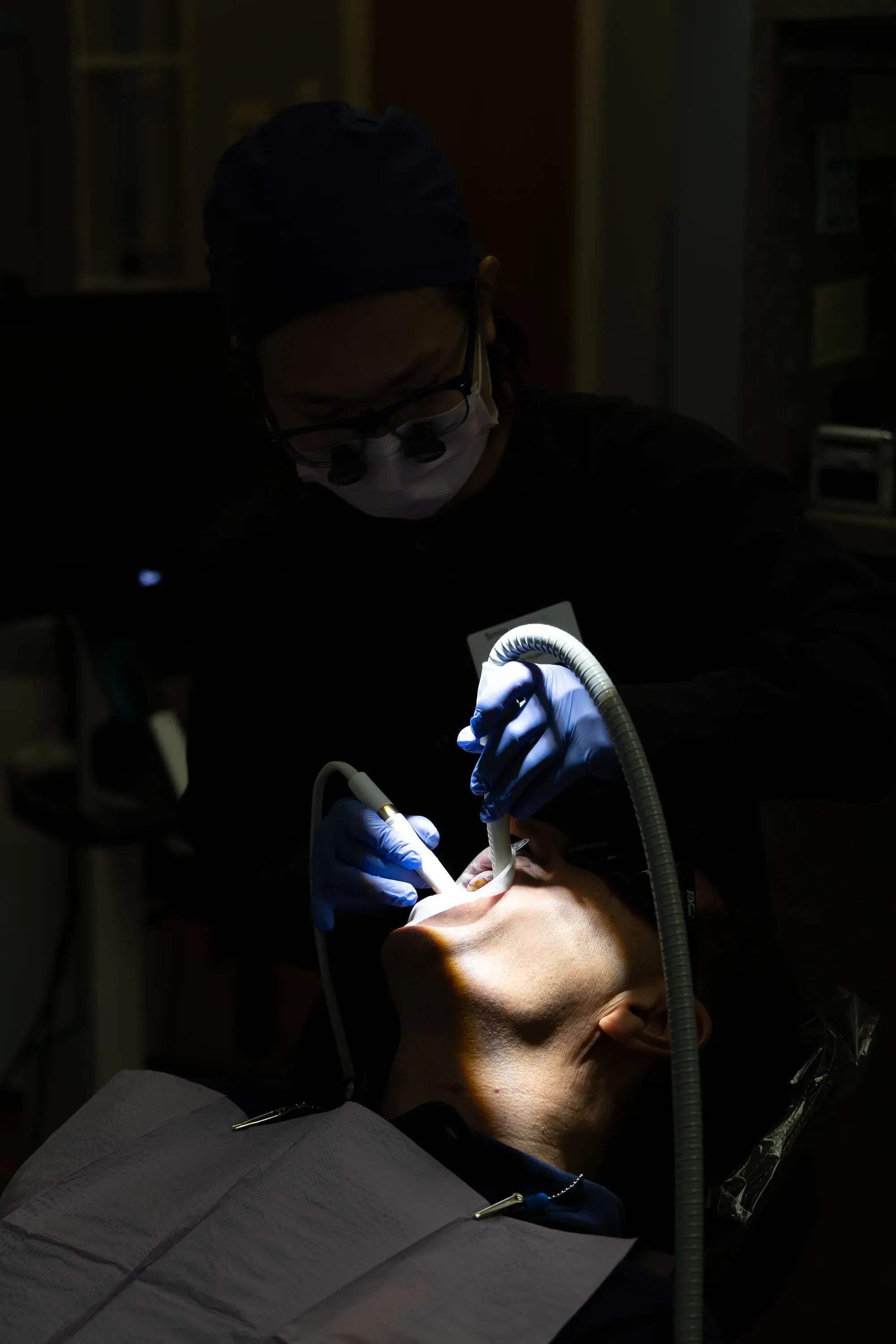
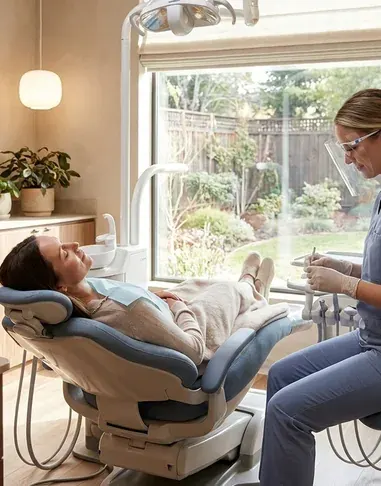
Guided Biofilm Therapy in Brookline, MA is an eight-step hygiene protocol that makes plaque visible with a disclosing dye, then removes it with a warm spray of water, air and fine erythritol powder instead of a metal scaler. Patients from Coolidge Corner, Brookline Village, Chestnut Hill, Newton and Brighton choose it when routine cleanings have felt harsh.
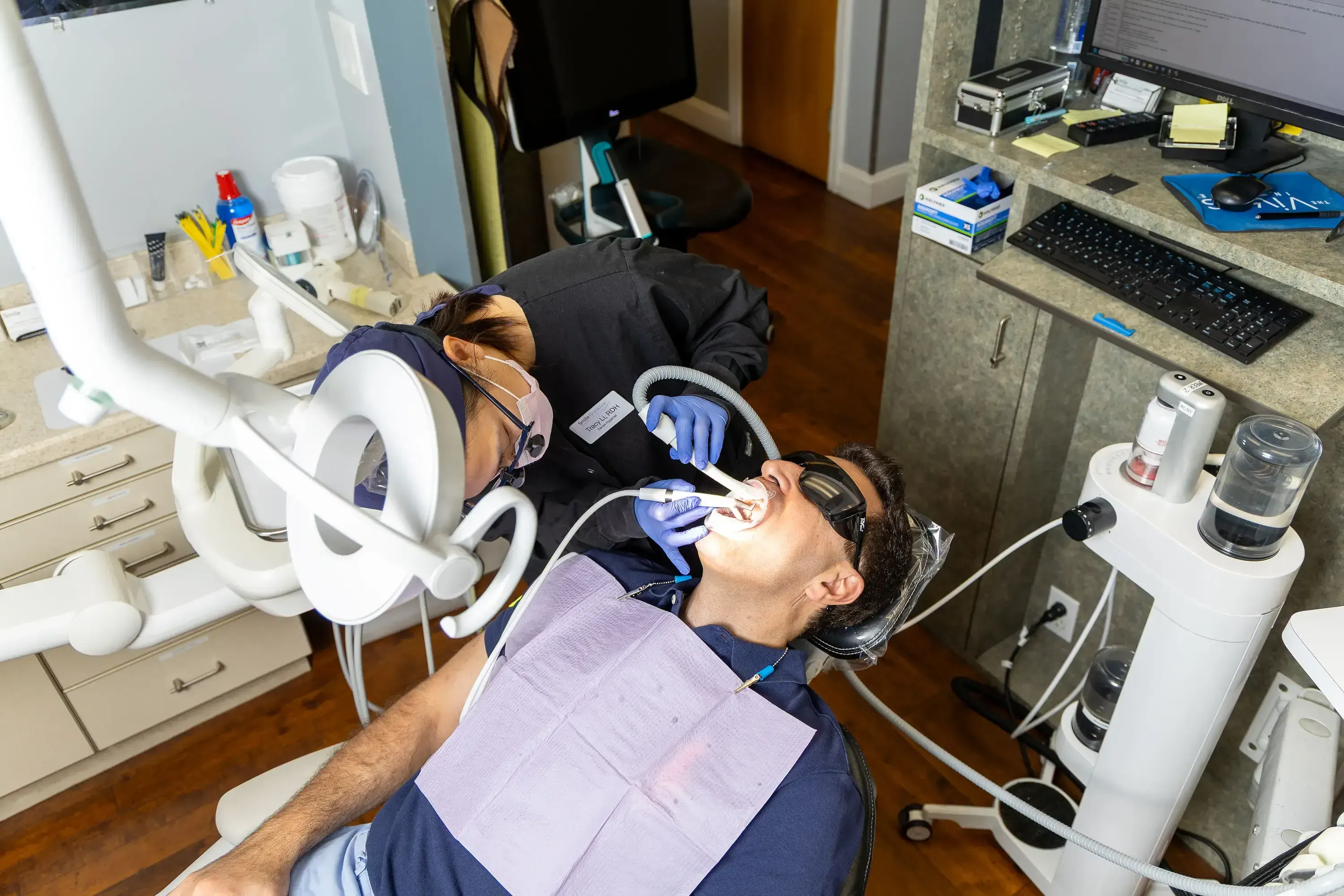
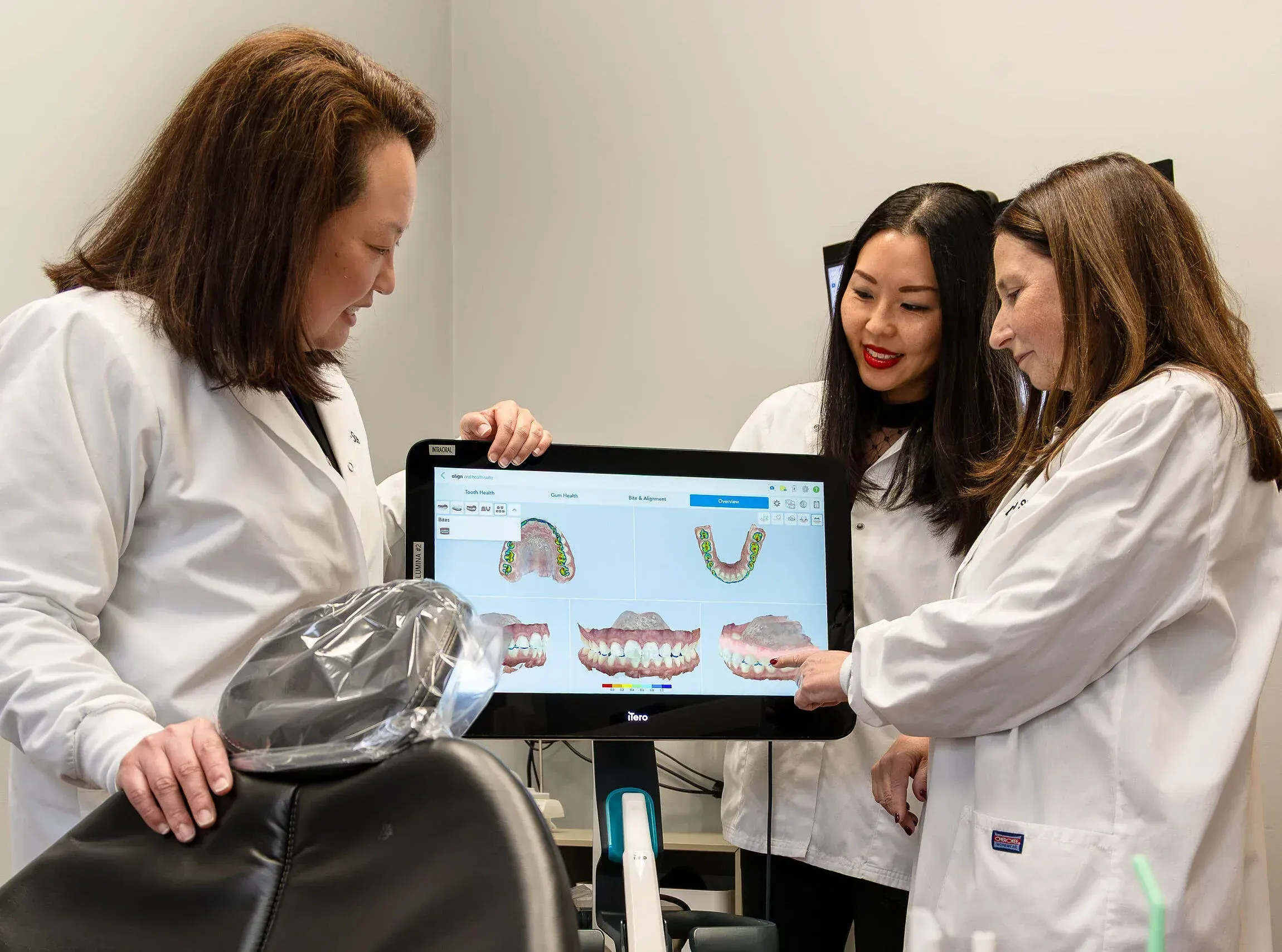
Dr. Sara Stock, DDS invested in air-polishing technology because too many patients were stretching six-month visits into two-year gaps to avoid the scraping. Our hygienists are trained in the full GBT sequence, and they use it around veneers, crowns, implants and orthodontic attachments where hand instruments risk scratching the surface.
The Difference
Why Guided Biofilm Therapy Feels Different
Understanding Air-Polishing
Understanding Your Treatment
What Is Guided Biofilm Therapy?
The Science of Air-Polishing
Guided Biofilm Therapy is a structured cleaning protocol developed by EMS that treats dental plaque as a biofilm to be disclosed, removed and then prevented. A dye makes the biofilm visible, an erythritol powder spray removes it from tooth surfaces and shallow pockets, and an ultrasonic tip handles any remaining calculus. The sequence ends with a review of what caused the buildup.
Erythritol is a sugar alcohol milled into particles small enough to disturb bacteria without scratching enamel, cementum, composite or titanium. That is why it suits implants, veneers and braces, where harder powders can leave micro-scratches for new plaque to settle into. Most patients describe it as a warm rinse rather than a scrape.
Treatment Timeline:
- Treatment Time:
- 45 to 60 minutes
- First Signs:
- Immediately
- Full Effect:
- 3 to 7 days
- Recovery:
- None
What We Treat
Guided Biofilm Therapy Treatment Areas
Comfortable Biofilm Control
- Sensitive Teeth
- Removes biofilm without the scraping that triggers sensitivity
- Around Implants
- Cleans titanium surfaces without scratching or scoring them
- Braces and Aligners
- Reaches around brackets, attachments and wires that trap plaque
- Veneers and Crowns
- Lifts stain from ceramic margins without dulling the glaze
- Coffee and Tea Stain
- Clears everyday extrinsic discoloration from enamel surfaces
- Early Gum Inflammation
- Disrupts the biofilm driving bleeding and puffy gum tissue
Benefits of Guided Biofilm Therapy
Cleaner teeth, calmer visit
Guided Biofilm Therapy vs. Alternatives
Air-polishing removes soft biofilm and stain. Hardened tartar still needs an ultrasonic tip, and diagnosed gum disease needs deeper care.
| Treatment | Mechanism | Time | Results | Duration | Downtime | Best For |
|---|---|---|---|---|---|---|
| Guided Biofilm Therapy | Erythritol air-polishing | 45-60 min | Immediate | About 6 months | None | Sensitive teeth, implants, braces |
| Traditional Cleaning | Hand and ultrasonic scaling | 45-60 min | Immediate | About 6 months | None | Healthy gums, moderate tartar |
| Scaling and Root Planing | Deep cleaning below gumline | 2 visits | 2-6 weeks | 3-4 months | 1-2 days | Diagnosed periodontitis |
| Sodium Bicarbonate Polishing | Coarser powder spray | 30-45 min | Immediate | About 6 months | None | Heavy stain on natural enamel only |

Is This Right for You
Who Is a Good Candidate for Guided Biofilm Therapy?
Finding Your Best Hygiene Visit
Guided Biofilm Therapy suits almost anyone due for a hygiene visit, and it is the obvious choice for patients whose teeth or restorations make traditional scaling uncomfortable.
Ideal Candidates for Guided Biofilm Therapy
- Patients with sensitive teeth or exposed root surfaces after recession
- Anyone with dental implants, veneers, crowns or bonded restorations
- Patients in braces or wearing Invisalign clear aligners with bonded attachments
- People who have avoided cleanings because past visits were painful
- Children and teens who find the sound of a scaler distressing
Who Should Choose Another Option First
- Patients with diagnosed periodontitis, who need scaling and root planing before maintenance
- Anyone with very heavy calculus, which requires ultrasonic removal in the same visit
- Patients on a sodium-restricted diet, if a bicarbonate powder is being considered rather than erythritol
- Anyone with an acute infection or abscess, which is treated as an emergency first
Tell us about respiratory conditions such as poorly controlled asthma or COPD before the appointment, since the powder spray is adjusted or replaced in those cases.
Your Experience
What Happens During Guided Biofilm Therapy Treatment
Step-by-Step Process
Disclose
A harmless dye stains the biofilm so both of you can see where it sits.
Coach
Your hygienist shows you the pattern and adjusts your brushing technique to match.
Air-Polish
Warm water, air and erythritol powder lift the stained biofilm off every surface.
Refine
A thin ultrasonic tip removes any remaining hardened calculus above and below the gumline.
Review
We re-check with the dye, then set your recall interval with Dr. Stock's exam findings.
Risks and Side Effects
What to Know
Common Guided Biofilm Therapy Side Effects
Most patients report none. A small number notice brief gum tenderness where inflammation was heaviest, or short-lived cold sensitivity once tartar that was insulating an exposed root is removed. Both usually settle within one to three days.
Less Common Effects
Temporary soft-tissue irritation from the powder spray can occur, and the disclosing dye may briefly tint dry lips or the tongue. Air-polishing is avoided over freshly placed restorations and open wounds. Subcutaneous emphysema is a documented but rare risk of air-driven devices, which is why the spray is directed along the tooth surface and never into a pocket or surgical site.
Safety and Who Should Tell Us First
Let us know about asthma, COPD, chronic respiratory disease, a sodium-restricted diet, pregnancy or any immune condition. The American Dental Association maintains guidance on powered plaque removal, and our hygienists work under Dr. Sara Stock, DDS to match the method to your history.
Investment
Guided Biofilm Therapy Cost in Brookline
Pricing and Payment Options
How Much Does Guided Biofilm Therapy Cost in Brookline?
GBT is priced as a hygiene appointment, and the fee depends on how much deposit has accumulated, whether X-rays and fluoride are included, and whether you are on a six-month or three-month recall. New patients usually start with the comprehensive exam package at $295, which covers the examination, full-mouth X-rays, an oral health scan and an oral cancer screening. Your hygiene fee is confirmed at that appointment.
Insurance and Flexible Payment Options
Smile Brookline is fee-for-service, so clinical decisions are not dictated by an insurance contract, and we submit claims to all major commercial dental carriers on your behalf. Preventive visits are typically the best-covered benefit on a dental plan.
- Cherry - monthly payment plans, apply at pay.withcherry.com/smilebrookline
- HSA and FSA funds - accepted for preventive and restorative treatment
The Smile Brookline Difference
Why Choose Smile Brookline for Guided Biofilm Therapy in Brookline
Beacon Street Since 1992
Dr. Sara Stock, DDS brought Guided Biofilm Therapy into a practice that already ran on comfort, and it is now the default for patients with sensitive roots, implants or orthodontic attachments. Our hygienists follow the full disclosed-and-documented protocol rather than treating the air-polisher as an optional extra at the end.
Full GBT Protocol
The complete disclose, remove and prevent sequence, not a shortcut
Trained Hygienists
Air-polishing technique practiced daily, not occasionally
Implant-Safe Method
Erythritol powder chosen specifically to protect restorations
Unhurried Appointments
Time built into the schedule so nothing is rushed
Now the Default
Standard for sensitive roots, implants and orthodontic work
Saturday Appointments
Open Saturday mornings from 7:30am for working patients
Explore More
Dental Cleaning
Comfortable hygiene visits built around prevention rather than repair.
- Stops Gum Disease Early
- Fewer Fillings
- Immediate Freshness
Explore More
Scaling and Root Planing
Deep cleaning that reaches below the gumline to stop infection.
- Avoids Surgery
- Measurable Result
- Stops Attachment Loss
Explore More
Gum Disease Treatment
Stop bleeding, swelling and bone loss before you lose a tooth.
- Stops Bone Loss
- Bleeding Resolves
- Fresher Breath
Explore More
Scaling and Root Planing
Deep cleaning that reaches below the gumline to stop infection.
- Avoids Surgery
- Measurable Result
- Stops Attachment Loss
Common Questions
Frequently Asked Questions About Guided Biofilm Therapy
How much does Guided Biofilm Therapy cost in Brookline, MA?
How long does a Guided Biofilm Therapy appointment take?
Does Guided Biofilm Therapy hurt?
How often should I have Guided Biofilm Therapy?
When will I see results?
What is the difference between GBT and a regular dental cleaning?
Is it safe around dental implants and veneers?
Can children have Guided Biofilm Therapy?
Will it whiten my teeth?
Can I have GBT if I have asthma?
Get Started
Book Your GBT Cleaning
References
- Vouros I et al., Int J Dent Hyg. (2022). A novel biofilm removal approach (Guided Biofilm Therapy) utilizing erythritol air-polishing and ultrasonic piezo instrumentation: A randomized controlled trial. PMID: 34218516.
- Mensi M et al., Int J Dent Hyg. (2022). Clinical evaluation of air polishing with erythritol powder followed by ultrasonic calculus removal versus conventional ultrasonic debridement and rubber cup polishing for the treatment of gingivitis: A split-mouth randomized controlled clinical trial. PMID: 34275193.
- Mensi M et al., Int J Dent Hyg. (2024). Air-polishing followed by ultrasonic calculus removal for the treatment of gingivitis: A 12-month, split-mouth randomized controlled clinical trial. PMID: 38689395.
- American Dental Association. (2025). Oral Health Topics library covering professional prophylaxis and powered plaque removal instrumentation.