Jowls Treatment in Brookline, MA
- Common In:
- Adults 40+
- Primary Causes:
- Collagen, muscle tone, bone
- Treatment Time:
- 20-60 minutes
- Results:
- 4-6 weeks

Introduction
Non-surgical options for a softening jawline
Understanding Facial Ageing
What Causes a Sagging Jawline?
Recognising the Signs
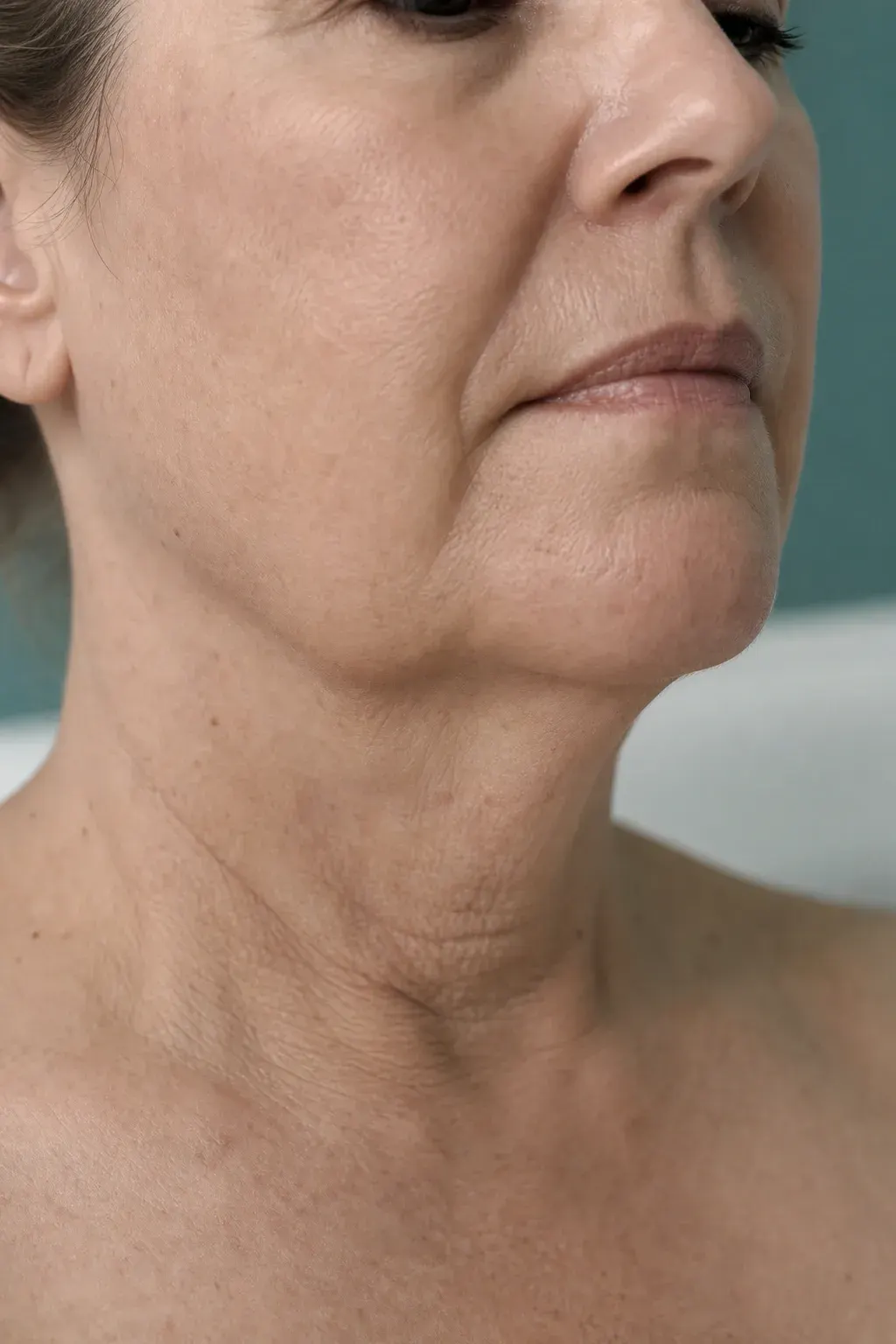
Jowling is the descent of soft tissue along the lower face, producing a break in what was once a continuous jawline. It results from several changes happening at once: reduced skin elasticity, loss of facial muscle tone, redistribution of fat pads and, over longer periods, change in the underlying bone.
Most patients notice it in photographs taken from a slight angle, or in the way a scarf or a collar now sits. The face still looks like yours, but the definition between the jaw and the neck has softened in a way moisturiser does not touch.
Because several layers are involved, treatments that address only one produce partial results. Understanding which layer dominates in your case determines whether tightening the skin, toning the muscle or something else is the sensible starting point.
Why the Jawline Softens With Age
Understanding the Root Causes
01The Science
Collagen and elastin production declines steadily from the mid-twenties, and the dermis thins as a result. Skin that once recoiled instantly now returns more slowly and holds the shape gravity gives it. Sun exposure accelerates this considerably by degrading the elastic fibre network directly.
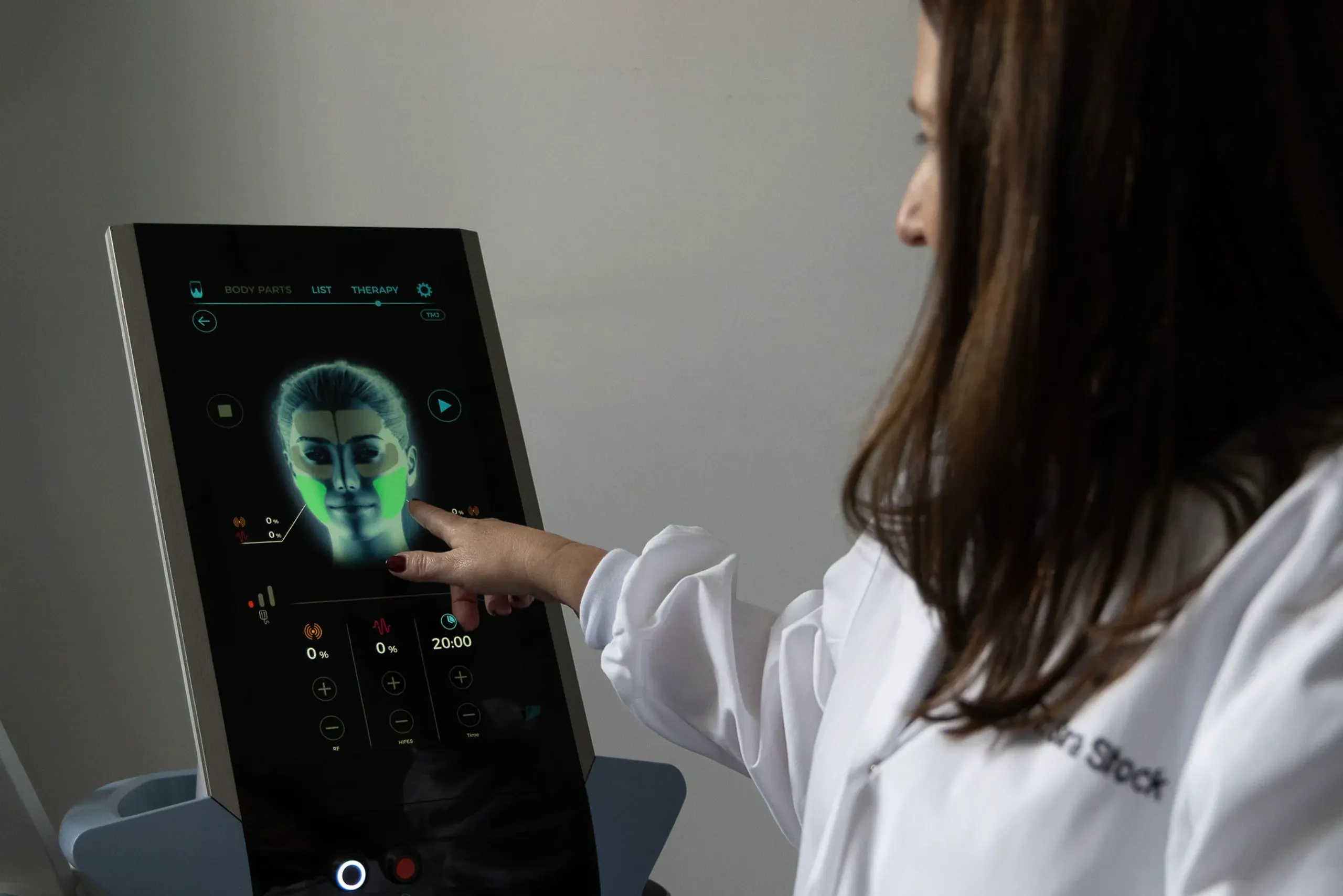
Facial muscle tone declines in parallel. The muscles supporting the mid-face and lower face lose bulk and resting tension the way any muscle does with age, and the soft tissue they support descends with them. This is the layer that Emface targets, using muscle stimulation alongside radiofrequency.
Structural change compounds both. Facial fat pads descend and deflate rather than simply enlarging, and where teeth have been lost, the resorbing jaw ridge removes support from the lower face entirely. Implant-supported prosthetics preserve that support in a way conventional dentures do not.
02Deeper Understanding
Skin Quality Versus Muscle Tone
Why Layer Matters More Than Product
Two patients can describe the same complaint and need entirely different treatment. Where the dominant change is dermal, the skin looks crepey and finely lined and the priority is collagen: radiofrequency energy delivered into the dermis triggers new collagen and elastin formation over the following weeks.
Where the dominant change is muscular, the skin quality is reasonable but the contour has descended. Reviews of radiofrequency for face and neck rejuvenation describe the effect on tissue tightening, while clinical work on synchronised radiofrequency with facial muscle stimulation examines the combined approach to lifting.
Clenching adds a third variable. A hypertrophied masseter widens the lower face and changes the jaw silhouette in a way that has nothing to do with ageing, and reducing that muscle bulk with masseter treatment alters the contour directly.
Contributing Factors
What Accelerates a Sagging Jawline?
Identifying Your Triggers
Several factors speed the softening of the lower face, and most act on more than one tissue layer at a time.
- Collagen Decline
- Production falls steadily from the mid-twenties, thinning the dermis and reducing recoil.
- Sun Exposure
- Ultraviolet radiation degrades the elastic fibre network faster than any other external factor.
- Muscle Tone Loss
- Facial muscles lose bulk and resting tension with age, so the tissue they support descends.
- Fat Pad Descent
- Facial fat compartments deflate and shift downward rather than simply enlarging.
- Tooth and Bone Loss
- A resorbing jaw ridge after tooth loss removes the skeletal support of the lower face.
- Smoking
- Reduces dermal blood supply and accelerates collagen breakdown measurably.
Is This You?
You May Be Experiencing Jawline Softening If...
These are the observations that bring patients to an aesthetic consultation, and each points toward a particular layer.
A Broken Jaw Line
The continuous line from chin to ear now has a soft break partway along it.
Crepey Neck Skin
Fine horizontal creasing has developed on the neck and under the chin.
Photograph Angles
Photographs taken slightly from below now look noticeably different from mirror views.
Lost Cheek Position
Mid-face fullness sits lower than it did, changing how the whole face reads.
A Squared Lower Face
The jaw looks wider at the angle, often from a hypertrophied clenching muscle.
Skincare Not Helping
Topical products improve surface feel but have changed nothing about the contour.
Treatment Options Comparison
Compare the non-surgical treatments we offer for a softening jawline, matched to whether skin, muscle or clenching is the main factor.
| Treatment | Best For | Session Time | Results Timeline | Maintenance |
|---|---|---|---|---|
| Botox Cosmetic | Expression lines in the upper face | 10-20 min | 3-5 days | Every 3-4 months |
| Emface | Lifting and toning facial muscle | 20 min | 4-6 weeks | 1-2 sessions a year |
| RF Microneedling | Crepey texture and skin firmness | 45-60 min | 1-2 weeks | 1-2 sessions a year |
| Exion Face | Skin laxity along the jaw and neck | 30-45 min | 4-8 weeks | 1-2 sessions a year |
| Botox for TMJ | A squared jaw from masseter bulk | 15-20 min | 5-7 days | Every 3-4 months |
Why Smile Brookline
Why Choose Smile Brookline for Sagging Jawline Care in Brookline, MA
Expert Care in Brookline
At Smile Brookline, facial aesthetics are delivered by clinicians who assess facial musculature and jaw function every clinical day, so the lower face is considered as structure rather than only as skin.
Layer-Led Assessment
Skin quality, muscle tone and jaw function are evaluated as separate contributors.
BTL Technology On Site
Emface and Exion are both available, so the right device is matched to the right layer.
Jaw Function Included
Clenching and masseter bulk are assessed, since they change the lower face silhouette.
Honest About Limits
Significant laxity is identified as beyond non-surgical range rather than treated anyway.
Airway Considered
Sleep and breathing are screened, since both change how the lower face is held.
Unhurried Appointments
Fee for service means treatment time is not rationed by an insurance schedule.

Explore More
Emface
Tone facial muscles and rebuild collagen in 20-minute sessions without needles.
- No Needles
- Zero Downtime
- Muscle and Skin Together
Explore More
RF Microneedling
Exion radiofrequency microneedling with exosome therapy for smoother, refined skin.
- Builds Real Collagen
- Short Recovery
- Safe for All Skin Tones
Explore More
Botox Cosmetic
Smooth frown lines and crow's feet with precise, natural-looking results.
- Fast Appointment
- No Recovery Needed
- Natural Movement Kept
Explore More
Night Guards
Custom occlusal splints that protect your teeth and ease jaw tension while you sleep.
- Precise Fit
- Protects Investment
- Thin and Comfortable
Your Questions
Frequently Asked Questions
Can I slow down jawline softening?
How do I know which treatment is right for me?
How quickly will I see results?
Is jowling normal as I age?
Can losing teeth change my face shape?
What can I do at home?
Can multiple treatments be combined?
When is surgery the better option?
Get Started
Schedule Your Aesthetic Consultation
Scientific References
- Austin GK et al., Lasers Surg Med. (2022). Evaluating the effectiveness and safety of radiofrequency for face and neck rejuvenation: A systematic review. PMID: 34923652.
- Manuskiatti W et al., Lasers Surg Med. (2025). The Efficacy and Safety of Synchronized Radiofrequency and High Intensity Facial Electrical Stimulation in Improving Facial Skin Laxity and Quality in Asians. PMID: 39800907.
- Feng J et al., Lasers Surg Med. (2025). Noninsulated Microneedle Radiofrequency for Skin Rejuvenation: A Histological, Transcriptomic and Clinical Study. PMID: 40518713.
- American Academy of Dermatology. (2025). Patient resource on facial aging, skin laxity and the non-surgical treatments available.