
Gum Recession Treatment in Brookline, MA
- Common In:
- Adults 30+
- Primary Causes:
- Inflammation, brushing, biotype
- Treatment Time:
- 60-90 minutes
- Results:
- 2-3 weeks to long term
Introduction
Protect the roots before more is lost
Understanding Your Gums
What Are Receding Gums?
Recognising the Signs
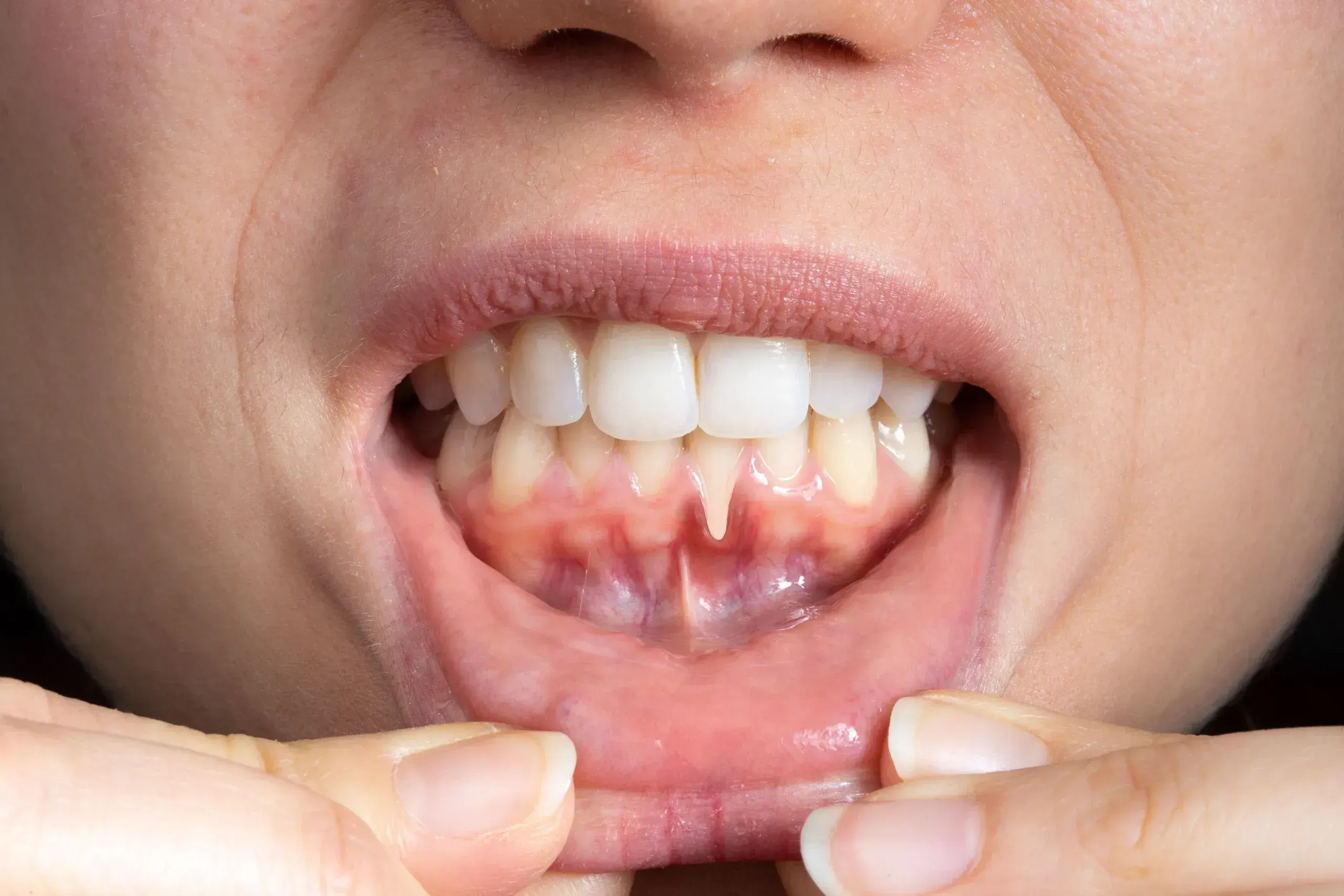
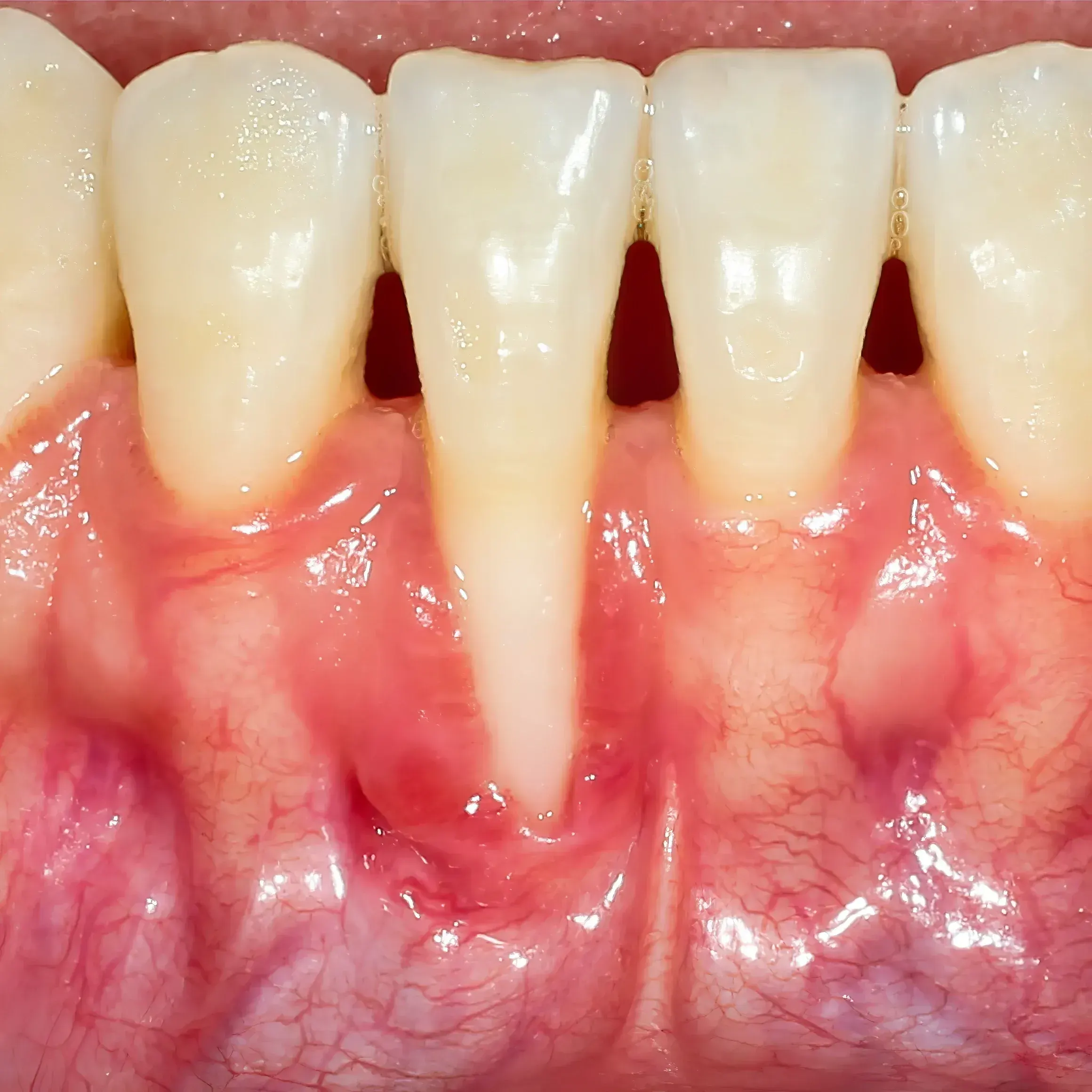
Gum recession is the apical migration of the gingival margin, exposing the root surface of a tooth. Unlike enamel, root surface is covered by cementum, which is softer, more permeable and far more sensitive to temperature and touch.
When you look closely, one tooth appears longer than its neighbour and there is a band near the gumline that is slightly yellower and duller than the crown above it. Cold water finds that spot specifically. Brushing there is uncomfortable enough that you start avoiding it.
Most patients describe it as ageing rather than a condition, which is why it is often left until sensitivity becomes constant. Systematic reviews report recession affecting a large proportion of adults, and it does not reverse on its own.
Why Gum Recession Happens
Understanding the Root Causes
01The Science
Two mechanisms dominate. The first is inflammatory: bacterial biofilm at the gumline provokes an immune response that destroys the attachment holding gum to tooth, and the margin retreats as the underlying bone is lost. This is the periodontal route, and it typically affects several teeth at once.
The second is mechanical. Excessive brushing force, an abrasive technique or a horizontal scrubbing motion wears the delicate margin away over years, usually on the side you brush hardest. Patients with a naturally thin gum biotype, where tissue is only a fraction of a millimetre thick, are considerably more vulnerable.
Grinding compounds both. Heavy occlusal forces flex the tooth at the neck and stress the tissue attached to it, and where clenching is chronic, recession and wear notches often appear together. Treating gum disease without addressing the grinding leaves half the cause in place.
02Deeper Understanding
Thin Tissue and Bone Support
How Biotype Affects Recession Risk
The gum you can see is only part of the picture. Underneath sits the alveolar bone that supports it, and gum tissue only stays where bone holds it. Where the bone plate over a root is naturally thin or absent, a condition called dehiscence, the tissue above it has almost nothing to sit on.
Tooth position matters for the same reason. A tooth positioned toward the outside of the arch sits closer to that thin outer plate, so patients with crowding often show recession on exactly the teeth that stick out furthest. Correcting position with clear aligners can reduce the ongoing risk.
Age adds a slow accumulation. Every episode of inflammation, every year of firm brushing and every night of clenching removes a little more, which is why prevalence rises steadily through adulthood even in patients who look after their teeth.
Contributing Factors
What Accelerates Gum Recession?
Identifying Your Triggers
Several factors accelerate gum recession, and most patients have more than one working at the same time, which is why the pattern of loss differs from person to person.
- Periodontal Disease
- Bacterial inflammation destroys the attachment and bone that hold the gum margin in position.
- Aggressive Brushing
- Firm pressure and a horizontal scrubbing motion wear the margin away, usually on one side more than the other.
- Thin Gum Biotype
- Naturally delicate tissue over a thin bone plate offers far less resistance to both inflammation and abrasion.
- Grinding and Clenching
- Heavy occlusal force flexes the tooth at the neck and stresses the tissue attached around it.
- Tooth Position
- Teeth sitting outside the arch have less bone covering the root, so the tissue above has little support.
- Smoking
- Reduced blood flow masks bleeding, worsens periodontal response and slows healing after any treatment.
Is This You?
You May Be Experiencing Gum Recession If...
Recognising recession early matters because the treatment options are wider and simpler before root exposure becomes extensive. Book an assessment for gum grafting for receding gums if these sound familiar.
Longer-Looking Teeth
One or more teeth appear noticeably longer than their neighbours, particularly canines.
Sharp Cold Sensitivity
Cold water or air finds one specific spot near the gumline and makes you wince.
A Visible Notch
You can feel a groove or step at the neck of a tooth when your tongue passes over it.
Darker Band at the Gum
A yellower, duller band sits between the gum and the whiter crown above it.
Brushing Discomfort
You avoid brushing one area properly because the bristles hurt when they reach it.
Food Catching
Small spaces have opened between teeth near the gumline where food now lodges.
Treatment Options Comparison
Compare the treatments we offer for gum recession, from controlling the infection driving it to covering exposed roots.
| Treatment | Best For | Session Time | Results Timeline | Maintenance |
|---|---|---|---|---|
| Dental Cleaning | Preventing inflammation at the margin | 45-60 min | Immediate | Every 6 months |
| Scaling and Root Planing | Stopping the infection driving loss | 2 visits | 2-6 weeks | Every 3-4 months |
| Gum Disease Treatment | Advanced attachment and bone loss | 1-2 visits | 6-8 weeks | Every 3-4 months |
| Gum Grafting | Covering exposed root surfaces | 60-90 min | 2-3 weeks | Long term |
Why Smile Brookline
Why Choose Smile Brookline for Receding Gums Care in Brookline, MA
Expert Care in Brookline
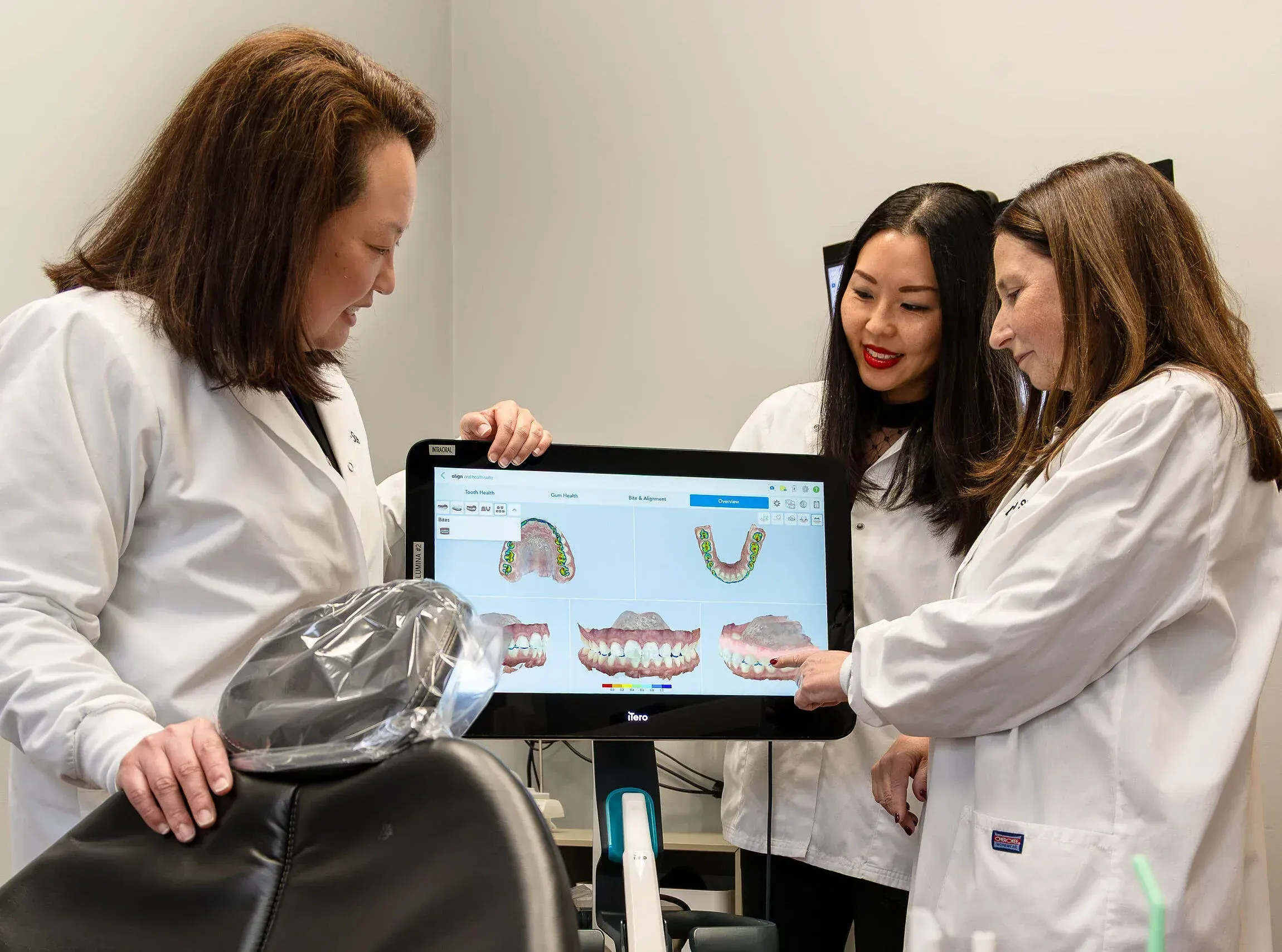
At Smile Brookline, gum recession is assessed by Dr. Yumi Ogata, a board-certified periodontist and associate professor of periodontology at Tufts, so both the cause and the correction are handled by a specialist in the same practice.
Specialist Assessment
A board-certified periodontist measures recession, tissue thickness and attached gingiva at every site.
Cause Identified First
Brushing technique, grinding, tooth position and periodontal status are reviewed before surgery is proposed.
Full Range of Options
Monitoring, non-surgical therapy and connective tissue grafting are all available in this practice.
Honest Thresholds
Stable, symptom-free recession is monitored rather than operated on for the sake of it.
Cleaning Without Scraping
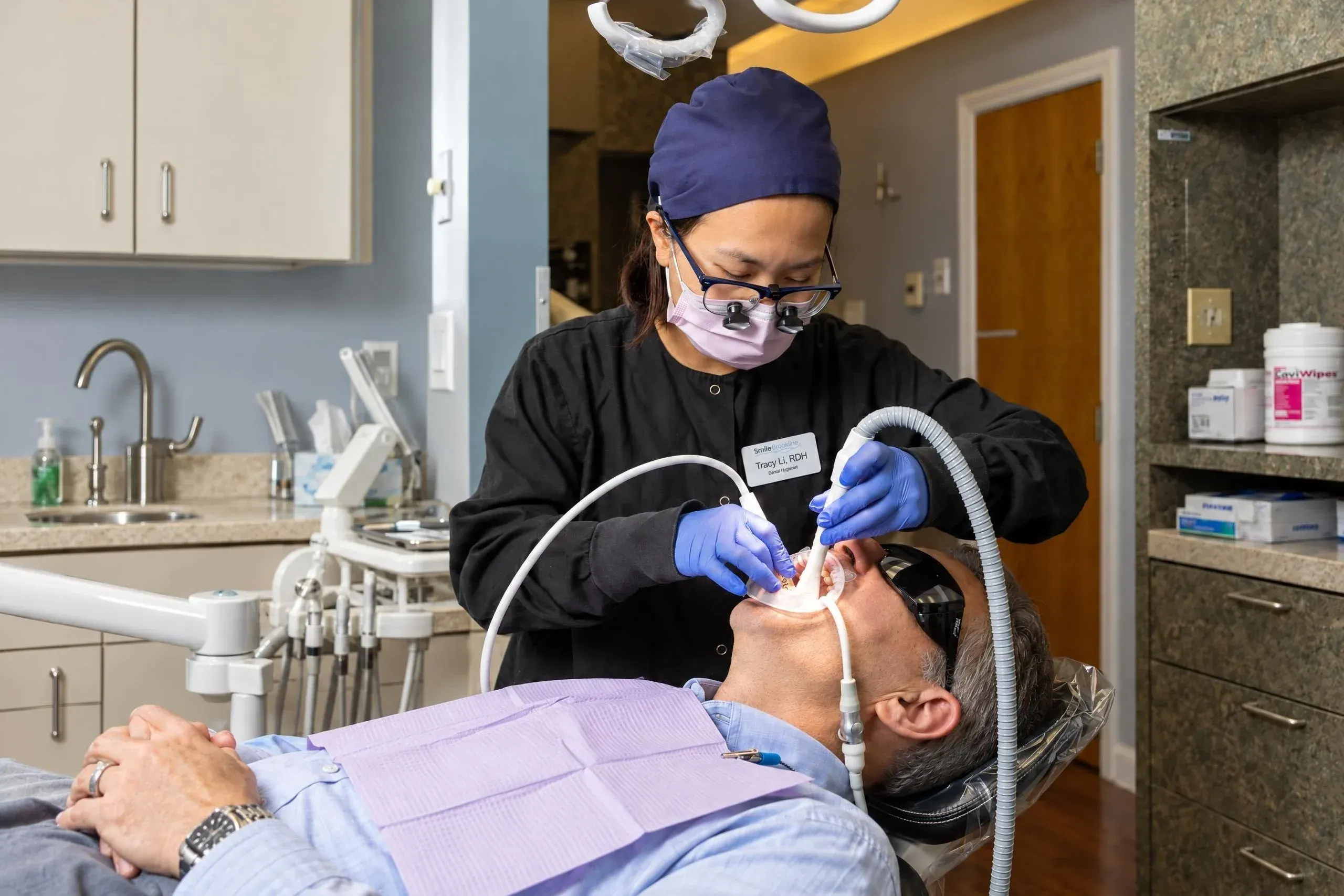
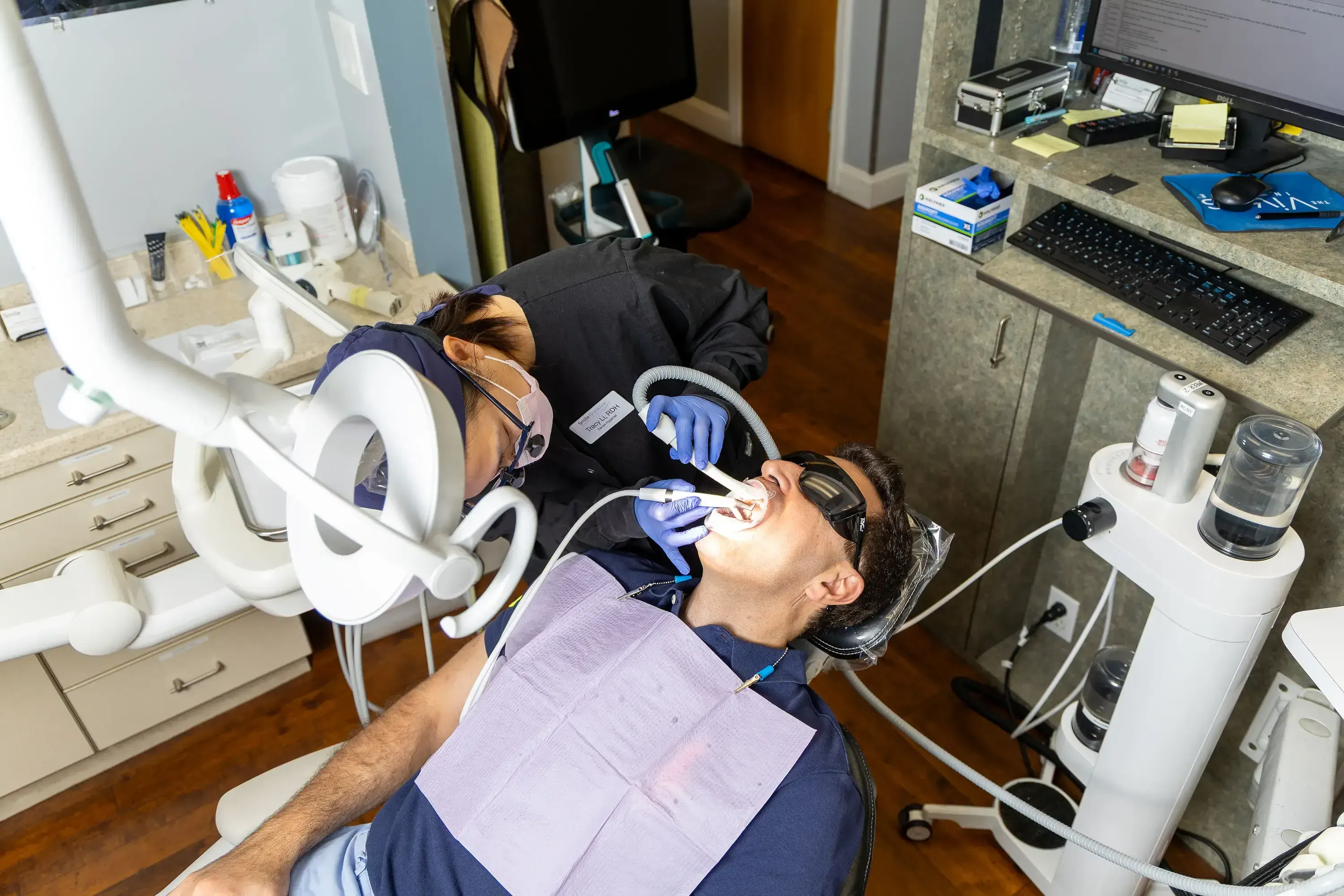
Guided Biofilm Therapy cleans exposed root surfaces without adding to the recession.
Recession Tracked Over Time
Sites are re-measured at each visit so progression is caught before grafting is needed.

Explore More
Gum Disease Treatment
Stop bleeding, swelling and bone loss before you lose a tooth.
- Stops Bone Loss
- Bleeding Resolves
- Fresher Breath
Explore More
Scaling and Root Planing
Deep cleaning that reaches below the gumline to stop infection.
- Avoids Surgery
- Measurable Result
- Stops Attachment Loss
Explore More
Gum Grafting
Restore receding gums and protect exposed tooth roots.
- Sensitivity Relief
- Stops Progression
- Protects the Root
Explore More
Dental Cleaning
Comfortable hygiene visits built around prevention rather than repair.
- Stops Gum Disease Early
- Fewer Fillings
- Immediate Freshness
Your Questions
Frequently Asked Questions
Can gum recession grow back on its own?
How do I know which treatment is right for me?
How quickly will sensitivity improve?
Is receding gums normal as I age?
Can brushing harder make it worse?
What can I do at home between visits?
Can multiple treatments be combined?
When should I see a professional about it?
Get Started
Schedule Your Gum Health Consultation
Scientific References
- Marschner F et al., J Dent. (2025). Systematic review and meta-analysis on prevalence and risk factors for gingival recession. PMID: 39988303.
- Kassab MM et al., J Am Dent Assoc. (2003). The etiology and prevalence of gingival recession. PMID: 12636127.
- Chambrone L et al., J Periodontol. (2022). Does the subepithelial connective tissue graft in conjunction with a coronally advanced flap remain as the gold standard therapy for the treatment of single gingival recession defects? A systematic review and network meta-analysis. PMID: 35451068.
- National Institute of Dental and Craniofacial Research. (2024). Overview of gum disease and recession, including warning signs that warrant professional evaluation.