
Missing Teeth Replacement in Brookline, MA
- Common In:
- Adults 35+
- Primary Causes:
- Gum disease, decay, trauma
- Treatment Time:
- 3 weeks to 6 months
- Results:
- Staged to permanent
Introduction
Compare your options before you decide

Understanding Tooth Loss
What Happens When You Have Missing Teeth?
Recognising the Signs
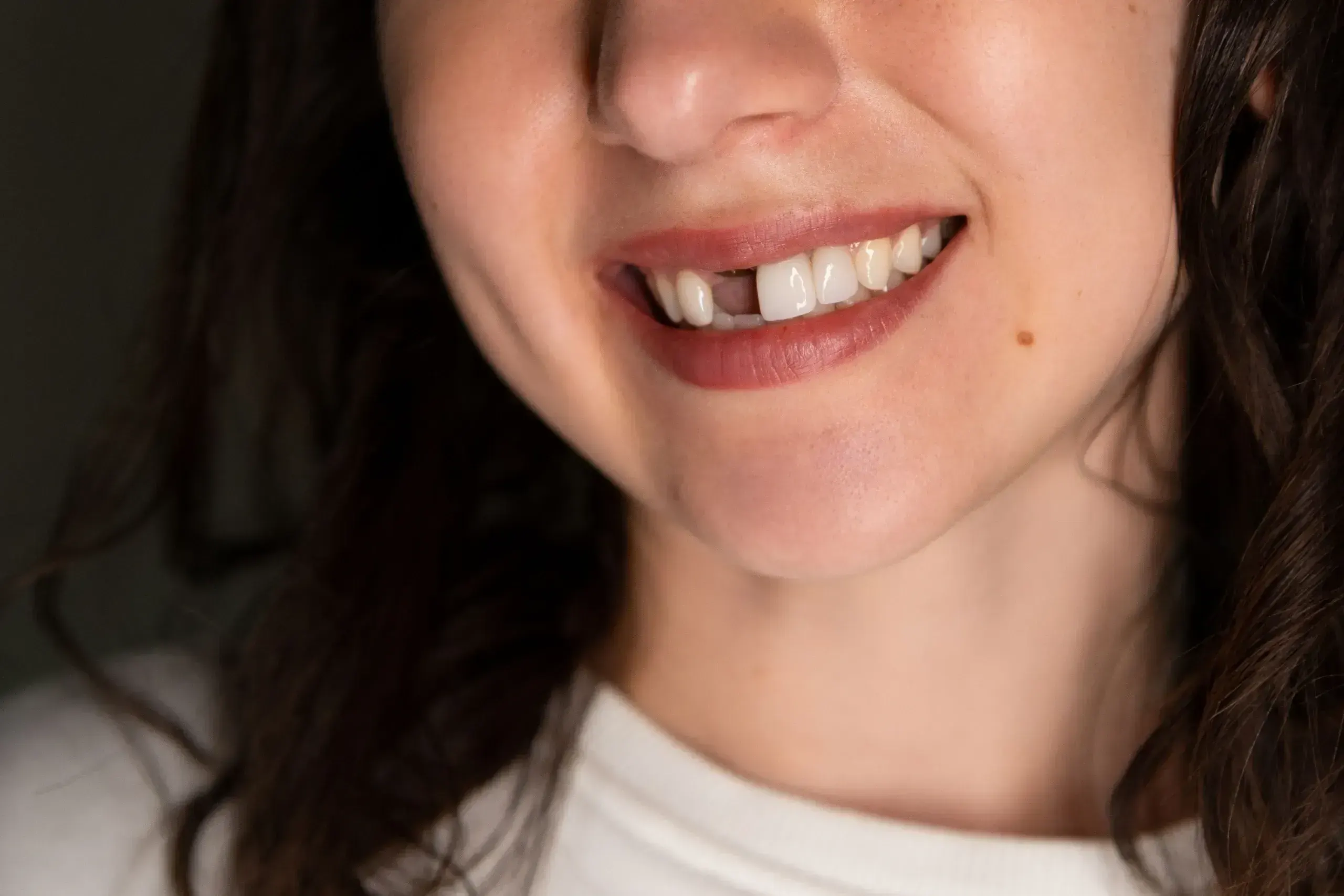
Tooth loss is not a static event. Once a tooth is removed, the alveolar bone that held its root begins to resorb, the opposing tooth drifts down toward the space, and the neighbouring teeth tilt inward over months and years.
Patients notice the practical consequences first: chewing shifts to one side, food packs into the gap, and speech changes slightly on certain sounds. If the space is visible, most people adjust how they smile without consciously deciding to.
This page is the comparison page. Three treatments replace missing teeth, they suit different situations, and choosing between them is easier when the differences are set out side by side rather than described one at a time.
Why Missing Teeth Cause Further Problems
Understanding the Root Causes
01The Science
Bone responds to load. A natural tooth root transmits chewing force into the jaw with every bite, and that stimulus is what maintains bone volume. Remove the root and the stimulus disappears, so the ridge resorbs, most rapidly during the first six months and steadily thereafter.
The teeth around the gap then move. Without an adjacent contact point to lean against, they tip toward the space, and the opposing tooth over-erupts because nothing meets it. Contacts open, food traps, and cleaning becomes harder in exactly the places where decay and gum disease start.
The bite changes too. Force that was shared across a full arch now distributes across fewer teeth, and those teeth wear and fracture faster. Placing a dental implant early preserves both the bone and the arrangement of everything around it.
02Deeper Understanding
How Replacement Options Differ
Comparing Implants, Bridges and Dentures
An implant replaces the root itself. A titanium post integrates with bone, transmits load the way a natural root does and slows the resorption that follows tooth loss. It requires adequate bone volume and a healing period of three to six months, and it leaves the neighbouring teeth untouched.
A dental bridge spans the gap using the adjacent teeth as anchors. It is faster, involves no surgery and works well where those neighbours already carry large restorations. The trade-off is that healthy neighbouring teeth must be prepared for crowns.
Implant-supported dentures address whole arches. Implants anchor the prosthesis so it holds without adhesive and transmits force into bone. Long-term studies report high implant survival at ten years, which is why they are the reference point for full-arch planning.
Contributing Factors
What Leads to Missing Teeth?
Identifying Your Triggers
Adult tooth loss usually has a preventable cause behind it, which matters because the same factor often threatens the remaining teeth.
- Advanced Gum Disease
- Periodontitis destroys the bone and ligament anchoring teeth and is the leading cause of adult tooth loss.
- Untreated Decay
- Decay that reaches the pulp and is left untreated eventually leaves nothing restorable behind.
- Root Fracture
- A vertical split through the root cannot be sealed, so the tooth has to be removed.
- Trauma
- Falls, sports injuries and accidents account for most sudden loss of front teeth.
- Failed Restorations
- Repeatedly repaired teeth eventually run out of sound structure to hold anything.
- Congenitally Absent Teeth
- Some adults never develop certain teeth, most often the lateral incisors or premolars.
Is This You?
You May Need Missing Teeth Replacement If...
Replacing a tooth is about function and bone as much as appearance. These are the signs that the gap is already affecting the rest of your mouth.
Chewing on One Side
You have unconsciously shifted all chewing away from the gap and onto the other side.
Food Trapping
Food lodges in the space or between teeth that have started tilting toward it.
A Tooth Has Dropped
The tooth above or below the gap has visibly over-erupted into the empty space.
Speech Changes
Certain sounds have altered slightly, particularly where a front tooth is missing.
A Loose Denture
An existing partial or full denture moves, needs adhesive or no longer fits as it did.
Changed Facial Support
The lower face looks slightly collapsed where several teeth have been lost.
Treatment Options Comparison
Compare the ways we replace missing teeth, from a single gap to a full arch, so the trade-offs are visible side by side.
| Treatment | Best For | Session Time | Results Timeline | Maintenance |
|---|---|---|---|---|
| Dental Bridges | One or two gaps with healthy neighbours | 2-3 visits | 2-3 weeks | Every 10-15 years |
| Dental Implants | Single teeth without touching neighbours | 3-6 months | Staged | Reviewed at recalls |
| Implant-Supported Dentures | Full arch stability without adhesive | 3-6 months | Staged | Every 3-6 months |
| Bone Grafting | Rebuilding volume before implants | 60-90 min | 4-9 months | One-time procedure |
Why Smile Brookline
Why Choose Smile Brookline for Missing Teeth Care in Brookline, MA
Expert Care in Brookline
At Smile Brookline, Dr. Yumi Ogata performs the implant surgery and Dr. Sara Stock, DDS handles the restoration, both in this practice. Because we provide every option, the recommendation is not shaped by what we can offer.
Surgery and Restoration Here
Dr. Ogata places implants and Dr. Stock restores them, rather than splitting care across offices.
Every Option Available
Implants, bridges and implant-supported prosthetics are all provided in this practice.
Bone Assessed in 3D
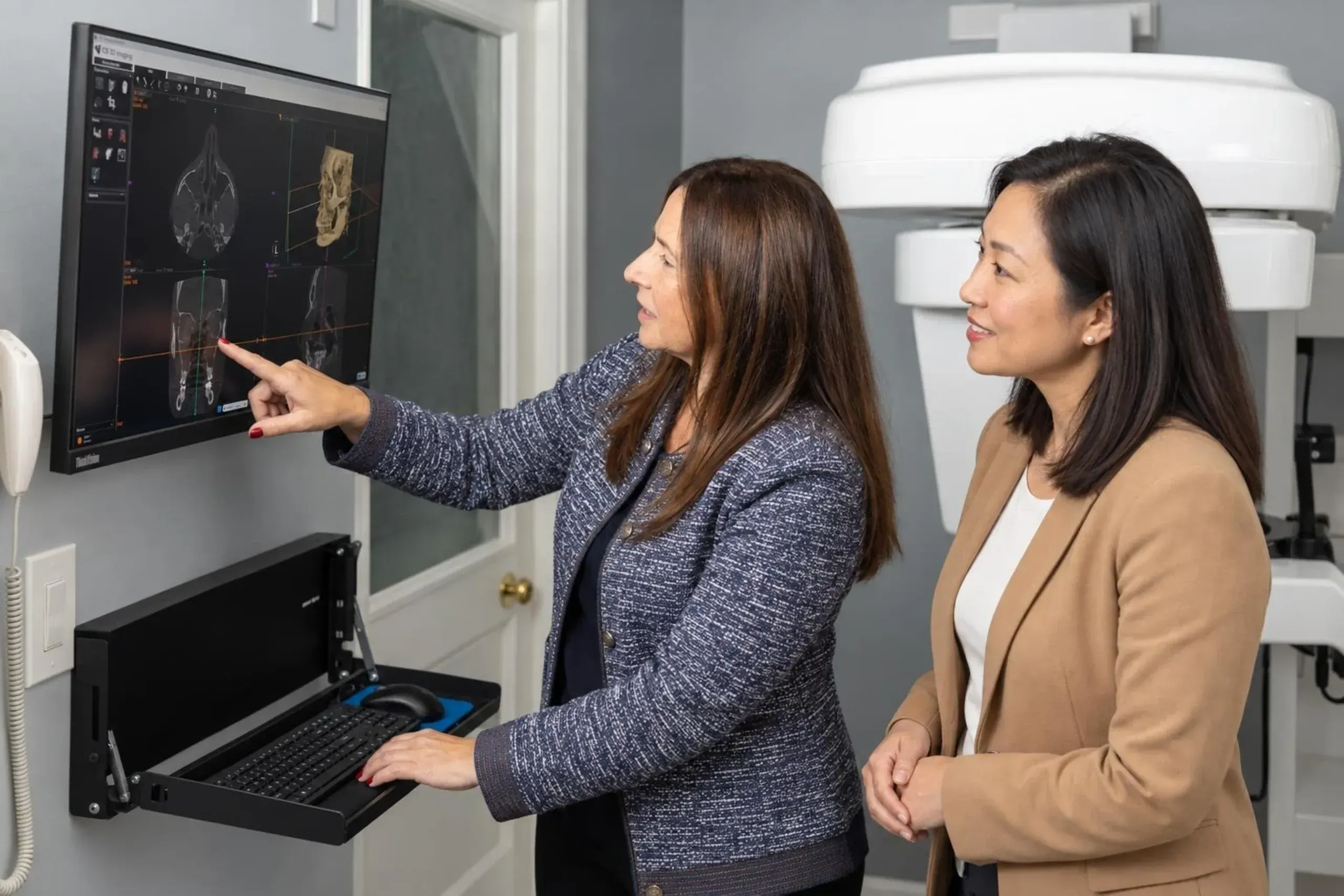
Three-dimensional imaging establishes exactly what volume is available before planning.
Grafting On Site
Where bone is short, it can be rebuilt here rather than ruling implants out.
Two Specialists, One Plan
Dr. Ogata and Dr. Stock plan the case together before any tooth is removed.
Same-Day Crown Capability
CEREC mills and fits the restoration in a single visit where the case allows.

Explore More
Implant-Supported Dentures
Secure dentures that stay put without adhesive.
- No Adhesive Needed
- Stronger Bite
- Preserves Jawbone
Explore More
Dental Bridges
Fill the gap and restore your bite without surgery.
- No Surgery Needed
- Fixed in Place
- Faster Than Implants
Explore More
Bone Grafting
Rebuild jaw support so your implant can succeed.
- Makes Implants Possible
- Better Implant Survival
- Preserves Facial Contour
Explore More
Bone Grafting
Rebuild jaw support so your implant can succeed.
- Makes Implants Possible
- Better Implant Survival
- Preserves Facial Contour
Your Questions
Frequently Asked Questions
Can I just leave the gap alone?
How do I know which replacement is right for me?
How quickly can the gap be closed?
Is losing teeth normal as I age?
Will my jawbone change after losing a tooth?
What can I do while I decide?
Can multiple treatments be combined?
When should I see a dentist about a missing tooth?
Get Started
Schedule Your Tooth Replacement Consultation
Scientific References
- Howe MS et al., J Dent. (2019). Long-term (10-year) dental implant survival: A systematic review and sensitivity meta-analysis. PMID: 30904559.
- Sailer I et al., Clin Oral Implants Res. (2018). A systematic review of the survival and complication rates of zirconia-ceramic and metal-ceramic multiple-unit fixed dental prostheses. PMID: 30328185.
- Sutariya PV et al., J Indian Prosthodont Soc. (2021). Mandibular implant-supported overdenture: A systematic review and meta-analysis for optimum selection of attachment system. PMID: 34810359.
- American College of Prosthodontists. (2025). Patient guidance comparing implants, bridges and removable options for replacing missing teeth.